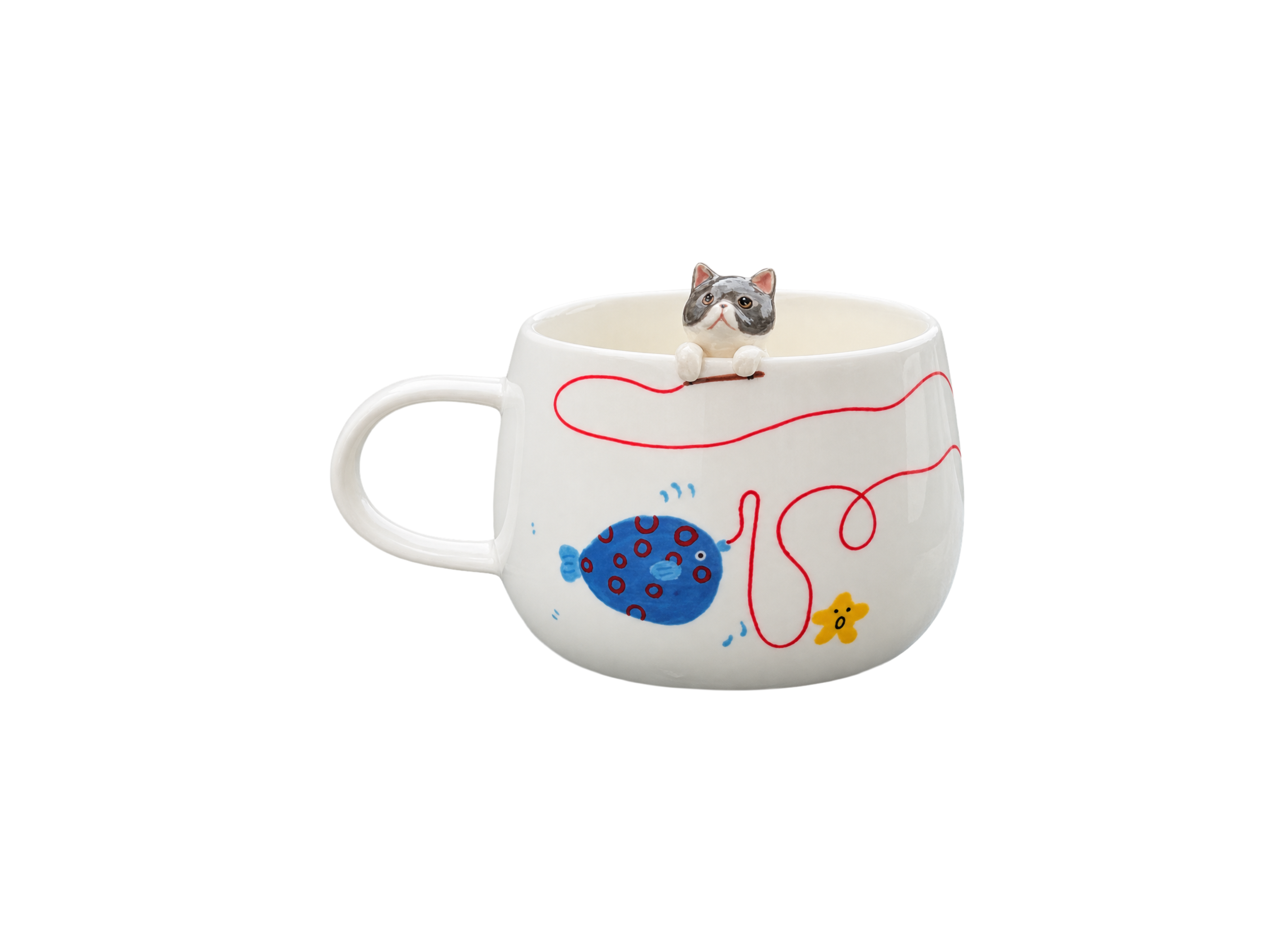
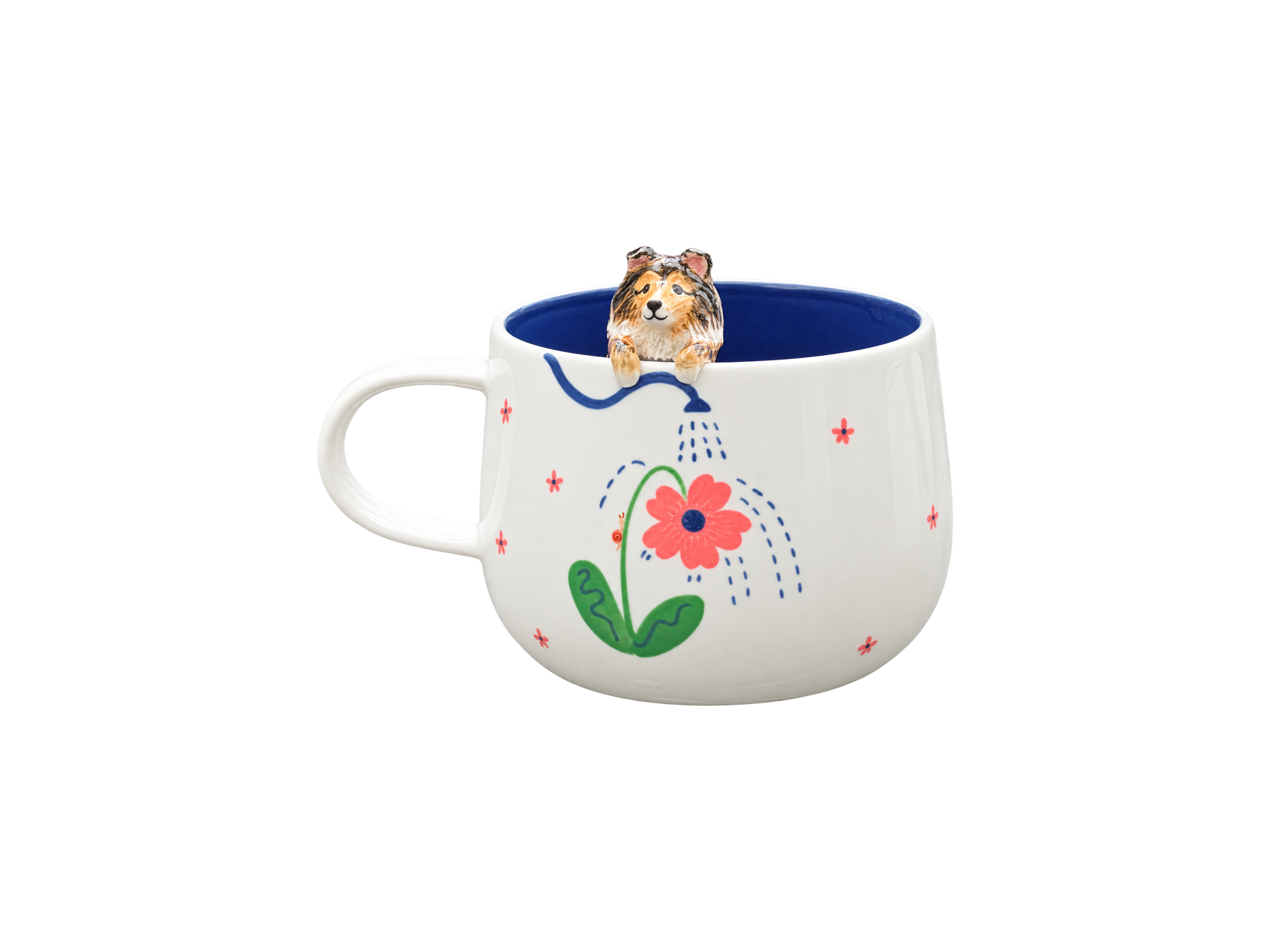
A custom cat mug from photo works best when the reference set shows one unmistakable individual: the cat’s head shape, eye colour, nose, ears, whisker pads, coat pattern and familiar expression. Choose one clear main image at eye level, then add two or three supporting views for details the main photo hides. A technically perfect picture matters less than a truthful, readable one.
Why a cat’s likeness depends on small details
Many cats share the same broad silhouette: triangular ears, rounded eyes, a short muzzle and a compact face. Yet their families recognise them instantly. The difference often lives in small relationships—the distance between the eyes, the curve of the cheeks, the width of the nose, the set of the ears and the exact route of a tabby stripe.
That is why a custom cat mug from photo should not be planned from colour alone. “Grey tabby” or “black-and-white cat” describes a category, not a companion. The useful question is: which features would still make this cat recognisable if the background, sofa and lighting disappeared?
Begin with one clear main photograph
The main image establishes the expression and angle of the portrait. For most cat mugs, a front-facing or gentle three-quarter view is easier to read than a steep overhead shot. Place the camera close to the cat’s eye level and leave enough distance to avoid enlarging the nose or narrowing the back of the head.
Look for a photograph in which:
- both eyes are visible, unless a profile is intentional;
- the ears are fully inside the frame;
- the nose and mouth are not hidden by a paw, blanket or toy;
- the coat is not blown out by harsh sunlight or lost in deep shadow;
- the expression feels characteristic of the cat;
- the original file is available, rather than only a compressed screenshot.
If you are still choosing between several images, the broader custom pet mug photo guide explains how composition, crop and intended use affect the decision.
Eight details that preserve a cat’s likeness
1. The overall head shape
Start with the silhouette before studying colour. Is the face narrow or broad? Are the cheeks full, the forehead flat, the muzzle delicate or pronounced? Long fur can make the head appear wider than the underlying proportions, so include another view if the main photo is especially fluffy or windblown.
A phone held very close can exaggerate the centre of the face. If the nose looks much larger than it does in person, step back and use a modest crop instead of moving the lens nearer.
2. Eye colour and the space between the eyes
Eye colour is memorable, but shape and placement matter just as much. Note whether the eyes are round, almond-shaped, slightly hooded or asymmetrical. A second daylight image can clarify colour when indoor bulbs make green eyes look yellow or blue eyes look grey.
3. The nose and muzzle
A pink, brick, brown or dark nose can anchor the entire face. Check whether it has freckles, a pale edge or an uneven patch. Then look at the muzzle: some cats have a short, compact muzzle; others have a more projected profile. A three-quarter supporting view is often more informative than a straight-on close-up.
4. Ear shape and position
Ears are not interchangeable triangles. Their height, spacing, tip shape, tufts and small notches can be distinctive. Keep both ears in the main frame whenever possible. If one ear has a healed edge, a clipped tip or a patch of different colour, include a close supporting image and say that the feature should remain.
5. Whisker pads, chin and mouth line
Whiskers themselves may disappear against a bright window or dark coat, but the pads from which they grow help define the muzzle. Observe whether they are full or subtle, white or coloured, symmetrical or marked by a spot. The chin and mouth line also change the apparent expression: a pale chin can brighten the face, while a dark lower lip may create a characteristic little “smile.”
6. Coat colour in neutral light
Warm indoor light can turn silver fur beige, while a cool window can make brown fur appear grey. Do not rely on a single filtered image for colour. Compare two or three photographs taken in different, natural conditions and identify which one feels most faithful.
The guide to why a pet’s coat colour changes in photographs offers a fuller explanation of light, white balance and screen differences.
7. Pattern, patches and small markings
Markings often matter more than the general coat category. Follow the white blaze between the eyes, the dark line around one nostril, the split colour on a tortoiseshell face or the rings along a tabby tail. Photograph both sides if the pattern is not symmetrical.
For a black cat, one softly lit side view can reveal where the face ends and the neck begins. For a white cat, avoid a bright window directly behind the subject; the edge of the ears and cheeks may otherwise disappear.
8. The familiar expression
Likeness is also emotional. Some cats are remembered with half-closed eyes, alert ears, a direct stare or a slightly tilted head. Choose an expression that belongs to the cat rather than one created by persistent posing.
Eyes, ears, whiskers and posture can also signal comfort or stress. Cats Protection’s body-language guide describes relaxed and unhappy signals; if the cat flattens their ears, crouches, tries to leave or appears tense, stop the session and give them space.
Build a small supporting-photo set
One image should remain the clear creative reference, but supporting photographs can answer practical questions without competing with it. A useful set might contain:
- Main portrait: the expression and angle you want to preserve.
- Colour reference: soft daylight, little or no filter, with the coat readable.
- Side or three-quarter view: head depth, muzzle and ear position.
- Marking reference: one close image of a patch, scar, ear edge or eye detail.
- Optional full-body view: useful when posture, tail or chest pattern belongs in the composition.
Label the main image and explain the role of each extra photograph in one short note. For example: “Use photo 1 for expression, photo 2 for eye colour and photo 3 for the white patch below the chin.” This is more helpful than sending a large, unranked camera roll.
If you are unsure how many files to provide, see the guide to how many photos a custom pet portrait needs.
What if the favourite photograph is imperfect?
An old, dim or slightly soft photograph may still be the only one that captures the right look. Keep it as the emotional reference, then search for supporting images that clarify what it cannot show. A blurred face cannot supply precise eye shape, but another image from the same period may. A cropped ear can be documented separately. A warm colour cast can be balanced by a daylight photo.
Do not ask the maker to invent a hidden side, reconstruct an unreadable marking or guess which of two conflicting colours is correct. State what is certain, what comes from another image and what may be interpreted.
Match the photo to the kind of mug you want
A printed photo mug, a painted portrait and a mug with a modelled figure do not use reference images in exactly the same way. A print depends heavily on resolution and crop. A painted interpretation needs readable colour and facial relationships. A small sculpted form benefits from side views and silhouette information.
Before ordering, check what the chosen product actually includes, which areas are personalised and what photographs are requested. You can compare the current Maison Scott creations and review the Maison Scott FAQ without assuming that every style follows the same process.
Planning a surprise without choosing the wrong cat
For a gift, first confirm the cat’s current appearance. Kittens change quickly, long-haired cats may have seasonal coats, and an older photograph may show a collar or haircut the owner no longer associates with them. Check the name spelling, the number of cats in the household and whether the recipient would prefer a useful daily object or a more decorative keepsake.
Frequently asked questions
Is one photo enough for a custom cat mug?
Sometimes, if it clearly shows the expression, eye colour, ears, muzzle and markings. Two or three supporting photographs are safer when the coat pattern is asymmetrical, the main image is old or the chosen style includes more than the face.
Should the cat look directly at the camera?
No. A gentle three-quarter view can feel more natural and show the muzzle well. What matters is that the angle is intentional, the important features are visible and the photograph does not distort the face.
Can I use a screenshot from a video?
Yes, when it captures the only familiar expression, but export the highest-quality frame available and add sharper still photographs for colour and markings. Screenshots from messaging apps or social media may be heavily compressed.
What is the best background for the reference photo?
A simple background helps, but perfect staging is unnecessary if the cat’s edges remain visible. Contrast matters: dark fur is easier to read against a mid-tone surface, while white fur needs enough separation from bright walls or windows.
Can two cats appear on the same mug?
Potentially, depending on the selected design and available space. Keep each cat’s photos separate, label them clearly and provide a simple note about relative size. If they never pose together, the guide to combining pets from separate photos explains what information helps.
A final reference-photo checklist
- Choose one main image for expression and angle.
- Confirm head shape, eyes, nose, ears, whisker pads and chin.
- Check coat colour in soft, neutral light.
- Photograph both sides when markings differ.
- Add only the supporting views that solve a specific question.
- Label every file and explain which details to follow.
- Stop photographing if the cat appears uncomfortable.
- Verify the product’s personalisation options before ordering.
The best custom cat mug from photo does not depend on a studio portrait. It depends on a small, honest set of images that makes one cat easy to recognise. Start with the expression their family knows, support it with clear evidence for colour and markings, and leave room for the chosen ceramic style to interpret those details with restraint.