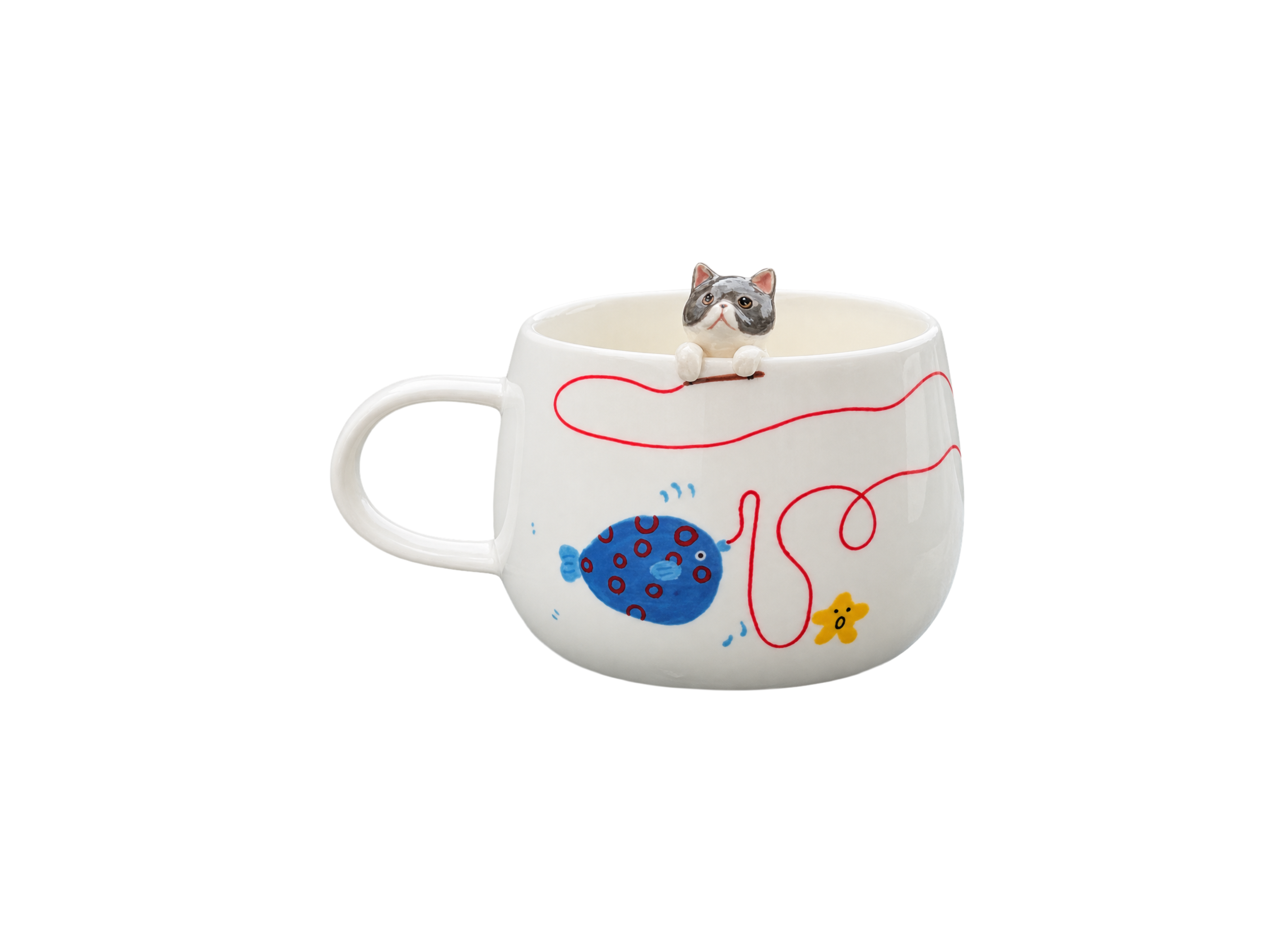
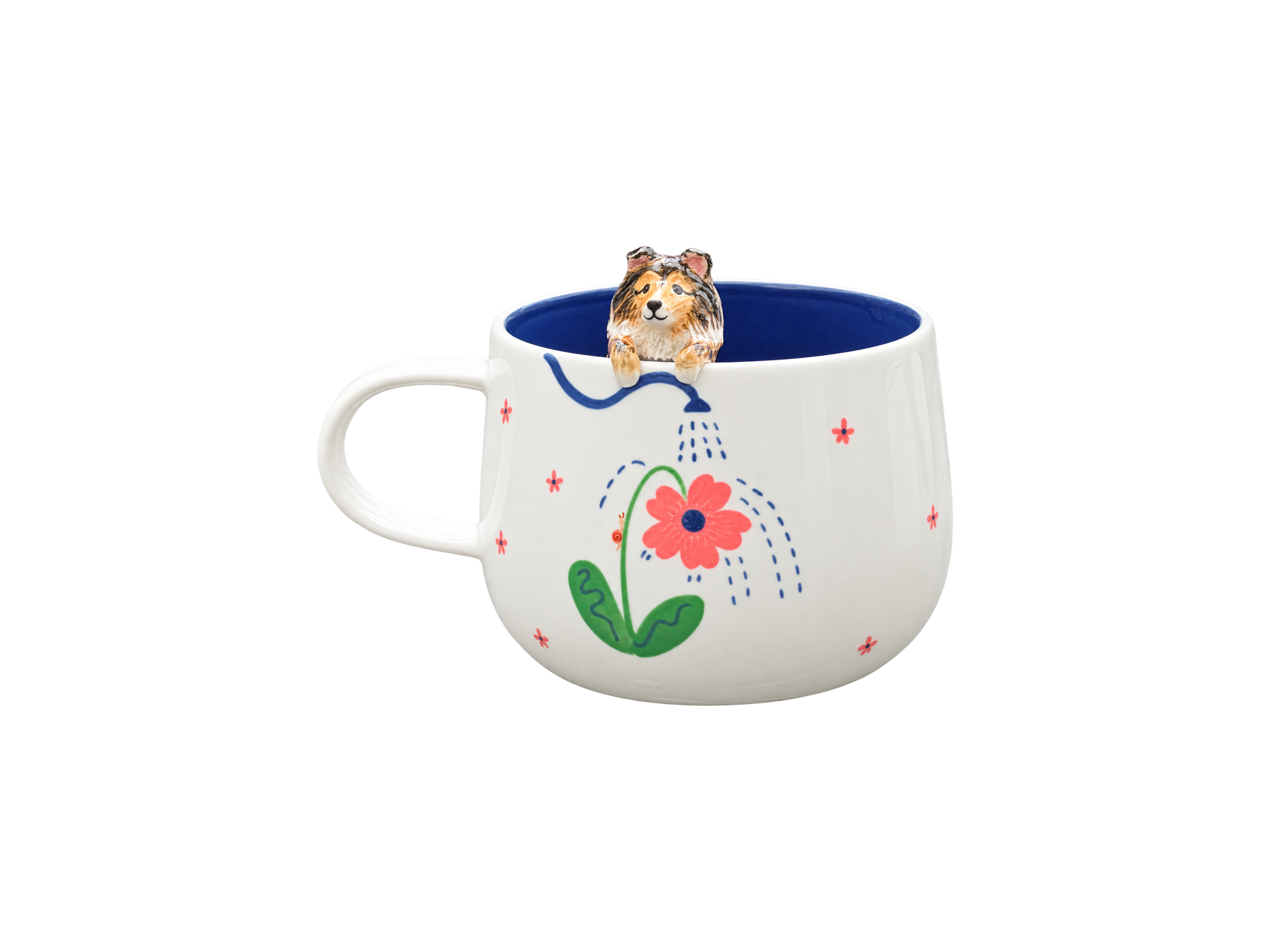
A good custom pet mug from a photo should match three things at once: your pet’s recognisable features, the way the mug will actually be used, and the making process you value. Before ordering, compare the portrait method, photo requirements, intended use, care instructions, personalisation options, production time and policies. The cheapest-looking option is not always the simplest—or the most personal.
First, decide what “from a photo” really means
Two mugs can both be described as personalised from a photograph while being made in completely different ways. The difference affects the appearance, the level of artistic interpretation, the information the maker needs and the way the finished piece should be cared for.
The main approaches include:
- Direct photo printing: the original photograph is reproduced on the mug, usually with minimal artistic interpretation.
- Digital illustration: the photograph is redrawn or stylised, then transferred or printed onto the surface.
- Hand-painted portrait: an artist studies the reference image and paints the animal by hand.
- Hand-sculpted detail: the pet is interpreted as a three-dimensional figure or relief, then painted and integrated into the ceramic design.
Choose the method according to what you want to remember
For an exact moment, consider a photo-based print
If the background, pose and expression of one particular photograph are central to the memory, a direct print can preserve the composition as it appears. In that case, resolution, cropping and colour reproduction deserve close attention. Ask whether the image will wrap around the mug, appear on one side or be repeated for left- and right-handed viewing.
For character, consider a painted interpretation
A hand-painted portrait does not copy every pixel. It interprets the animal’s expression, markings, silhouette and colour through brushwork. Look for finished examples that show how the artist handles different coats, ears, muzzles and eye colours. The relevant question is not “Does every portrait look photographic?” but “Does each portrait preserve what makes this pet recognisable?”
For a tactile keepsake, consider sculpted details
A sculpted figure adds shape, shadow and a physical presence. This approach can be especially expressive when the pet has distinctive ears, a characteristic sitting posture or markings that continue around the body. It may also require more reference views and more careful handling than a flat decoration.
Maison Scott’s collection includes hand-painted and hand-sculpted ceramic interpretations rather than mechanical photographic copies. You can compare the available approaches in the Maison Scott collection.
Check the photo requirements before choosing the photo
A maker’s photo guide is not a formality. It tells you what visual information the process depends on. One clear front-facing image may be sufficient for a simple printed design, while a sculpted figure may need side, rear and full-body views to understand body shape, tail, coat length and asymmetric markings.
For most custom pet mugs, a useful primary photograph should show:
- the eyes, nose, muzzle and ear shape clearly;
- the pet at a natural camera height, without extreme wide-angle distortion;
- the true coat colour in soft or neutral light;
- distinctive patches, stripes, scars or facial markings;
- an expression that feels characteristic of the animal;
- enough original detail to crop without turning the face into a blur.
If no single photograph contains everything, use one primary image for the desired expression and a small number of supporting images for colour, markings or body shape. If several animals will appear together, read Maison Scott’s guide to combining pets from separate photographs.
Ask how the mug is intended to be used
A personalised mug may be a daily cup, an occasional piece or a display object. Decide which matters before comparing designs, because relief elements, delicate handles, unusual rims and hand-painted details can change both use and care.
If you plan to drink from the mug, confirm the intended use on the specific product page. Do not assume that every decorative ceramic object is suitable for food contact simply because it resembles tableware. The European Commission’s guidance on food-contact materials explains that kitchenware and tableware placed on the EU market must meet the applicable safety framework.
Also check:
- the stated capacity and dimensions;
- whether sculpted elements affect the drinking edge or grip;
- whether hand washing is recommended;
- whether microwave or dishwasher use is addressed;
- whether the mug is suitable for hot drinks;
- whether the care advice applies to the entire object, including relief details.
Follow the maker’s instructions for the exact model. A care rule from an ordinary factory-made mug should not be applied automatically to a handmade sculptural piece.
Understand where personalisation begins—and where it stops
“Custom” can refer to a pet’s name, a choice of colour, a portrait based on photographs, a sculpted figure, a short inscription or a combination of these. Read the product description slowly enough to separate included options from examples shown in photographs.
Before ordering, confirm:
- how many pets are included;
- whether the representation is painted, sculpted or both;
- which colours or motifs can be selected;
- where a name or short message will appear;
- whether additional animals or text change the price or lead time;
- which details cannot be altered because of the chosen ceramic form.
For Maison Scott, the FAQ explains the current personalisation workflow and the way photographs are interpreted during hand-modelling, painting, glazing and firing. Checking this page before placing an order helps align expectations with an artisanal process.
Check whether a proof or revision stage is included
Digital portrait services often provide an on-screen proof because the artwork can be revised before it is printed. Directly painted or sculpted ceramics may follow a different logic: the appearance develops during making, drying, firing and glazing, so a conventional pre-production preview may not exist.
This is an important distinction, not a minor administrative detail. Ask what you will see before completion, whether changes are possible, and at which point the work becomes irreversible. Maison Scott’s current FAQ states that directly sculpted or hand-painted ceramic creations do not receive a preview before production; a finished-piece photograph may be sent for information, but it is not an approval stage.
If exact digital approval is essential to you, choose a process that explicitly includes it. If you prefer a hand-shaped interpretation, be comfortable giving the maker enough visual information and a clear creative brief without attempting to control every brushstroke.
Read the timing and personalised-item policies before paying
A custom mug is not the same as an item taken from a shelf. Time may be needed for image review, design, handwork, drying, firing, quality control and secure packing. The sequence varies by technique, so compare the current estimate on the product page rather than relying on a general promise from an old review or social post.
For a birthday, Christmas, wedding or memorial date, work backwards from the day the gift must be in hand. Leave room for questions about the photographs and for transport, especially across borders. If the date is close, ask what is realistically possible before ordering; urgency should never be hidden inside the order notes.
Personalised-item return and cancellation rules can also differ from standard stock items. Read the current store policies and confirm what happens if you upload the wrong image, miss a requested reply, enter an incorrect name or receive an item damaged in transit.
Look at finished work, not only the product mock-up
A polished mock-up can explain layout, but it cannot show the natural differences between handmade pieces. Look for photographs of completed work from several angles. They should help you understand scale, glaze, brushwork, sculpted depth, handle position and the relationship between the portrait and the rest of the mug.
When reviewing examples, ask yourself:
- Can I distinguish one pet from another, or do all faces follow the same template?
- Are coat markings placed with care?
- Does the style remain coherent across different breeds and species?
- Are sculpted elements integrated into the mug rather than merely attached visually?
- Do close-up images show the finish honestly?
Compare value, not only the lowest price
The price of a custom pet mug may reflect very different things: a standard blank, automated image processing, individual illustration, hand painting, sculpting, multiple firings, the number of animals, the level of communication and protective packaging. Compare like with like.
A useful comparison asks what is included, how much work is individual to your pet and what kind of object you will receive. A less expensive printed mug may be the right choice for everyday use. A hand-painted or sculpted piece may be the better choice when the making process and tactile presence are part of the gift’s meaning.
A nine-question checklist before you order
- Is the pet printed, digitally illustrated, hand-painted, hand-sculpted or represented through a combination of methods?
- Which photographs are required for this exact process?
- Will the chosen expression, markings and body shape be clearly readable from those images?
- Is the mug intended for drinking, display or both?
- What capacity, dimensions and care instructions apply?
- How many pets and which personalisation options are included?
- Is a proof or revision stage available?
- What is the current production and delivery estimate?
- What do the cancellation, return and damage policies say about personalised work?
Frequently asked questions
What is the best photo for a custom pet mug?
Choose an original, well-lit image in which the eyes, muzzle, ears and distinctive markings are easy to see. A natural expression matters more than a formal pose. For a sculpted design, add side and full-body views where requested.
Can a blurry photo still be used?
A slightly soft photograph may still communicate expression and markings, but no process can recover detail that was never recorded. Send the best original file and support it with clearer photographs of colour or shape when available.
Can two pets appear on one mug?
Often, yes, but the answer depends on the design, available space and representation method. Two painted faces and two sculpted figures do not require the same area. Confirm the current limit before ordering.
Is a handmade portrait supposed to look exactly like the photograph?
No. A handmade portrait is an artistic interpretation. It should preserve recognisable features and character, but brushwork, modelling, glazing and firing create natural differences from both the source photograph and previous examples.
Should a custom pet mug be dishwasher safe?
Do not assume so. Follow the care instructions for the specific product. Sculpted or hand-painted details may benefit from gentler hand washing even when the ceramic body is durable.
A well-chosen custom pet mug is more than an image placed on a cup. It is a meeting point between a useful object, a particular animal and a way of making. Begin with the method, provide honest photographs, and choose the process whose degree of interpretation feels right to you. When you are ready, explore Maison Scott’s personalised ceramics or contact the studio with questions about a specific design.