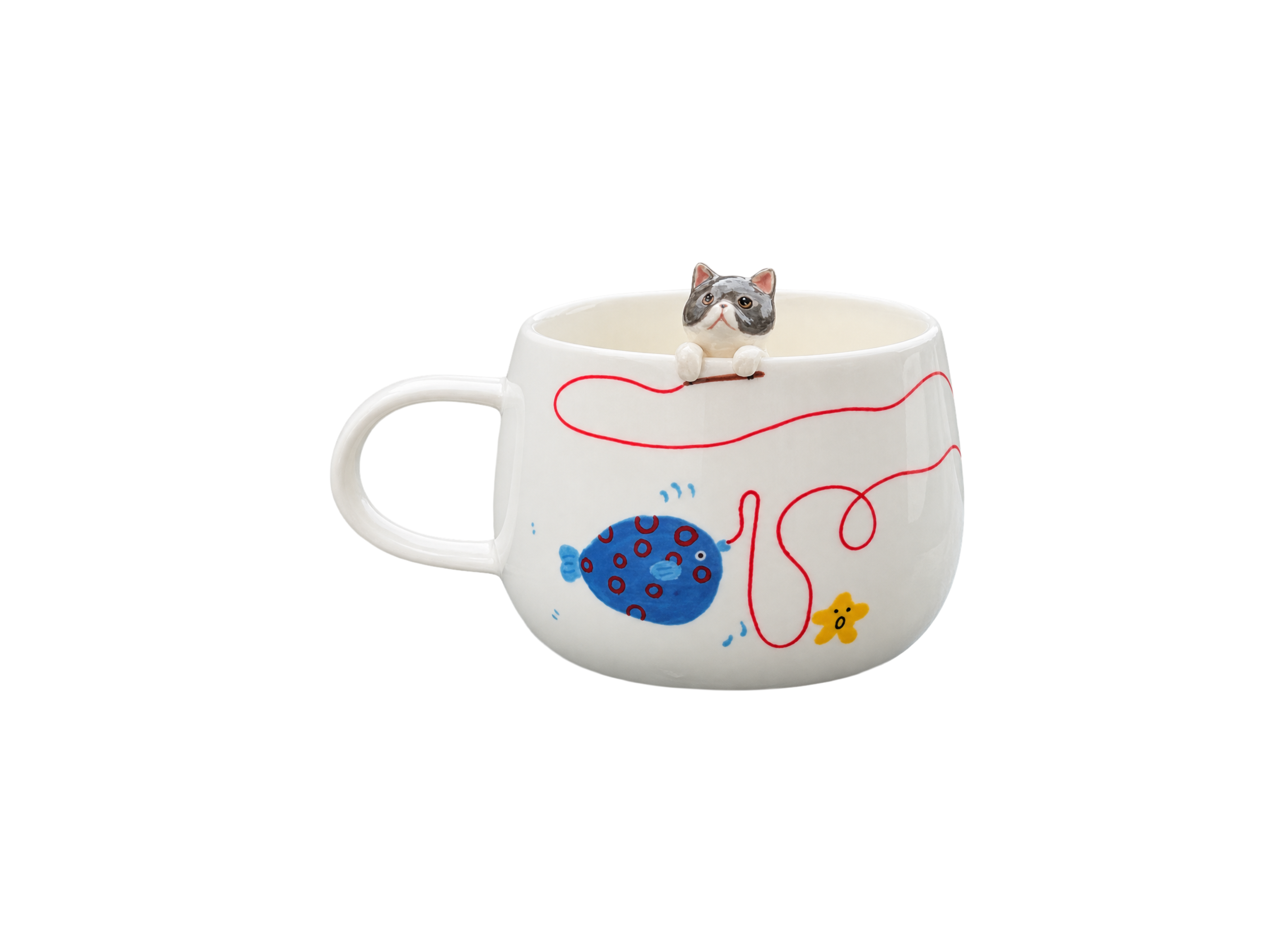
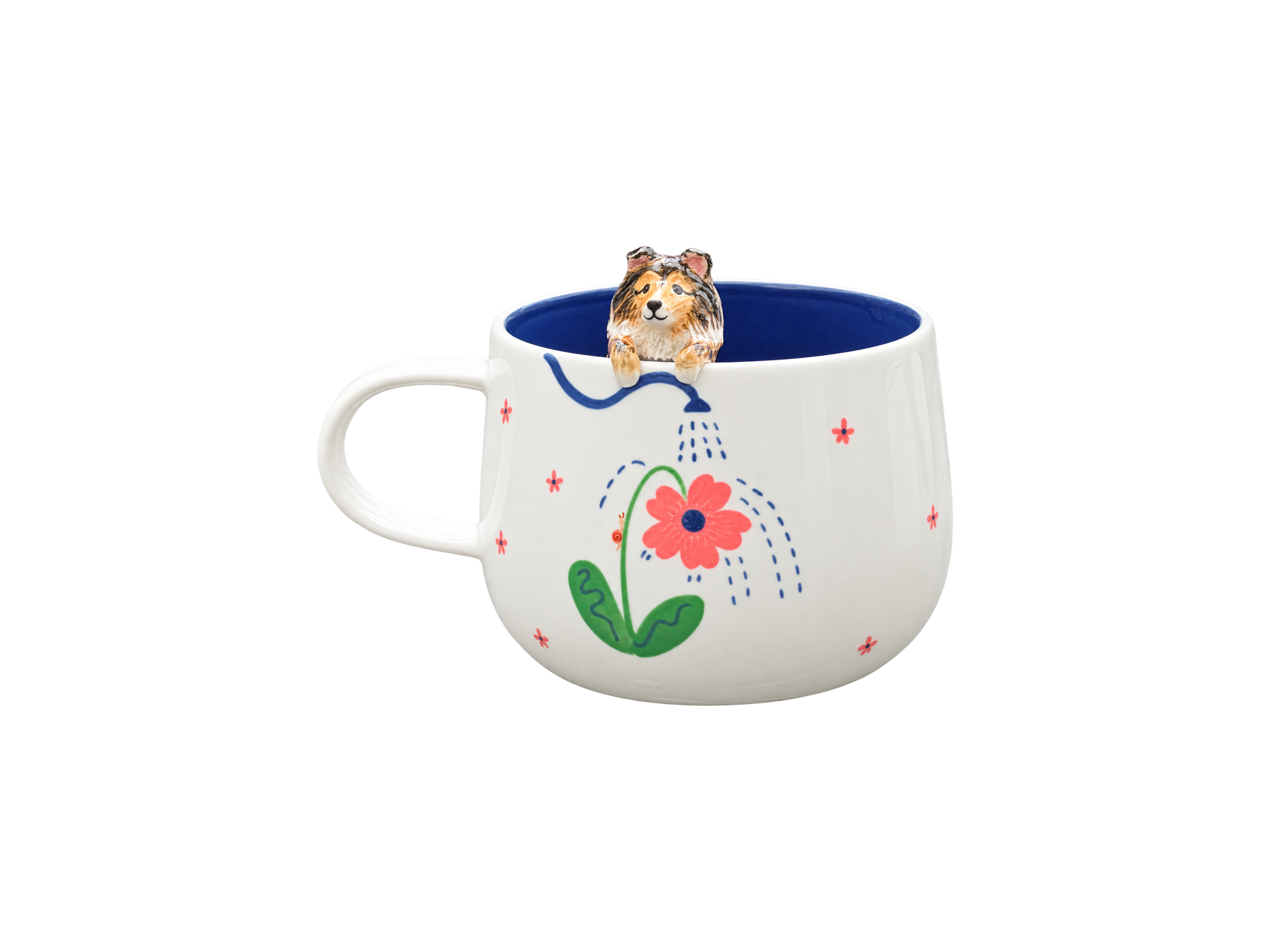
Yes, separate photographs can often be used to plan one multi-pet portrait, provided each animal is clearly visible and the maker can reconcile angle, lighting, scale and markings. A blurry group photograph is not automatically better than two strong individual images. For a Maison Scott ceramic, however, capacity and composition depend on the chosen design and must be confirmed before ordering.
Why separate photographs can be more useful than one group picture
Anyone who has tried to photograph two dogs, three cats or a dog and a cat together will know that cooperation is rarely guaranteed.
One animal looks towards the camera while another turns away. A face is hidden behind an ear. The smaller pet moves closer to the lens and appears larger than the others. By the time everyone is visible, the expression that made the photograph feel personal has disappeared.
Separate photographs allow you to choose a stronger reference for each animal.
One image may capture the shape of a dog’s ears perfectly. Another may show a cat’s eyes and facial markings in clean natural light. These references can sometimes provide more useful information than a single group photograph in which none of the animals is shown clearly.
This does not mean that every group can automatically be combined on every object. A ceramic cup has limited physical space, and a painted portrait does not have the same spatial requirements as several sculpted figures. The number of animals that can be represented, and the most suitable Maison Scott design, should be confirmed before the order is placed.
Begin with one primary photograph for each pet
Start by selecting one main photograph for every animal.
The primary image should show the expression and view you would most like to preserve. It should ideally make the following features easy to read:
- both eyes, unless a profile is intentional;
- the shape and position of the ears;
- the muzzle and nose;
- the outline of the face;
- distinctive patches, stripes or colour transitions;
- the natural texture and length of the coat;
- any feature that immediately distinguishes this pet from another of the same breed.
Name the files clearly. “Milo-main.jpg” and “Luna-main.jpg” are more helpful than a folder containing ten images called “IMG_4827”.
If you have useful supporting views, label those as well:
- Milo-left-side;
- Milo-coat-colour;
- Luna-ear-marking;
- Luna-full-body.
A supporting image should answer a specific question. Sending many almost identical photographs can make the choice less clear rather than more accurate.
For a broader guide, read How Many Photos Do You Need for a Custom Pet Portrait?.
Match the camera angle before trying to match the background
The backgrounds of the photographs do not need to be identical. One pet can be photographed in a garden and another beside a window.
The viewing angle matters more.
Combining a straight-on portrait with an extreme overhead photograph can make the final composition feel uneven. The head photographed from above may appear narrower, while a pet photographed from very close to the floor may have an enlarged muzzle or chest.
The easiest combinations usually come from photographs taken at a broadly similar camera height:
- two front-facing portraits;
- two three-quarter views;
- two side views looking towards the centre;
- one front-facing image and one gentle three-quarter view.
The angles do not need to match with mathematical precision. They should simply feel as though the animals could occupy the same visual space.
If your favourite photographs have very different angles, send them anyway, but include alternative views where possible. The maker can then assess whether the preferred expressions can be reconciled.
Preserve the real difference in size
A Chihuahua and a Golden Retriever should not become the same size by accident. Nor should a kitten appear larger than an adult cat simply because its photograph was taken closer to the camera.
When separate images are combined, the original photographs no longer provide a reliable visual comparison. Help the maker understand the relationship between the animals.
Useful information may include:
- their approximate shoulder height;
- their weight, when relevant;
- which animal is noticeably taller or broader;
- whether one pet was still young in the selected photograph;
- a casual snapshot showing the animals together, even if it is not suitable as the main reference.
A technically imperfect group photograph can therefore remain valuable. It may show relative size, posture and the way the animals naturally occupied space together, while the individual photographs provide the facial detail.
If the pets never met, explain the size difference in words rather than trying to estimate it from unrelated photographs.
Look for compatible light, not identical colour
Different lighting can make the same coat appear surprisingly different.
A black animal photographed indoors may lose the details around its eyes. A cream coat photographed in direct sunlight may appear almost white. A warm artificial lamp can make grey fur look brown, while a strong filter may alter the colour of the nose, eyes and markings.
When choosing separate reference photographs, favour images taken:
- in natural or soft light;
- without a strong colour filter;
- without deep shadows across the face;
- without overexposed white fur;
- with enough detail to distinguish the eyes from the surrounding coat.
The photographs do not need to share exactly the same brightness. Their colours simply need to provide trustworthy information.
If one favourite image has a beautiful expression but misleading colour, add a second image showing the true coat in neutral daylight. Label it as a colour reference rather than leaving the maker to decide which photograph is more accurate.
Choose expressions that belong in the same composition
Technical clarity is important, but a multi-pet portrait also needs an emotional relationship.
Imagine one photograph showing a relaxed, sleepy cat and another showing a dog barking mid-run. Each may be charming on its own, yet the two expressions can feel as though they belong to different stories.
Consider whether you want the final piece to feel:
- calm and intimate;
- playful and lively;
- formal and portrait-like;
- quietly commemorative;
- affectionate without becoming overly sentimental.
Then select expressions that support that shared atmosphere.
This does not mean erasing each animal’s personality. A serious older dog and a curious young cat do not need identical expressions. They only need enough visual connection to feel intentionally placed together.
A short note can help:
“Luna was calm and observant; Milo was more playful, but I would like the finished piece to feel gentle rather than comic.”
That sentence may communicate more than several extra photographs.
Do not force pets to pose together
If your pets do not comfortably remain beside one another, there is no reason to force a group photograph for the sake of the commission.
The animal welfare charity Blue Cross recommends keeping photography sessions short, rewarding the animal and stopping when the pet is unwilling, frightened or uncomfortable. It also suggests capturing natural behaviour rather than insisting on a pose.
Separate photographs are particularly useful when:
- one pet becomes nervous around another;
- a cat prefers to be photographed in a familiar hiding or resting place;
- an older animal tires quickly;
- the pets live in different households;
- one animal joined the family after another had died;
- the only group photograph is blurred or distant.
A shared portrait should not require a stressful shared photo session.
Combining pets who never lived at the same time
One of the most meaningful reasons to use separate photographs is to bring together animals from different periods of a family’s life.
Perhaps an older dog died before a new puppy arrived. A childhood cat may never have met the animals who live with the family now. The finished piece can place them within one visual composition without pretending that an original group photograph existed.
For this kind of project, clarity matters, but sensitivity matters too.
Try to provide:
- the best available image for each animal;
- a note explaining which pet is represented in each file;
- an indication of their relative size;
- the features that must not be lost;
- the mood you would like the composition to convey.
If the older photograph is small or imperfect, do not enlarge it repeatedly before sending it. Enlargement cannot create missing detail and may add artificial edges or noise. Send the most original version available, together with other views if any exist.
The feasibility of working from an old, damaged or very low-resolution photograph must be assessed case by case.
Painted portraits and sculpted figures need different information
Maison Scott currently presents both hand-painted animal portraits and cups incorporating sculpted, hand-painted figures. These two approaches do not use photographs in exactly the same way.
For a painted portrait
The main concerns are usually:
- facial angle;
- visible markings;
- coat colour;
- the relationship between the animals within the painted area;
- whether each face will remain legible at the chosen scale.
A clear head-and-shoulders photograph may provide much of the necessary information.
For a sculpted figure
A front view alone may not explain:
- the shape of the body;
- the length of the back;
- the tail;
- asymmetric markings;
- ear position from the side;
- how the coat changes around the chest and legs.
Additional side and rear views can therefore be more useful.
Several sculpted animals may also require more physical space than several painted faces. The maximum number of pets and their placement are to be confirmed by Maison Scott for the chosen model.
One group portrait or several coordinated pieces?
Combining every animal on one object is not always the strongest solution.
One shared composition may suit:
- two pets with compatible reference photographs;
- animals whose relationship is central to the gift;
- a memorial bringing different companions together;
- a design with enough room for each face to remain clear.
Separate but coordinated creations may be preferable when:
- there are many animals;
- their photographs differ greatly in angle or quality;
- every pet has important details that need more space;
- you want each animal to have an individual presence;
- the chosen product cannot comfortably accommodate the full group.
The right question is not simply “Can they all fit?” It is “Will every animal still feel recognisable and properly considered?”
Prepare one organised reference package
Before sending the photographs, prepare a concise package containing:
- One primary photograph for each animal.
- One or two supporting views only where they add useful information.
- A file name identifying the pet and the purpose of the image.
- A note explaining relative size.
- The distinctive features that must be preserved.
- The desired emotional tone.
- A group snapshot, if one exists, for scale and natural relationship.
- Confirmation that you own the photographs or have permission to use them.
UK guidance on copyright in digital images and photographs explains that the creator of a photograph is generally its first copyright owner. A photograph received from a friend, found online or supplied by a professional may therefore require permission before it is used.
Keep the order notes factual and brief. The purpose is to remove uncertainty, not to direct every brushstroke or modelling decision.
What to confirm before ordering
Before choosing a multi-pet ceramic, ask:
- How many animals can the selected model accommodate?
- Can separate photographs be used for this design?
- Is the representation painted, sculpted or both?
- Are additional views required for each pet?
- Is there an additional cost per animal?
- Will adding animals affect the production time?
- Is any composition preview or approval stage provided?
Maison Scott’s published guide discusses representing several animals on one personalised cup, but the practical limits, price and process should be checked for the current product before ordering.
A thoughtful multi-pet portrait does not begin by placing every available photograph into one image. It begins by giving each animal one clear, truthful reference, then building a composition in which none of them feels secondary.
You can browse Maison Scott’s personalised creations, view the Maison Scott gallery, or contact Maison Scott to ask whether your proposed combination is suitable for a particular design.
Standalone conclusions
- Separate pet photographs can be combined successfully when each animal has one clear primary reference and the images provide compatible facial angles.
- A sharp individual photograph of each pet is often more useful than one blurry group photograph.
- Relative size cannot be judged reliably from unrelated photographs; measurements, a casual group snapshot or a written comparison can help.
- Backgrounds do not need to match, but strong differences in camera angle, lens distance and lighting can make a shared composition less natural.
- Painted multi-pet portraits and sculpted multi-pet figures require different reference views and different amounts of physical space.
- Pets should not be forced to pose together; short, comfortable individual photo sessions can provide better references.
FAQ
Can two pets be combined if they were photographed years apart?
Yes, potentially. Select one clear photograph for each pet, explain their relative size and provide any supporting views that clarify markings or body shape. The maker should assess whether the photographs can form a coherent composition.
Do both photographs need the same background?
No. The background is usually less important than the facial angle, camera height, lighting and clarity of the animal’s distinguishing features.
Can a dog and a cat be placed in the same portrait?
They can potentially be represented together even when photographed separately. Their size relationship, expressions and the available space on the chosen ceramic should be considered before confirming the order.
Is one photograph per animal enough?
One excellent photograph may be enough for a painted face. Sculpted figures or animals with asymmetric markings may require additional side, rear or full-body views.
Can Maison Scott put any number of animals on one cup?
The maximum number depends on the model, representation style and available space. The current limit, additional cost and production impact must be confirmed by Maison Scott before ordering.