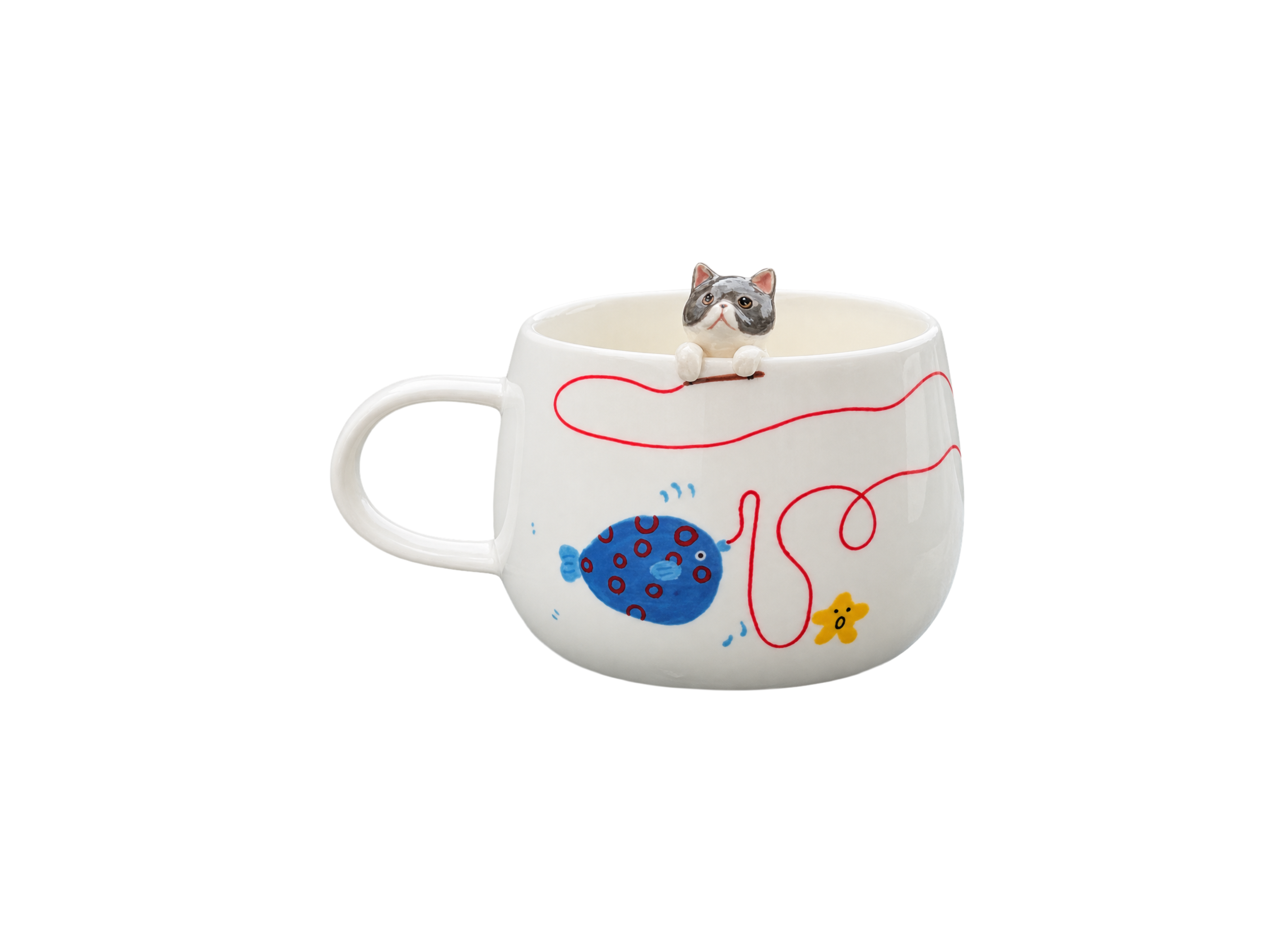
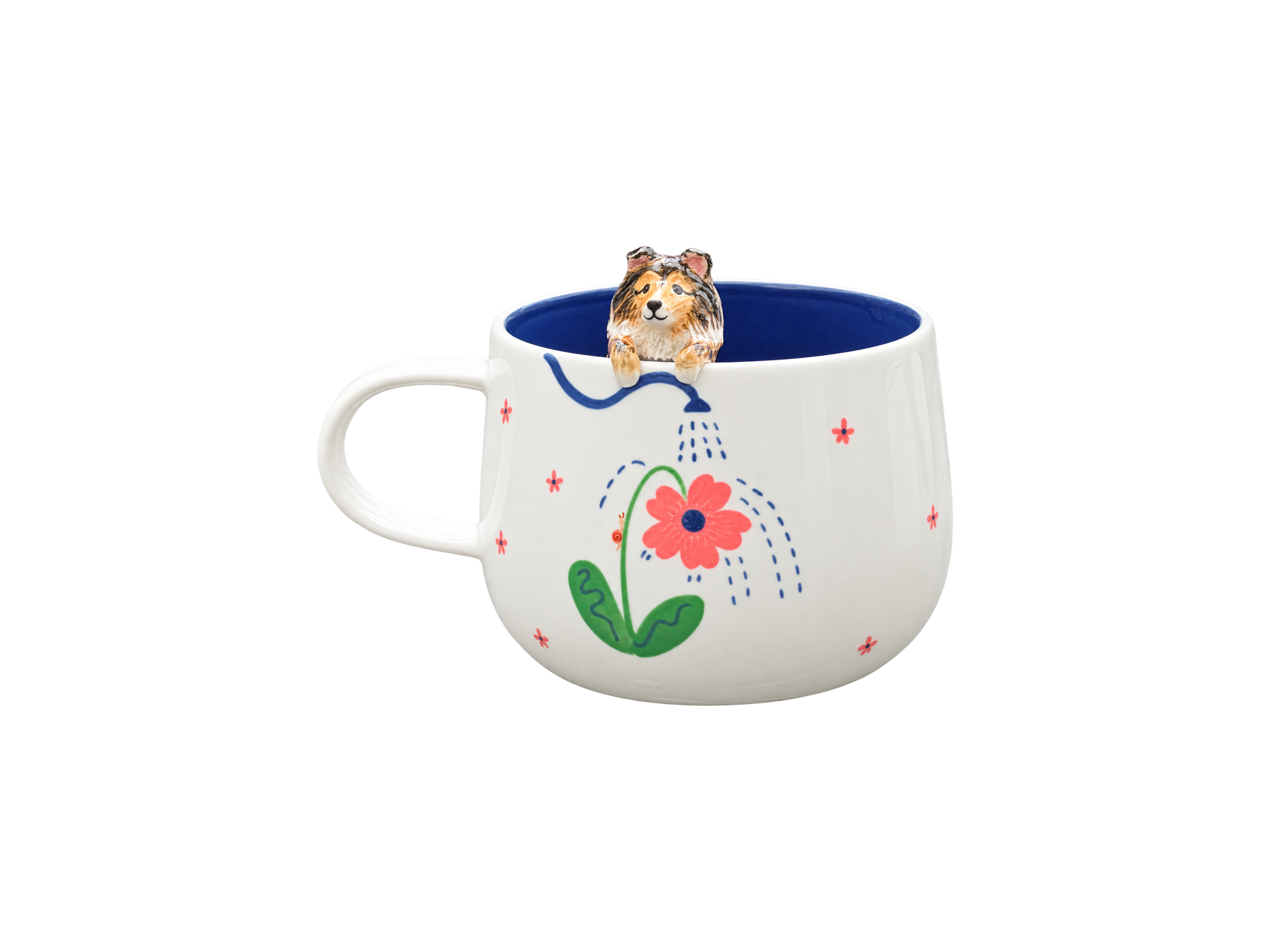
Yes, some personalized mugs can feature multiple animals in a single creation. However, you need to check that the chosen model accommodates the desired number, and then submit clearly identified photos for each pet. The success of the composition depends less on a perfect group photo and more on the quality of the individual references, size differences, and the specific characteristics you wish to preserve.
A single creation can tell the story of an entire family
A dog and a cat that grew up together, two inseparable companions, three animals that arrived at different times: an animal family isn't always limited to a single portrait.
The FACCO-ODOXA 2025-2026 barometer estimates the French pet population at 73.4 million. Behind this figure are many households where multiple presences, multiple personalities, and sometimes multiple species share daily life.
Bringing them together in a single piece is possible, but a multi-animal composition requires more preparation than an individual portrait. The surface remains limited, each animal must remain identifiable, and the overall design must maintain visual balance.
The Maison Scott FAQ confirms that some creations can feature multiple animals. However, the number available, options, and potential additional fees depend on the product and the complexity of the project.
The first step is to check the product description before preparing the photos.
Start with the right medium
Not all mugs have the same space or shape.
A portrait painted on the outer wall, several small figurines placed on the rim, and a scene modeled around the mug each have different constraints. A composition that works with two painted faces may not be able to accommodate three three-dimensional figurines without losing legibility or ease of use.
Before ordering, check:
- how many animals the product allows you to select;
- if the personalization is painted, sculpted, or combines both;
- if the animals are represented by their face or full body;
- if position or posture options are offered;
- if the chosen number incurs an additional charge;
- if names or a short text can be added.
To be confirmed by Maison Scott: the maximum number of animals accepted for each range and the available compositions based on the mug's shape.
If the product description doesn't clearly answer these questions, it's best to request confirmation before placing the order.
Do you need a photo with all the animals together?
No. A group photo can be useful, but it shouldn't be the only reference.
In a group photo, an animal might be further away, turn its head, be partially hidden, or appear in different lighting. The face of each animal would then contain fewer details than an individual portrait.
Maison Scott requests clear photos of each animal and allows the customer to indicate their preferences regarding their arrangement, posture, and the overall composition. It is therefore preferable to create a small, separate file for each companion.
A useful collection for each animal
Ideally, prepare:
- a main front-facing or three-quarter photo;
- a profile view;
- a photograph showing distinctive markings;
- a body view if a full figurine is planned;
- a group photo, if it helps to understand their size or relationship.
You don't need to do a whole new photoshoot if you already have these images. The guide on choosing photos for a personalized creation helps verify sharpness, lighting, and color accuracy.
How to organize files without creating confusion?
When several cats or dogs resemble each other, a poorly organized folder can quickly become ambiguous.
Avoid sending a series of files like IMG_1024, IMG_1025, and IMG_1026 without explanation. Rename them or add a summary document.
For example:
Milo-faceMilo-left-profileMilo-bodyNala-faceNala-ear-spotMilo-and-Nala-sizes
If you don't want to change the file names, you can specify their order in the personalization area.
| Information | Useful example |
|---|---|
| Animal's name | Nala |
| Species | Cat |
| Main photo | IMG_2045 |
| Dominant color | Light gray and white |
| Distinctive detail | Small gray spot under the nose |
| Relative size | Smaller than Milo |
| Desired position | To the right of Milo |
| Expression | Calm gaze, ears slightly turned |
This preparation may seem simple, but it helps distinguish objective information from compositional preferences.
How to differentiate between two similar-looking animals?
Two gray cats, two dogs of the same breed, or two animals from the same litter can seem almost identical to someone who doesn't know them. Their family, however, immediately notices the differences.
You therefore need to show the details you use yourself to recognize them.
The face
Observe:
- the shape of the muzzle;
- the width of the forehead;
- the position of the ears;
- the color of the eyes;
- the markings around the nose or mouth;
- the length and direction of the fur.
The body
Specify:
- which is larger or slimmer;
- the color of the chest and paws;
- the length of the tail;
- the presence of a spot on the back;
- a habitual posture;
- a drooping ear or a tail often held high.
The expression
Expression can be very recognizable, but it remains more subjective. A note like "Milo usually looks attentive" or "Nala often keeps her eyes slightly narrowed" can guide the interpretation. However, it doesn't replace a clear photograph.
Avoid purely emotional descriptions such as "the kindest" or "the little princess." They convey your bond but don't always provide usable visual cues.
How to indicate size differences?
Photographs taken separately don't always allow for understanding the actual proportions.
A small cat photographed up close can appear more imposing than a large dog taken from a distance. If their size difference matters in the composition, provide a simple indication.
You can write:
- "Oscar is about twice as big as Plume";
- "the two cats are almost the same size";
- "Rio is smaller, but has proportionally larger ears";
- "the rabbit should appear lower than the dog."
A photograph where the animals are on the same plane can also serve as a reference. It doesn't need to be the main photo: its role is simply to show their proportions.
In a small composition, the artist may need to slightly adjust sizes to maintain readability. If exact adherence to scale is essential for you, clearly indicate it before production.
What compositions to choose for multiple animals?
There isn't just one good arrangement. The choice depends on the number of animals, the shape of the mug, the technique, and the character you want to give to the scene.
Side-by-side
This composition gives comparable importance to each animal. It is suitable when you want to present them as a balanced group.
One animal in the center, the others around
This highlights one companion but intentionally creates a hierarchy. Use it only if this intention suits you.
A small continuous scene
Animals can be integrated into the same action or setting. However, the scene must remain compatible with the universe and options of the chosen product.
One animal on each side
This solution provides more space for each portrait. It allows you to discover the animals by turning the mug, but they are less often visible together.
Several figurines on the rim
The relief creates a very unique presence. However, you must consider the available space, the fragility of the elements, and the daily use of the mug.
To be confirmed by Maison Scott: the possible arrangements for each collection and the option to request a specific side of the mug.
A composition request expresses a preference. It should not be presented as a millimeter-perfect reproduction guarantee, especially for an individually sculpted piece.
Can a dog, a cat, or other species be brought together?
Maison Scott's FAQ states that the brand can represent dogs and cats, but also rabbits, birds, horses, snakes, and other pets.
This does not automatically mean that all combinations are possible on every product. A bird figurine, a painted horse, and a small snake do not require the same space or visual information.
For a composition featuring multiple species, specify:
- their relative size;
- how you want them arranged;
- whether they should appear in full or only by face;
- each one's essential markings;
- if a shared scene has particular significance.
To be confirmed by Maison Scott: the possibility of mixing different species on the same piece depending on the selected product.
Can animals that have never been photographed together be reunited?
Yes, individual references can be used to imagine a common composition. However, you must be transparent about the fact that the scene does not exist in an original photograph.
This situation arises when one animal arrived after another left, when two companions never managed to pose together, or when the only available photos are from different periods.
In a memorial project, you can simply explain:
- which animals lived together;
- which one is no longer present;
- whether you want a realistic or rather symbolic composition;
- whether all should have the same importance;
- what expression you associate with each.
It is not necessary to turn this story into a long order narrative. A few precise indications, accompanied by authentic photos, are usually better than an AI-reconstructed image that might invent details.
Should names be added?
Names can facilitate identification, but they are not mandatory for the creation to be personal.
They are particularly useful when:
- the animals resemble each other closely;
- the piece is intended for someone else;
- the composition brings together a present and a deceased animal;
- each portrait appears on a different side;
- the name is part of the memory.
Carefully check the spelling, accents, and capitalization before confirming. An error submitted in the personalization information may no longer be modifiable once manufacturing has begun.
The availability of text, its placement, and length depend on the product. Do not assume that a name, a date, and an entire sentence can be added if the product description does not offer it.
Does the number of animals change the price or lead time?
It can affect complexity and price. Maison Scott indicates that any additional fees depend on the chosen product and the complexity of the creation.
The number of animals may require:
- more photos to analyze;
- a denser composition;
- multiple portraits to paint;
- multiple figurines to sculpt;
- more details to check before shipping.
The exact price should be the one displayed by the selected option on the product page. For the lead time, also consult the information valid at the time of order.
This article intentionally does not give a fixed surcharge or precise duration, as this information can vary from product to product.
The checklist before sending a multi-animal order
Check the following points:
- the product accepts the desired number;
- each animal has a distinct set of photos;
- files or descriptions allow for their identification;
- size differences are explained;
- distinctive markings are visible;
- the desired position is simply indicated;
- names and texts have been proofread;
- the chosen options match the order;
- you have distinguished essential requests from optional preferences.
Maison Scott's FAQ specifies that a creation sculpted or painted directly by hand cannot be previewed before manufacturing. A photograph of the finished product may eventually be sent, but it occurs after finalization and does not constitute a modification stage.
This rule makes the preparation of references particularly important.
What to expect when discovering the piece?
A multi-animal creation should not be evaluated like a photomontage.
Each companion is interpreted from their photos, then integrated into the material, proportions, and visual universe of the piece. The details should allow them to be recognized, but painting, sculpting, enameling, and firing naturally introduce slight variations.
To better understand this difference, you can read how a Maison Scott personalized portrait is created or compare photographic printing and hand-painting.
Bringing several animals together on the same mug is not just about adding faces. It's about finding a fair place for each, without erasing the small differences that make up the family's story.
FAQ
Do I need a photo of all my animals together?
No. Send clear individual photos of each. A group photo can only help to understand their sizes or relationship.
How many photos should I provide per animal?
A front or three-quarter view, a profile, and a body view form a good basis. The maximum number of files accepted by Maison Scott remains to be confirmed.
Can a dog and a cat be represented on the same mug?
Some creations accept multiple animals. The exact combination must be verified on the product description or with Maison Scott.
Can a living animal and a deceased animal be reunited?
Yes, when authentic photos are available. Specify whether you want a realistic or symbolic composition and provide a clearly identified file for each.
Is it possible to modify the arrangement after seeing a preview?
Maison Scott states that it does not provide a preview before manufacturing for creations directly sculpted or hand-painted. Therefore, preferences must be specified before work begins.