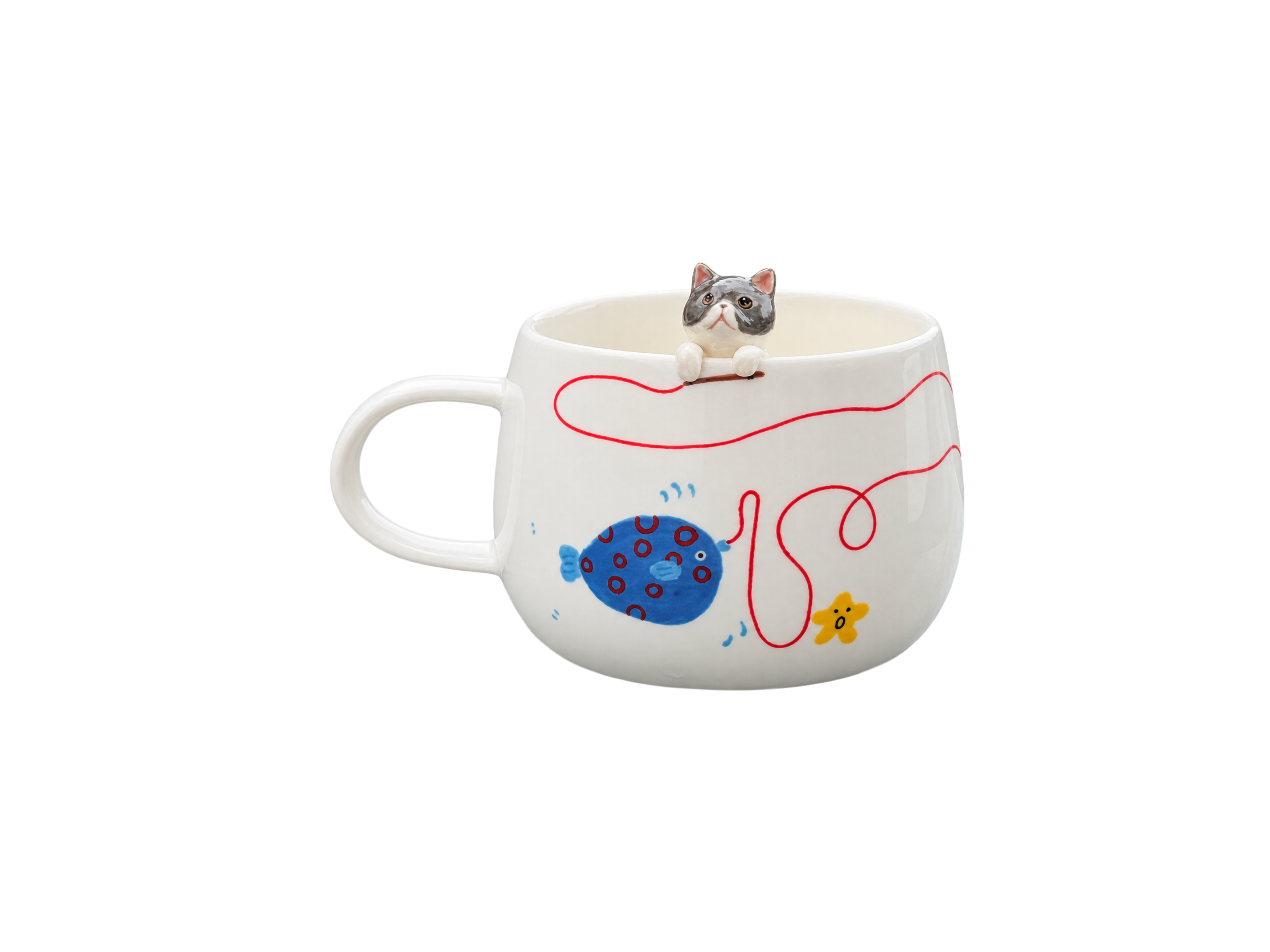
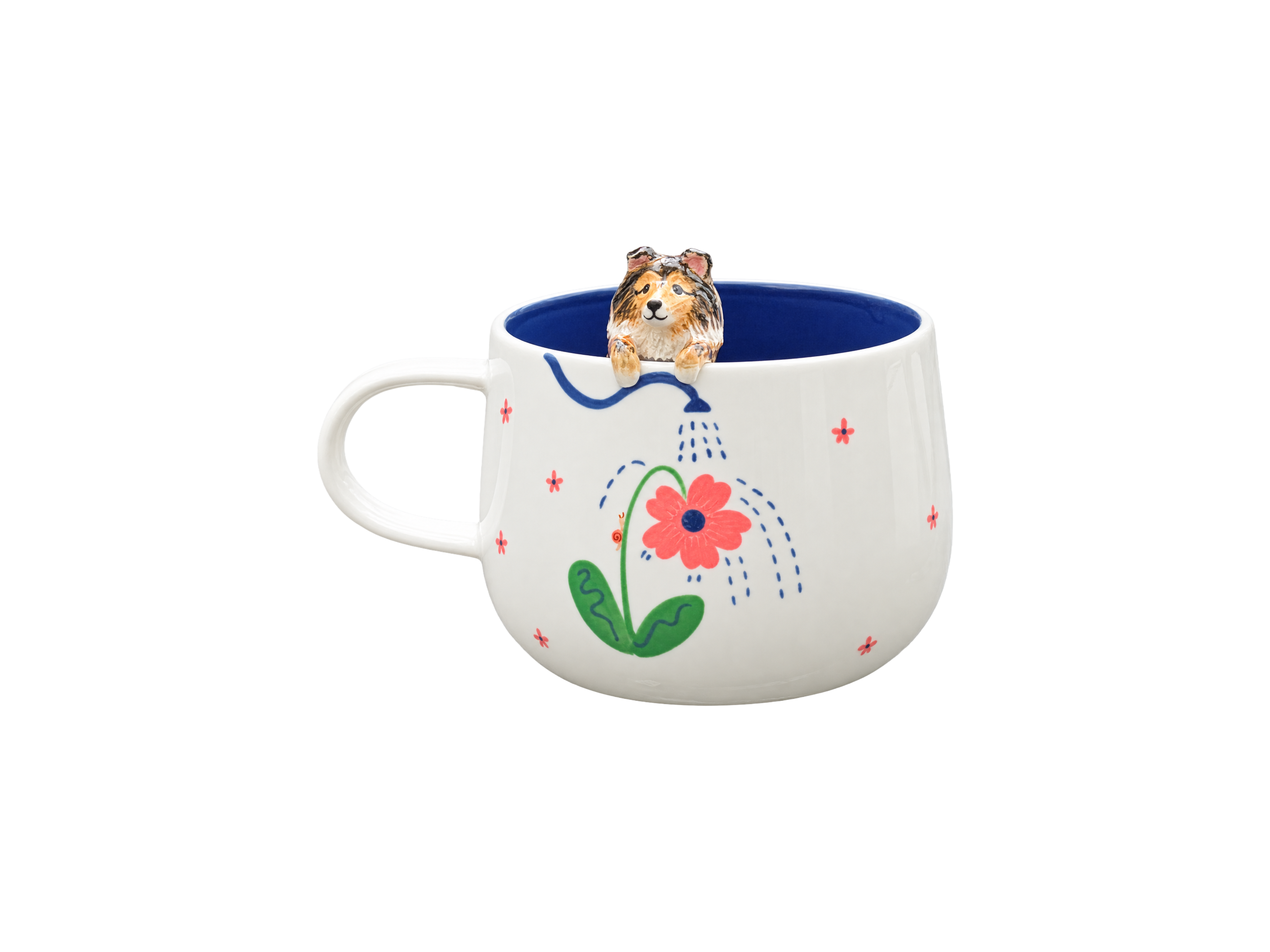
Yes, a broken ceramic mug can sometimes be restored, but that doesn't automatically mean it can be used for drinking again. A through crack, a chip on the rim, a weakened handle, or a repair with unknown glue justify discontinuing food use. Depending on the damage, it's best to contact the seller, consult a restorer, or keep the item as a decorative keepsake.
Start by identifying the type of damage
Not all visible marks on a mug present the same problem. A superficial mark in the glaze does not have the same consequences as a crack that goes through the wall. Before looking for glue or a tutorial, observe the mug in the light, without forcing fragile parts.
| Observed Damage | What to Check | Prudent Decision |
|---|---|---|
| Superficial scratch | Is the surface smooth? Does the mark go through the glaze? | Inspect and ask the manufacturer for advice if in doubt |
| Small exterior chip | Is it far from the rim and the inside? Is the area sharp? | Discontinue use if the surface is rough or unstable |
| Chip on the rim | Risk of contact with lips and worsening | Do not use the mug for drinking anymore |
| Fine crack | Does it go through the wall? Does it evolve with heat? | Do not pour hot beverages into it |
| Broken or loose handle | Could the remaining attachment give way? | Do not lift the mug by the handle anymore |
| Detached relief decoration | Do other elements seem weakened? | Keep the fragments and contact the seller or a restorer |
| Mug broken into several pieces | Are any fragments missing? Are the edges sharp? | Reserve for professional restoration or a decorative project |
If you cannot determine if the crack is only superficial, consider the mug fragile until the manufacturer or a professional advises otherwise.
What to do immediately after breaking?
The first step is not to glue the piece back together. First, avoid aggravating the damage and preserve any useful information.
- Do not pour hot liquid into the mug anymore.
- Keep small fragments away from children and animals.
- Handle the pieces with care, without repeatedly testing their fit.
- Photograph the mug, the crack, and each fragment.
- If the product has just been delivered, keep the box, protective packaging, and shipping label.
- Contact the seller before any personal repair.
Intervening too early can obscure the initial state of the product, complicate the investigation of shipping damage, or make professional restoration more delicate.
For a customized creation, photographing the object before any manipulation also helps to preserve a faithful image of its portrait, colors, and sculpted details.
Why is a re-glued mug not automatically suitable for drinking?
In Europe, materials and objects intended to come into contact with food must be sufficiently inert so as not to transfer substances to food in quantities that could endanger human health, change the composition of the food, or alter its organoleptic characteristics. This principle is outlined in European Regulation No 1935/2004 and in the DGCCRF's explanations on food contact materials.
However, an intact mug and a repaired mug are no longer exactly the same assembly. The added glue, resin, pigment, and finish layer are now part of the area likely to be exposed to the beverage, lips, heat, and washing.
Therefore, the safety of the repair cannot be deduced solely from the fact that the original mug was suitable for food use. The repaired object must be considered as a whole and under its actual conditions of use.
Can "food-safe glue" be used to repair a mug?
There is no universal answer or glue that can be recommended for all mugs.
The mention "suitable for food contact" must be read with the precise conditions indicated by the manufacturer: compatible materials, curing time, maximum temperature, direct or indirect contact, duration of contact, and resistance to repeated washing. An adhesive suitable for occasional contact with cold food is not necessarily designed for very hot beverages, microwaves, or dishwashers.
Several situations must also be distinguished:
- re-gluing a purely decorative element located far from the beverage;
- repairing a handle subjected to the weight of the mug;
- filling a through crack;
- intervening on the rim in contact with the lips;
- repairing the inside of the container.
These uses do not exert the same constraints or the same level of food contact.
In the absence of explicit confirmation covering the completed repair and the intended use, the most prudent solution is to reserve the mug for decoration. An invisible repair to the naked eye is not proof of safety.
Can a broken handle simply be re-glued?
A handle supports the weight of the mug and its contents. Even when it appears to be solidly repositioned, its strength cannot be assessed simply by pulling it lightly with your fingers.
If the handle breaks while the mug contains a hot beverage, the consequences are not limited to another breakage. For this reason, a mug with a repaired handle should not be put back into service without an appropriate evaluation.
However, it can become a decorative object, provided the repair is stable and no sharp edges remain accessible. To move it, it is preferable to hold it by the body rather than by the repaired handle.
Does kintsugi allow a mug to continue being used?
Kintsugi is a Japanese ceramic repair practice where fracture lines are accepted and highlighted. The National Library of France describes it as an art of repairing broken ceramics by emphasizing their scars.
The collections of the Musée des Arts Décoratifs also feature objects restored with gold lacquer. These pieces remind us that repair can be part of an object's visible history, rather than trying to completely erase the accident.
However, it is important to distinguish traditional kintsugi from contemporary "kintsugi effect" kits. The latter frequently use resin and gold pigment, which reproduces an appearance without necessarily employing traditional materials or know-how.
The presence of a gold line therefore does not mean that the object is again suitable for beverages. Even for a repair carried out using a traditional method, food use must be confirmed based on the materials, the process, and the final state of the mug. An object restored for display is not automatically intended for daily use.
When to call a ceramic restorer?
Professional restoration should be considered when the piece is unique, has strong sentimental value, or features sculpted work that is difficult to recreate.
In a personalized mug representing an animal, the value is not only in the material. It also lies in an expression, a posture, a fur color, or a detail chosen from photographs. A professional repair can then seek to preserve this presence, even if the object subsequently becomes an exhibition piece.
Institutions such as the Cité de la céramique – Sèvres et Limoges involve professionals specializing in the conservation and restoration of ceramics. This illustrates the difference between a quick domestic repair and an intervention designed for the stability and preservation of the object. The restoration work is notably mentioned in the activity report of Sèvres – Cité de la céramique.
Before entrusting the mug, ask a few questions:
- Is the restoration intended for exhibition or food use?
- What materials will be used?
- Will the repair remain visible?
- How can the object be cleaned?
- Will missing parts be recreated?
- Can the professional intervene without altering the existing paint or modeling?
Stating from the outset that the mug has a personalized painting or figurine will help the restorer propose an appropriate intervention.
What to do if the mug arrived broken?
When a new mug arrives damaged, do not start by gluing it back together. First, photograph:
- the exterior of the package;
- the shipping label;
- the interior protective packaging;
- the mug in its packaging;
- the crack or fragments;
- any missing elements.
Then contact the seller and provide the order number. This approach allows the situation to be examined before the initial state is altered.
The rules applicable to a personalized product are not limited to the right of withdrawal. A custom-made creation may be subject to specific conditions, while guarantees relating to a damaged or non-conforming product fall under other provisions. Find this point in our article on returns and guarantees for personalized products.
How to give a second life to a mug that can no longer be used?
Giving up drinking from a mug does not mean giving up the object. Once it has been stabilized and no accessible edge remains, it can become:
- a pencil or brush holder;
- a container for a small bouquet of dried flowers;
- a display case item accompanied by a photograph of the animal;
- an object intended to hold a medal or a small keepsake;
- the center of a shadow box containing a photo and a few fragments.
A cracked mug should not be used with water or soil if the repair and waterproofing were not designed for that. Loose or sharp pieces can instead be fixed in a closed frame by a professional.
For a creation that holds a memory, the right repair is not always the one that allows you to resume breakfast as before. It can be the one that preserves the portrait, protects the details, and allows you to continue looking at the object with tenderness.
How to avoid another breakage?
A mug decorated with a relief or figurine requires more attention than a perfectly smooth mug. Hold it by the body when you move it, avoid bumping it against the sink, and do not leave it unbalanced on the edge of a table.
For Maison Scott creations with delicate elements, hand washing remains the preferred method indicated in the Maison Scott FAQs. Allow the mug to cool before significantly changing the water temperature, and place it on a stable surface during drying.
These precautions do not make ceramics unbreakable, but they reduce unnecessary stress on the handle, glaze, and raised decorations.
Repair for use or preserve the memory?
A broken mug can often be assembled, restored, or transformed. The real question is what to use it for afterward.
For a piece without particular value, a second decorative life may be the simplest solution. For a personalized creation, seeking the advice of the seller or a restorer helps protect both the object and what it represents. Preserving a mug in another way does not diminish its history; sometimes, it precisely allows it to last.
- A seemingly repaired mug is not automatically suitable for food contact.
- A chip on the rim, a through crack, or a weakened handle justify discontinuing its use for beverages.
- The mention "food-safe glue" must be checked for the specific use: heat, contact with lips, repeated washing, and type of material.
- Traditional kintsugi and decorative repairs with gold resin do not necessarily refer to the same process.
- When a new product arrives broken, you must photograph the package and contact the seller before any personal repair.
- A personalized creation too fragile to drink from can be kept as a decorative object or entrusted to a restorer.
FAQ
Can you drink from a slightly cracked mug?
It is best to stop using it until the nature of the crack is identified. A crack that goes through the wall or changes with heat makes it unadvisable for drinking.
What glue should be used to repair a ceramic mug?
There is no universal glue. For a decorative repair, follow the manufacturer's or restorer's instructions. To resume food use, confirmation covering the completed repair and its actual conditions of use is required.
Can a mug handle be re-glued?
It can be re-glued for decorative purposes, but a handle supports the weight of the mug and potentially hot beverage. Do not put it back into service without appropriate evaluation.
Is a kintsugi-repaired mug food-safe?
Not automatically. It depends on the materials and process used. A resin and gold pigment kit should not be considered food-safe simply because it mimics the appearance of kintsugi.
How to preserve a broken personalized mug?
Keep all fragments, photograph the portrait, then ask the seller or a restorer for advice. If food use is no longer possible, the mug can become a decorative object or be displayed in a shadow box.