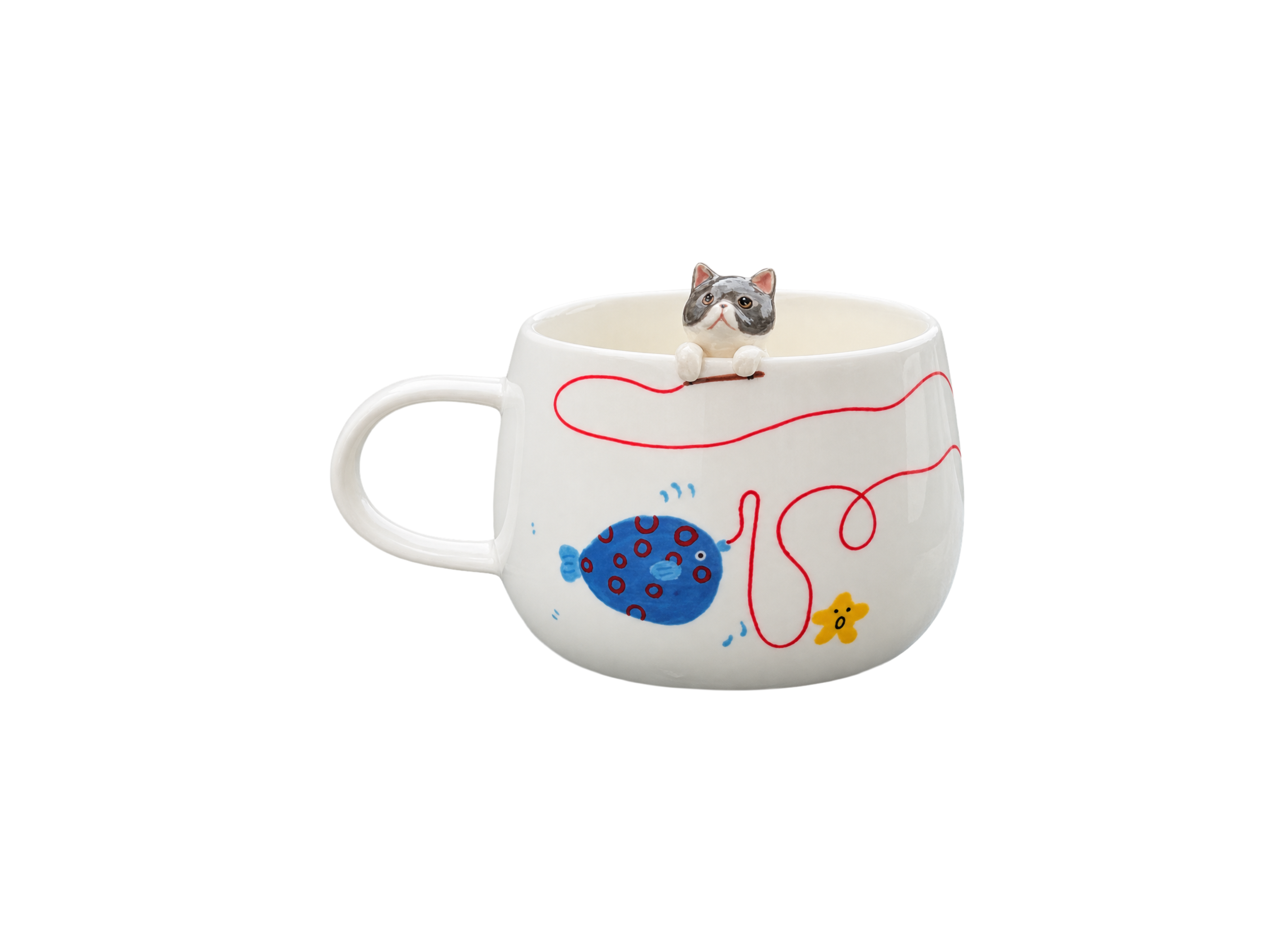
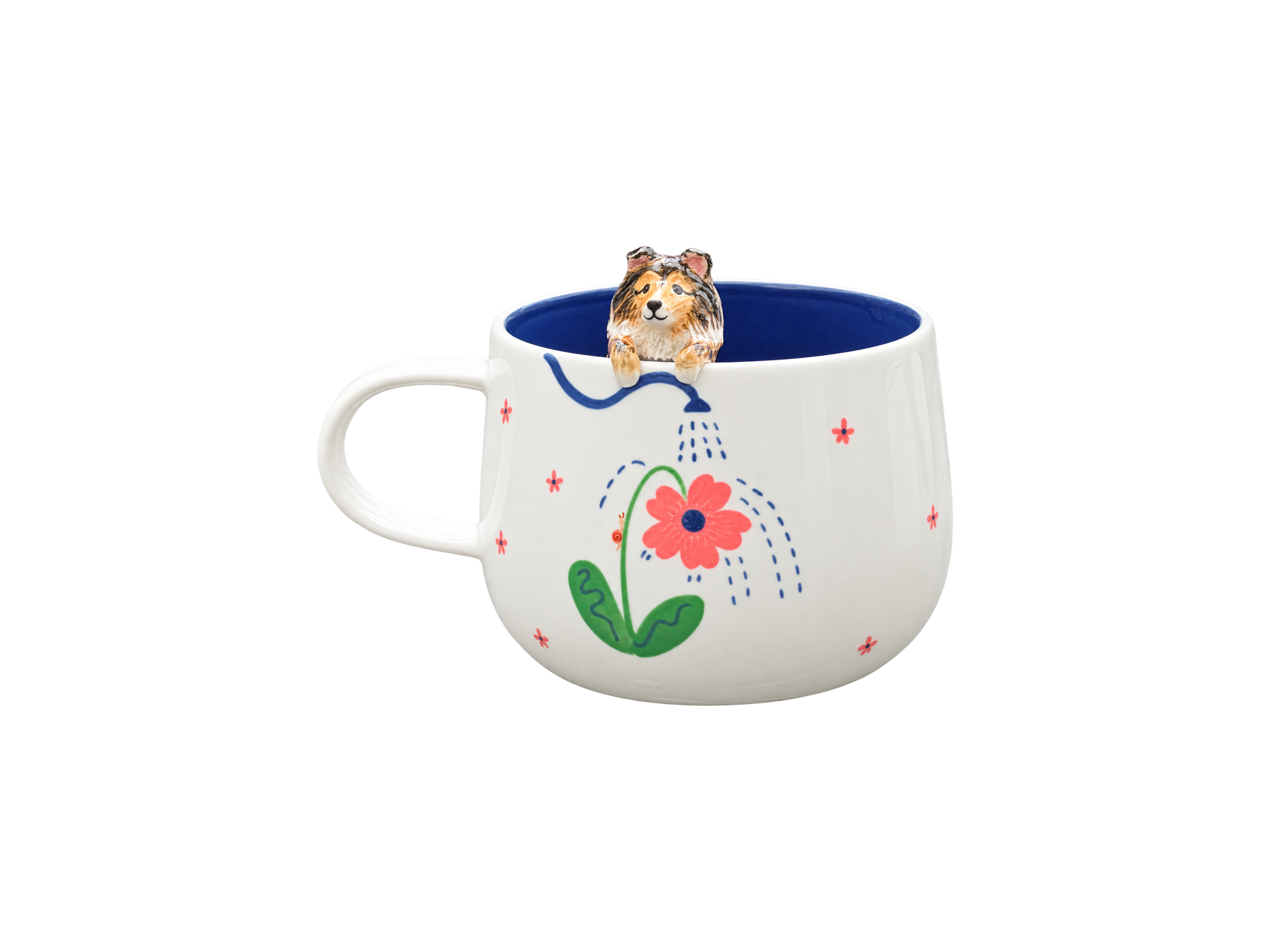
For a custom mug, first choose a clear, bright photo that accurately reflects your pet's usual appearance. Its gaze, the shape of its face, the color of its coat, and its distinctive markings should be easy to observe. A main front or three-quarter view, accompanied by a few complementary angles, is generally more useful than a single, very aesthetic but hard-to-read image.
The best photo isn't necessarily the prettiest
A photograph can be very moving without being the best reference for a custom creation. A silhouette at sunset, a nose hidden in a blanket, or a portrait taken in motion tells a lovely story, but doesn't always show the necessary details.
To create from a photograph, it must be possible to observe what makes your companion recognizable: the shape of its ears, the spacing of its eyes, the length of its snout, the distribution of its colors, or even a particular small spot.
In its photographic recommendations, Maison Scott advises clear, sufficiently bright images without strong filters. The brand also recommends several angles, particularly front and profile, as well as a full body view when the creation represents the animal's entire silhouette.
The main photo should therefore be chosen for its readability. More spontaneous photos can then be used to convey an expression, a posture, or a character trait.
The quick check before selecting a photo
| Criterion | To prefer | To avoid |
|---|---|---|
| Sharpness | Eyes, muzzle, and face outline well defined | Motion blur or focus on the background |
| Light | Soft natural light evenly distributed on the face | Backlight, very harsh shadows, or overly dark room |
| Angle | Front or three-quarter view, taken at the animal's height | Photo taken only from very high up |
| Colors | Coat close to its real color | Filters, colored lighting, or strong saturation |
| Framing | Entire head visible, including ears | Ear, muzzle, or tail cut off |
| Consistency | Photos taken during a period when its appearance was similar | Mix of very different cuts, ages, or colors without explanation |
| File | Original photograph, in the best available quality | Screenshot, thumbnail, or image saved multiple times |
1. Start with the gaze and sharpness
Before choosing a photo, enlarge it on your phone or computer. Do the eyes remain sharp? Can you distinguish the shape of the nose, the outline of the ears, and the boundaries between the different colors of the coat?
A photograph that appears sharp as a small thumbnail can reveal a lot of blur when enlarged. If the eyes are undefined or if movement has erased part of the face, keep this image as an expression reference and look for another main photo.
Nikon's photography tips for pet portraits recommend focusing on the eye and using burst mode to capture fleeting expressions. With a phone, the principle remains simple: touch the face or eye on the screen, wait for the focus to stabilize, then take several images.
You don't need a professional camera. A photo taken with a recent smartphone can be suitable if there is enough light and if the animal doesn't move too much when the shutter is pressed.
2. Choose lighting that respects true colors
The light should allow you to understand your animal's colors, not transform them.
Place it near a window, on a shaded balcony, or outdoors when the light is soft. Light coming slightly from the side generally reveals the volume of the face better than a source located directly behind it.
Avoid as much as possible:
- backlighting that plunges the face into shadow;
- direct flash;
- very yellow, pink, or blue light bulbs;
- filters that lighten the eyes or alter the coat;
- areas where one part of the face is in sunlight and the other in deep shadow.
Nikon's guide to pet photography particularly favors bright shade, which produces soft, reflected light on the face. The RSPCA also recommends natural light and advises against sudden and intense light that could discomfort the animal.
This precaution is particularly important for a black cat, a very dark dog, or an animal with a white coat. In the first case, details must be preserved in the dark areas. In the second, the light parts must not become entirely white and without texture.
3. Get down to the animal's level
A photo taken standing up, with the phone pointed at the ground, can distort the perception of proportions: the top of the skull appears more prominent, while the muzzle, chest, and paws become less easy to observe.
For the main view, try to place the lens approximately at your animal's eye level. You will get a more natural reading of its face and expression.
A three-quarter view is often particularly informative: it simultaneously shows the gaze, the length of the muzzle, the volume of the cheeks, and the position of the ears. Then add a true front view and a profile.
Sony also advises photographing the animal at eye level, in a familiar environment, and taking multiple shots to capture a natural expression.
4. Photograph what makes it immediately recognizable
Two animals of the same breed and color are never entirely identical. For a custom creation, small details often have more value than a spectacular setting.
Check if your photos clearly show:
- eye color;
- the usual shape and position of the ears;
- spots around the nose or mouth;
- hair lines on the forehead;
- one ear lighter than the other;
- a whisker, scar, or distinctive mark;
- the color of the chest, paws, and tail;
- its usual posture.
If an important detail only appears on one side, add a photo of that side. A short note can also avoid any ambiguity: "white right ear," "black tail tip," or "left eye slightly lighter."
Not every photo needs to be perfect. The collection should simply provide consistent information.
5. Which views to send depending on the type of creation?
A mug adorned with a painted portrait and a creation including a three-dimensional figurine do not use exactly the same visual information.
| Type of representation | Recommended main view | Useful complementary views |
|---|---|---|
| Painted facial portrait | Front or three-quarter | Profile, detail of eyes, ears, and coat markings |
| Figurine centered on the head | Clear front view | Three-quarter, right profile, and left profile |
| Figurine representing the body | Three-quarter or side view | Front, back, paws, chest, tail, and color distribution |
| Multiple animals | A distinct series for each animal | A common photo to understand their relative sizes, if available |
This list is a general recommendation. To be confirmed by Maison Scott: the maximum number of files, their size, and accepted formats in the customization form.
When several animals need to appear on the same piece, clearly name the files or specify which animal corresponds to each series. This reduces the risk of confusing a color, posture, or detail.
6. Take better photos with your phone in minutes
You can prepare a reference series without organizing a real photo shoot.
A simple seven-step method
- Choose a time when your animal is calm and available.
- Set up in a familiar place, near a window or in bright shade.
- Quickly clean the phone lens.
- Get down to its eye level.
- Touch its eye or face on the screen to check the focus.
- Take several photos in a row rather than waiting for a perfect pose.
- Immediately check the images by enlarging them.
A familiar toy or a slight noise placed near the lens can briefly attract its gaze. However, don't insist if it turns its head away, moves away, or seems uncomfortable. A relaxed expression will be more true to its personality than a pose obtained under duress.
After the session, keep the original files. Avoid only submitting a screenshot or a photo downloaded from social media. On iPhone, Apple explains how to share the original file and its data. Regardless of the device used, select the best quality offered by the submission form.
7. Can an old or imperfect photo be used?
Yes, especially when it is the only image that preserves an important expression or memory. The main photo should then be distinguished from complementary references.
Choose as the main image the photograph that best shows the face, even if it is less moving. Then add old images that express its personality, posture, or a peculiarity absent from the first.
If your companion is no longer with you and you cannot take new photos, gather everything that can help:
- a clear image of the face;
- a profile view;
- an outdoor photograph that better shows its colors;
- a view of the body or tail;
- a note describing details that the photos do not show well.
Avoid artificially reconstructing part of the face with an AI tool. A generated image can invent a texture, symmetry, or color that did not belong to your animal. An imperfect but authentic photo, accompanied by explanations, remains a more honest reference.
8. The most frequent errors
Only sending a heavily cropped photo
It may show the eyes but hide the ears, neck, or silhouette.
Using an aesthetic filter
Filters can change eye color, smooth the coat, or alter contrasts.
Choosing an image taken from a great distance
Even with a beautiful background, the face may contain too few details.
Mixing very different periods
A summer cut, a winter coat, and a photo from youth can provide contradictory information. Specify which period should serve as a reference.
Hiding part of the face
A toy, a hand, a blanket, or another animal can mask an important feature.
Sending several almost identical shots
Three complementary angles are generally more informative than ten images taken from exactly the same position.
Looking for a "perfect" photograph
The goal is not to create a studio portrait. It is about conveying enough information to recognize your companion while respecting their natural appearance.
Before uploading your photos: the final checklist
Check that:
- at least one photo clearly shows both eyes and the face;
- the colors appear natural;
- the ears and muzzle are not cut off;
- a profile view is available;
- distinctive markings are visible;
- a body view accompanies any request for a complete figurine;
- the files correspond to the same animal and the desired appearance;
- the original images were selected rather than their screenshots.
Maison Scott creates an artisanal interpretation, not a mechanical photographic reproduction. The À la pêche! product sheet specifies that the artist retains the most recognizable features while integrating them into an illustrated, non-photorealistic style. The photos therefore serve to understand your animal, then to translate its presence into the universe of the chosen collection.
To discover more about this work, you can read how a Maison Scott custom creation is born or observe the different interpretations presented in the Maison Scott Gallery.
A photograph doesn't have to be perfect to faithfully represent your companion. It simply needs to show what you already know by heart: its gaze, its colors, and those little details that belong only to it.
Useful FAQs
Is a smartphone enough to take a reference photo?
Yes. Sufficient light, correct focus on the eyes, and complete framing are more important than using a professional camera.
How many photos should I send?
Maison Scott recommends several angles. A main view, a profile, and one or two images showing specific features form a useful basis. The maximum number accepted by the form remains to be confirmed.
Can I send only one photo?
Yes, if it is clear and complete, but complementary views reduce ambiguities regarding the profile, ears, tail, or coat markings.
How do I photograph a black dog or cat?
Use soft natural light directed towards its face, avoid backlighting, and ensure that the eyes and coat texture remain visible.
Can I use old photos of a deceased animal?
Yes. Select the most accurate files, add several angles if you have them, and describe characteristics that the photographs do not show well.