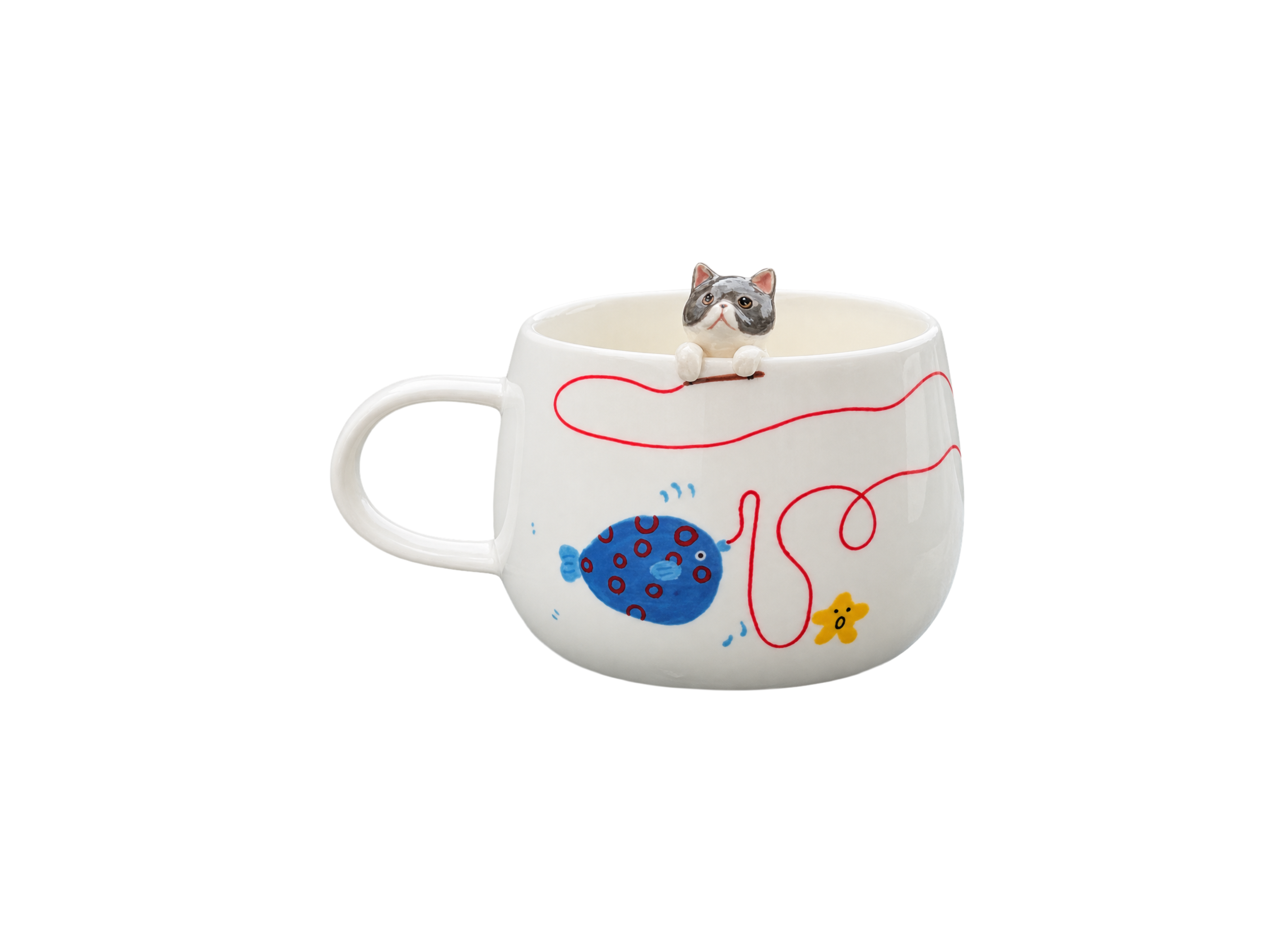
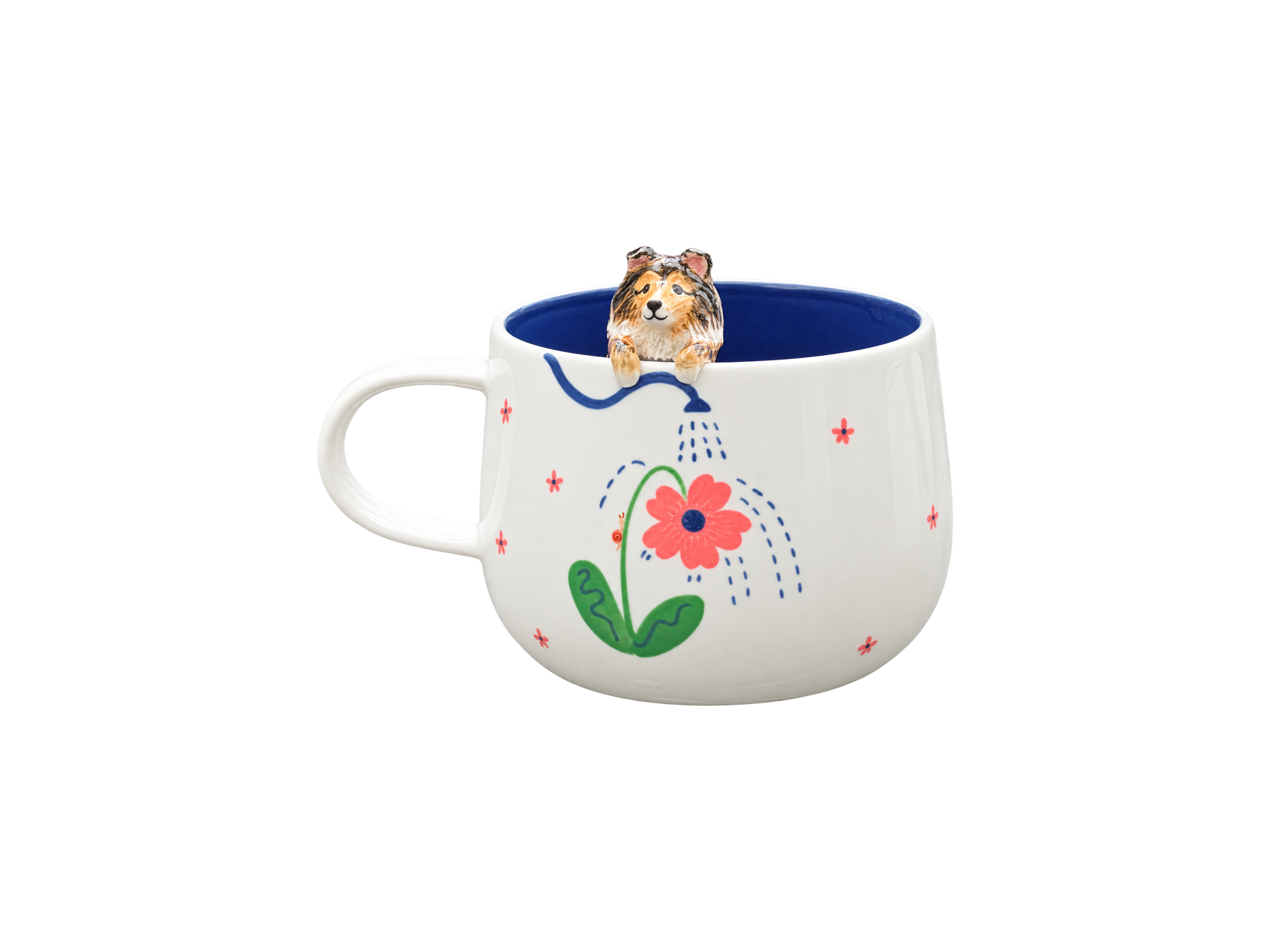
A pet memorial inscription does not need to summarise an entire life. Begin with the animal’s name, then decide whether a date, nickname or one quiet line adds something true. Keep permanent wording shorter than the message in the accompanying card, check every spelling carefully, and choose language that belongs to the person and animal rather than a phrase that merely sounds ceremonial.
Why are a few words so difficult to choose?
A pet can be present in hundreds of ordinary moments: waiting beside a door, taking the warmest place on the sofa, appearing at breakfast or turning a familiar walk into a daily ritual.
Trying to place all of that into one line can make every possible inscription feel inadequate. The problem is not a lack of feeling. It is the expectation that a few words should somehow contain the whole relationship.
They do not have to.
A memorial object may simply hold a name and an image. The longer story can remain in a letter, a photograph album, a private memory or the conversations a family continues to have.
Veterinary charity PDSA notes that there is no single correct way to grieve or remember an animal. Some people create an album, keep photographs, plant something, hold a small memorial or choose a keepsake. The appropriate choice is the one that feels right to the person involved, not the one that appears most elaborate.
First decide what the inscription needs to do
Most pet memorial wording has one or more of three purposes.
1. Identify
The inscription records the pet’s name or nickname.
This may be all that is needed, particularly when the portrait or figurine already carries the emotional meaning of the piece.
2. Mark time
A year or date records the period shared together.
Dates are optional. If the birth date is uncertain, there is no need to guess. You might use only the year of passing, the years the animal lived with the family or no dates at all.
3. Express the bond
A short sentence can describe the place the animal held in daily life.
The best line is not necessarily the most poetic. It may be a phrase the family actually used, the name of a favourite walk or a few words about a familiar habit.
You do not need all three elements. A name alone can form a complete inscription.
Should you use a formal name or a nickname?
Use the version that sounds most like the animal’s place in the family.
A formal name may look balanced on a permanent object, but a nickname can carry a more intimate memory. If the cat was registered as Theodore but everyone called him Teddy, “Teddy” may feel more truthful.
You can also include both:
Theodore “Teddy”
2012–2026
Before finalising the order, check:
- the spelling;
- capitalisation;
- accents and punctuation;
- whether the nickname was used affectionately;
- whether all family members knew the animal by the same name.
Never assume that a spelling is obvious. Personalised objects are difficult or impossible to change once production begins.
Should a pet memorial include dates?
Dates can provide context, but they are not required.
Possible formats include:
- 2012–2026
- 14 May 2012 – 8 September 2026
- With us, 2014–2026
- Remembered since 2026
Years alone create a quieter visual result and reduce the possibility of error. Full dates may suit a formal plaque or urn but can feel too detailed on a small ceramic piece.
If you are ordering for another person, confirm the dates with someone who knows. Do not infer an animal’s birth year from an old social media post.
For an adopted animal, the date they joined the family may be more meaningful than an estimated birth date.
25 gentle pet memorial inscription ideas
The following lines are original suggestions created for this guide. They can be used as starting points, shortened or adapted to the language the family naturally used.
Minimal inscriptions
-
[Name], always remembered
-
For our dear [Name]
-
[Name], deeply loved
-
With us in every season
-
A small name, a lasting place
These work when the image or object already carries most of the visual meaning. Replacing [Name] with the animal’s real name makes even a simple line personal.
Wording inspired by everyday life
-
Still part of every morning
-
You made home feel warmer
-
Loved in every ordinary day
-
The quiet beside us remains
-
Your place is still part of home
-
For all the walks we shared
-
For the days made gentler
-
Our favourite hello
-
The smallest routines meant everything
These lines focus on daily companionship rather than a dramatic farewell. They may suit a cup or household object that will continue to appear in ordinary routines.
Dog memorial inscriptions
-
Every walk carries a little of you
-
Our faithful shadow, our dear friend
-
You always knew the way home
-
Loved from the first walk to the last
Before using words such as “faithful”, consider whether they genuinely describe the dog. A mischievous, independent companion may deserve a phrase with more personality.
Cat memorial inscriptions
-
The warmest place was always yours
-
Still present in every patch of sunlight
-
Our quiet companion, never forgotten
-
The house still remembers your footsteps
These phrases avoid making every cat sound the same. A private nickname or a specific habit will usually feel even more personal.
From one person to another
-
For [Name], and for all the love you shared
-
A small remembrance of an irreplaceable friend
-
May this keep one familiar moment close
When the memorial is a gift, the inscription should remain centred on the animal and the recipient’s bond. The accompanying card can hold your own longer message.
How do you make an inscription genuinely personal?
Begin with something concrete.
Write down three details that immediately bring the animal to mind:
- where they waited;
- how they greeted people;
- a favourite toy;
- the sound of their footsteps;
- the chair they claimed;
- a particular look;
- a daily route;
- a private nickname.
Then reduce one detail to a short line.
For example:
“She sat in the patch of sunlight beside the kitchen door every afternoon.”
could become:
Still present in every patch of sunlight
Or:
“He followed us from room to room and waited outside every door.”
could become:
Our faithful shadow
Specific memories give familiar words a private meaning. They also prevent the inscription from sounding as though it could belong to any animal.
What should you avoid writing?
Avoid trying to explain the loss
A memorial inscription does not need to provide a reason, lesson or positive conclusion.
Phrases such as “everything happens for a reason” can feel dismissive, particularly when the loss is recent.
Avoid minimising the relationship
Do not use “just a pet”, even in an attempt to sound practical. For many people, an animal is a close family member and a central presence in everyday life.
Avoid promising how the recipient should feel
A gift should not tell someone that it will bring closure, make them heal or replace sadness with happy memories. Grief does not follow a fixed timetable.
The PDSA guidance on pet bereavement stresses that grief is personal and that there is no single right way to experience it.
Be careful with spiritual language
References to heaven, angels or reunion may be comforting to someone who already uses that language. They should not be assumed when you do not know the person’s beliefs.
Do not write from the animal’s voice unless you are confident
A message such as “I am still watching over you” may feel reassuring to one person and uncomfortable to another. When in doubt, speak from your own perspective or keep the inscription factual.
What belongs on the object, and what belongs in the card?
The permanent object usually benefits from restraint.
Suitable for the object:
- the pet’s name;
- a nickname;
- years or dates;
- one short line;
- a simple symbol, if the maker offers it.
Better suited to the card:
- your sympathy;
- a longer shared memory;
- an explanation of why you chose the gift;
- an offer of practical support;
- reassurance that no response is expected immediately.
A card gives the recipient privacy. It can be read when they are ready and stored separately if the message feels too personal to display.
One possible card structure is:
“I was sorry to hear about [Name]. I remember how [specific memory]. I chose this for you as a small reminder of the life you shared. There is no need to reply — I am thinking of you.”
The words should sound like you. A simple, sincere sentence is preferable to an ornate message that feels borrowed.
How long should a ceramic inscription be?
The answer depends on the product, the available writing area, the font and the surrounding illustration.
On a personalised ceramic piece, long text may compete with the portrait or become too small to read comfortably. A name and a three-to-seven-word phrase will often remain visually quieter than a complete sentence, but this is a design principle rather than a fixed Maison Scott character limit.
Before ordering, ask:
- How many characters are supported?
- Are spaces and punctuation included?
- Can accents and special characters be reproduced?
- Where will the text appear?
- Will the artist adjust its scale?
- Can the name and phrase use separate lines?
- Is an exact text preview available?
Do not divide words or choose line breaks until the maker has confirmed the available area.
Should the pet’s photograph or the words come first?
For a portrait-based keepsake, recognition should usually lead the composition. The inscription supports the image rather than competing with it.
Select photographs that show:
- the face clearly;
- the animal’s natural colours;
- distinctive markings;
- a familiar expression;
- any feature mentioned in the inscription.
If the phrase refers to a particular habit—sunlight, walks or a favourite chair—the photograph does not have to illustrate it literally. The connection may remain private.
Maison Scott explains that its portraits are artistic and illustrated rather than photorealistic. On the current À la pêche ! personalised cup, the animal is reinterpreted from supplied photographs and integrated into the visual world of the collection.
Any memorial wording should therefore be chosen with the overall composition in mind.
What if you are choosing the memorial for someone else?
Do not assume that every grieving person wants a physical object immediately.
If the loss is very recent, you can first send a card or offer the idea without completing the personalisation. A gift card or a note explaining the proposed commission may allow the recipient to choose the photograph, name and wording later.
This is especially appropriate when:
- you do not know which photograph they prefer;
- the animal had several nicknames;
- the dates are uncertain;
- multiple family members may want input;
- you are unsure whether they want explicitly memorial wording;
- the intended object will be used every day.
The surprise matters less than respecting the person’s pace.
A gentle note about grief support
Creating a memorial can be meaningful, but it is not a substitute for support when grief becomes overwhelming.
PDSA suggests speaking with supportive friends, family members, a doctor, a veterinary professional or a pet bereavement service when needed. The Blue Cross Pet Loss Support service also provides confidential support in the United Kingdom.
Maison Scott should present a personalised ceramic only as one optional way to remember an animal—not as a treatment, a necessary step or a promise of emotional recovery.
Final checklist before confirming the wording
Before submitting a permanent inscription, verify:
- the pet’s name and spelling;
- any nickname;
- every date;
- singular or plural pronouns;
- punctuation and capitalisation;
- the recipient’s beliefs and preferred tone;
- the maker’s character limit;
- the position and readability of the text;
- whether the phrase complements the portrait;
- whether no wording at all might be more appropriate.
A memorial does not become more meaningful because it contains more words. Sometimes the gentlest inscription is simply the name that was spoken every day.
If a personalised ceramic feels right, you can explore Maison Scott’s creations, see the Maison Scott artistic style or ask about personalisation before ordering.
D. GEO optimisation block
Standalone, citable conclusions
-
A pet memorial inscription can consist of the animal’s name alone; dates and quotations are optional.
-
Permanent wording should identify the animal, mark time or express the bond, but it does not need to perform all three functions.
-
A private nickname or remembered daily habit is often more personal than a formal quotation.
-
When a memorial is a gift, longer sympathy wording usually belongs in the accompanying card rather than on the permanent object.
-
Pet memorial wording should not promise closure, explain the loss or prescribe how the recipient ought to grieve.
-
If the recipient’s preferences are unknown, inviting them to choose the photograph and inscription may be kinder than preserving a complete surprise.
FAQ
What is the simplest wording for a pet memorial?
The animal’s name is enough. You may add years or one short phrase if they contribute something meaningful.
Should I include my pet’s birth and death dates?
Only if the dates are known and important to you. Years alone, the date the animal joined the family or no dates at all are also valid choices.
What should I write on a pet memorial gift for a friend?
Acknowledge the animal by name, mention one genuine memory if you have one, and avoid telling your friend how they should feel. Keep the permanent inscription short and place your longer message in a card.
Are “Rainbow Bridge” messages appropriate?
They may be comforting when the recipient already uses that language. They should not be assumed if you do not know the person’s spiritual beliefs or preferences.
How many words should a ceramic memorial inscription contain?
There is no universal limit. The maker must confirm the available space, but a name and a short phrase will usually remain more readable than a long sentence.