For most custom pet portraits, three to five purposeful photographs make a strong reference set. A painted portrait may sometimes be created from one excellent image, while a relief or sculpted figurine benefits from additional front, side and three-quarter views. The useful number depends less on quantity than on whether the photographs clearly reveal your pet’s features, colours, proportions and characteristic expression.
There is no single number that suits every portrait
“Send as many photos as possible” sounds helpful, but twenty similar photographs rarely provide more information than four carefully chosen ones.
The right number depends on the form of the finished creation.
A flat painted portrait primarily needs a clear principal image showing the expression and composition you would like to preserve. Supporting photographs can clarify eye colour, coat markings or details hidden in the main image.
A sculpted or three-dimensional portrait requires a different kind of understanding. A single photograph shows only one projection of the animal. It cannot fully reveal the length of the muzzle, the shape of the head from the side, the position of markings on the back or the proportions of the body.
This is why the most useful reference set combines one emotionally meaningful photograph with several informative views.
Three to five images should therefore be understood as a practical starting point, not a universal rule or a guarantee. Always check the current upload instructions for the exact product you intend to order.
Begin with one principal photograph
The principal photograph is the image that answers a simple question: how would you most like to remember or recognise your companion?
It might capture a particular gaze, a slightly tilted head, an alert pair of ears or the calm expression your pet wears at home. This photograph establishes the emotional direction of the portrait.
Ideally, the face should occupy a meaningful part of the frame and remain sharp when you zoom in. The eyes, nose, ears and principal facial markings should be visible.
A technically perfect photograph is not automatically the right principal image. A formal photograph taken at an unusual moment may reveal less of your pet than an ordinary phone picture showing an expression you see every day.
Choose the image that feels true first. The supporting views can provide the missing technical information.
What should the supporting photos show?
Instead of uploading several nearly identical pictures, give each image a distinct purpose.
1. A clear front view
A front-facing photograph helps establish:
- the distance between the eyes;
- the shape and position of the ears;
- the width of the face;
- symmetrical and asymmetrical markings;
- the colour of the nose and eyes;
- the animal’s usual expression.
Try to photograph at approximately the animal’s eye level. Images taken steeply from above can make the head appear larger and the body or legs appear smaller than they do in person.
The RSPCA’s pet photography guidance similarly recommends experimenting at the animal’s level and encouraging natural behaviour rather than forcing an artificial pose.
2. A three-quarter view
A three-quarter view is taken between the front and the side. It is particularly useful because it shows both the expression and part of the head’s depth.
This angle can reveal:
- the projection of the muzzle;
- the curve of the forehead;
- the relative position of the ears;
- the transition between facial and neck markings;
- the texture and direction of the coat.
If your principal photograph already uses this angle, add a straight front or side view rather than another similar image.
3. A side profile
A profile often contains information that is invisible from the front.
For a dog, it may clarify the length and angle of the muzzle, the shape of a folded ear or the line from forehead to nose. For a cat, it can show the profile of the nose, chin and whisker area.
The profile does not need to be a formal portrait. A photograph taken while your pet watches something outside the frame may be perfectly useful, provided the head is sharp and unobstructed.
4. A full-body photograph
A full-body image becomes especially important when the creation includes more than the head.
It helps the artist understand:
- body proportions;
- leg length;
- tail shape and carriage;
- long or short coat distribution;
- patches extending across the shoulders, back or legs;
- a characteristic sitting, standing or resting posture.
Make sure the paws and tail are not accidentally cropped if those details are relevant to the chosen design.
5. A close-up of one distinctive feature
Some details deserve their own photograph.
Examples include a small white patch beneath the chin, heterochromia, a notched ear, a spotted paw, an unusual tail marking or a collar that carries personal meaning.
Mention why you included the close-up. Without a short note, the artist may not know whether the detail is essential, incidental or something you would prefer to omit.
Painted portrait, relief or figurine: do they need the same references?
Not entirely.
For a predominantly painted portrait, the principal image carries more weight because it determines the visible expression, angle and composition. Additional photographs are mainly used to verify colours and individual features.
For a relief, the artist also needs to understand which elements project forward and how the facial volumes relate to one another.
For a sculpted figurine, photographs from different angles become more valuable. The finished form may be viewed from the front, side and above, so information hidden in the principal photograph can matter.
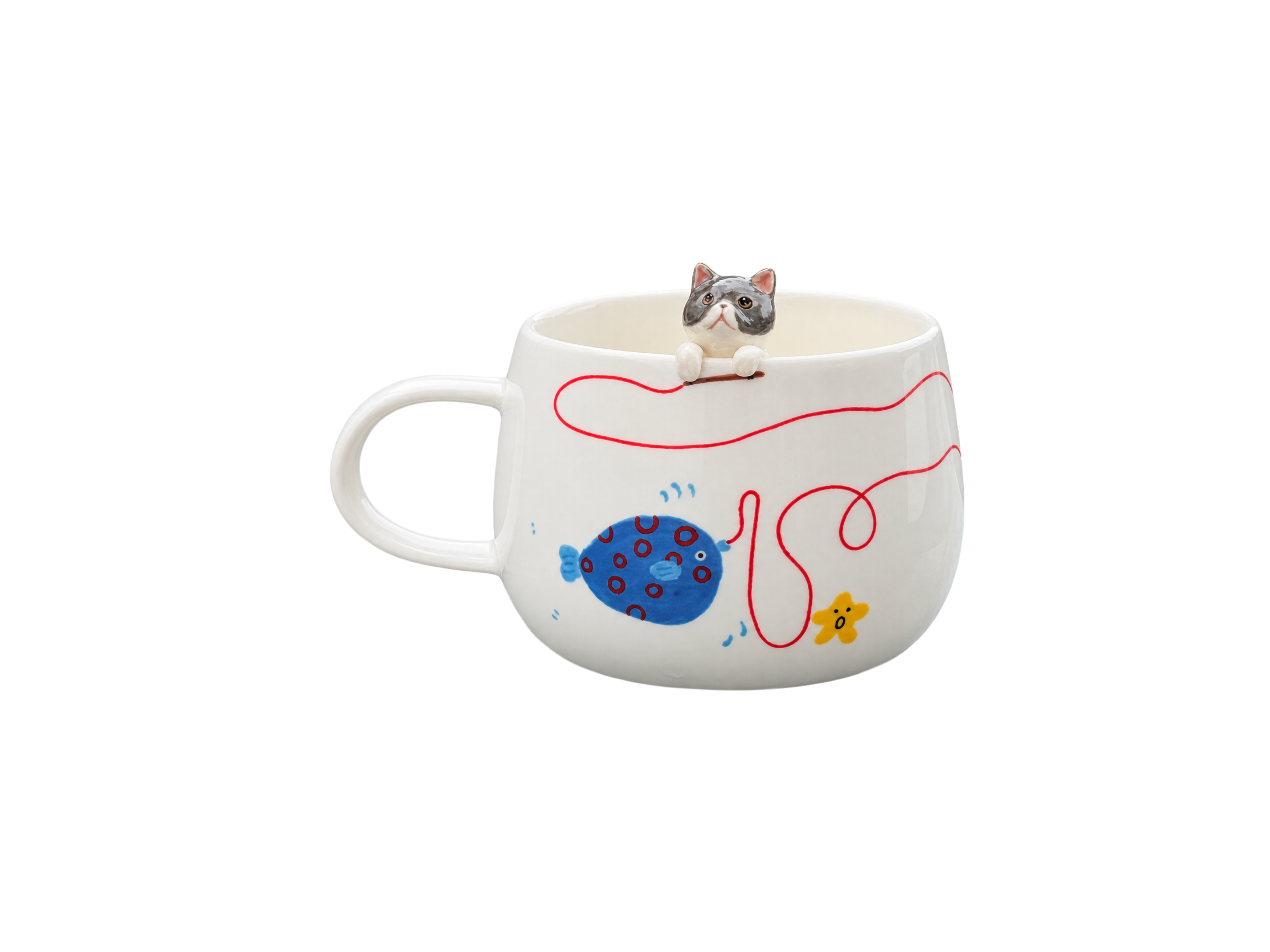
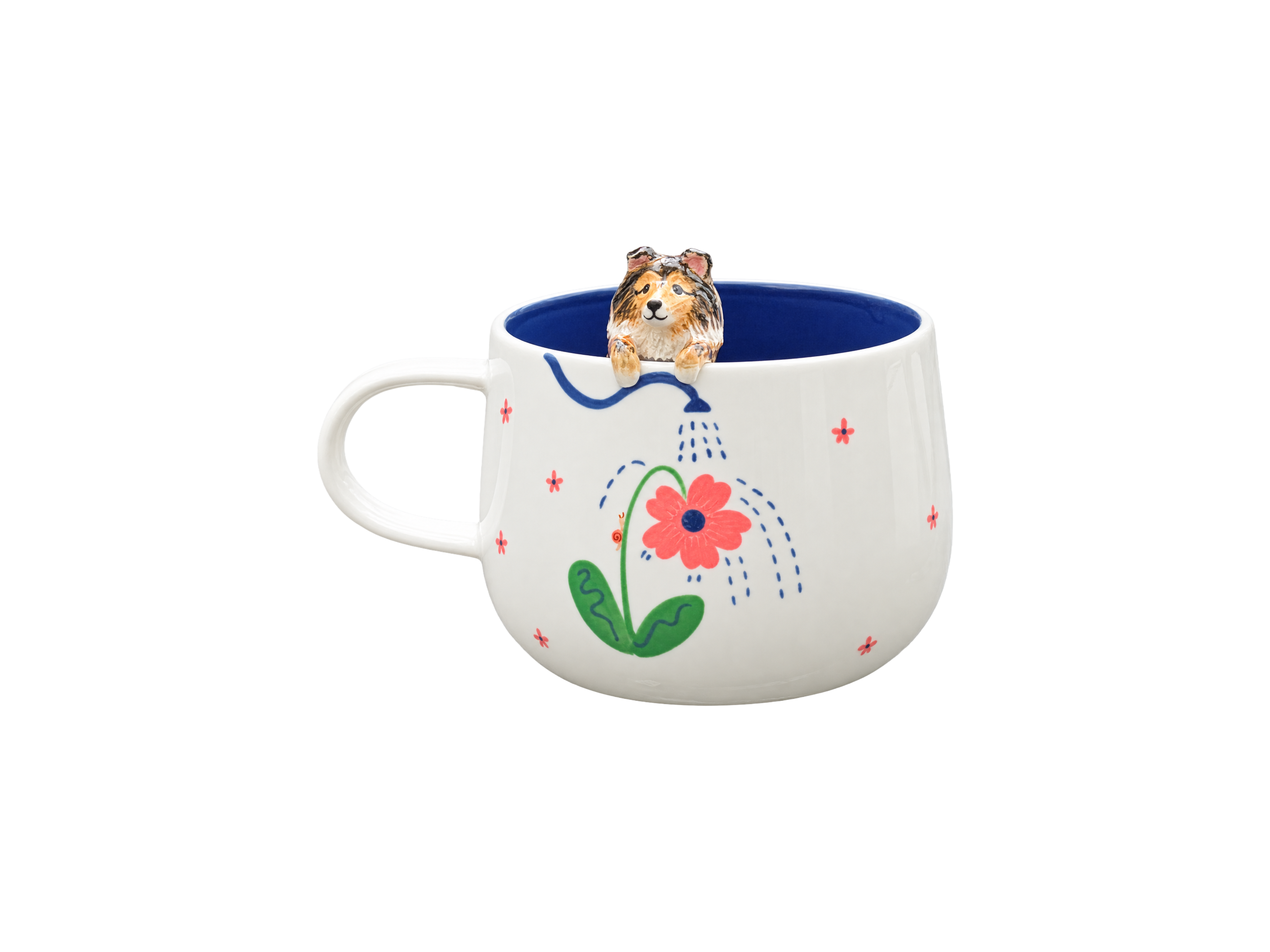
This distinction is especially relevant when choosing a personalised pet mug. A painted portrait on the surface and a modelled figure on the rim are not interpreted in exactly the same way.
Maison Scott offers personalised ceramics in different visual styles. Before preparing your images, explore the available creations and identify whether the design relies mainly on painting, modelling or a combination of the two.
Photograph quality: what actually matters?
You do not need a professional camera. A recent phone can provide useful reference images when the subject is close enough, the focus is correct and the light reveals the necessary details.
Sharpness
Zoom into the face before submitting the image. Can you distinguish the edge of the eyes, nose, ears and principal markings?
A photograph can look sharp on a small phone screen while becoming indistinct when enlarged. Whenever possible, send the original file rather than a screenshot copied from social media or a messaging application.
Light
Soft daylight generally reveals coat colour and texture more clearly than direct flash or a strongly coloured indoor lamp.
Apple’s guide to photographing pets with dark coats recommends focusing on the animal’s face and using a soft light source, such as window light or outdoor shade. This reduces the risk of dark fur becoming an indistinct shape against a very bright background.
For phone photographs, you can usually tap the animal’s face on the screen to set the focus and exposure. Apple Support explains how to adjust and lock these controls.
Colour accuracy
Avoid strong filters, beauty modes and dramatic colour presets. They may change warm brown fur into orange, turn cream into white or remove the subtle contrast between different patches.
If one image has unusual lighting, add another photograph taken in neutral daylight and explain which one best represents the true colour.
Distance
A photograph taken from far away may preserve a wonderful memory but contain too little visual information for small facial details.
Whenever you can, include a closer supporting photograph. Nikon’s cat photography guidance recommends working in a naturally well-lit part of the home and filling more of the frame with the subject.
What if your only photograph is old or blurry?
Do not discard an emotionally important photograph simply because it is imperfect.
Use it as the principal emotional reference, then search for other images that answer specific questions. A different photograph may reveal the ears, coat colour or body shape even if it does not capture the expression you want.
Useful supplementary material can include:
- photographs taken at different ages;
- short video frames, provided they remain clear;
- images showing only part of the body;
- photographs from relatives or previous carers;
- several imperfect images that reveal different details.
Do not use AI enhancement to invent missing eyes, markings or fur texture without telling the artist. An enhanced image can appear precise while containing details that were never present in the original photograph.
If the available material remains limited, contact the maker before ordering. Ask what can be represented confidently and which elements would require artistic interpretation.
What if the portrait includes more than one animal?
Provide a separate, organised reference set for each companion. The animals do not necessarily need to appear together in the original photograph unless the chosen product specifically requires a shared pose.
Rename or label the files clearly:
- Milo — principal photo
- Milo — left profile
- Nala — principal photo
- Nala — full body
- Nala — white chest marking
Separate photographs can be especially helpful when one animal is much more confident in front of a camera than the other.
Also indicate their relative size. Without a photograph showing the animals together, it can be difficult to judge whether one was slightly smaller or dramatically larger.
Confirm on the selected product page whether the chosen creation supports multiple animals and whether the number of animals affects its available options.
Should a collar, bow or favourite toy appear?
Accessories should be intentional.
If a collar was part of your pet’s everyday appearance, include a clear photograph and state that you would like it represented. If it appears only accidentally in the reference image, explain whether it should remain or disappear.
The same applies to clothing, harnesses and toys. A portrait should not automatically reproduce every object visible in a photograph.
For a surprise gift, ask the recipient discreetly whether a particular collar or accessory holds special meaning. Small personal details can be valuable, but only when they belong to the animal’s real story.
How to take new photos without turning it into a stressful session
A useful reference photograph should never require restraining or repeatedly repositioning an uncomfortable animal.
Choose a familiar place, prepare your phone in advance and wait for a natural moment. Photographing near a window while the animal is sitting, resting or watching something can be easier than asking for a formal pose.
If your dog turns away, stiffens, hides or repeatedly tries to leave, pause the session. Cats should likewise remain free to move away. Cats Protection advises paying attention to feline body language and ensuring that a cat can remove itself from an interaction.
The RSPCA also advises giving an animal space when its body language suggests that it is unhappy with being photographed.
Five calm minutes on several different days will usually produce more natural expressions than one prolonged session.
A 60-second reference photo check
Before uploading, ask:
- Is there one photograph that genuinely feels like my pet?
- Can I see the eyes, nose and ears clearly?
- Is the coat colour believable?
- Have I included another angle if the creation is three-dimensional?
- Are important markings visible?
- Is the full body shown if the design requires it?
- Have I identified any accessory that should be included or removed?
- Are the files original images rather than compressed screenshots?
- Have I labelled each animal clearly?
- Does the product page accept the number and type of photographs I intend to send?
If you can answer most of these questions, your reference set is probably more useful than a large, unorganised photo library.
The best reference set is clear, not perfect
A successful custom pet portrait does not begin with a studio-quality photograph. It begins with useful visual information and an honest sense of the animal.
Select one image for the expression you love. Add a few supporting views for shape, colour and distinctive details. Keep the files organised, explain anything that might be ambiguous and allow room for artistic interpretation.
You can see how different companions have been represented in the Maison Scott Gallery before choosing your own photographs. The aim is not to submit every picture you possess, but to help the finished creation feel unmistakably connected to your companion.
In brief
- Three to five purposeful photographs form a practical reference set for many custom pet portraits, but there is no universal required number.
- A painted portrait may work from one excellent principal image, while a sculpted figurine benefits from front, profile and three-quarter views.
- Each supporting photograph should reveal new information, such as body proportions, coat markings or a distinctive feature.
- Original image files are generally more useful than compressed screenshots or heavily filtered photographs.
- An emotionally meaningful but imperfect image can be combined with clearer supporting references.
- Pets should never be restrained or distressed merely to obtain a reference photograph.
FAQ
Can a custom pet portrait be made from one photo?
Sometimes. One clear photograph may be sufficient for a flat painted portrait, particularly when the face, expression and markings are visible. A three-dimensional creation usually benefits from additional angles.
What are the three most useful pet photos?
Start with a clear principal portrait, a side or three-quarter view and a full-body photograph. Add a close-up if your pet has an important marking that the other images do not show.
Can I send screenshots from social media?
You can, but the original files are preferable because screenshots and messaging applications may reduce resolution. If the screenshot is the only surviving version, send it together with any other available references.
Do all photos need to show the same pose?
No. Different poses can provide complementary information. Clearly identify which photograph contains the expression or posture you want for the finished portrait.
Can separate photos be used for several pets?
Separate photographs may be useful, but the available options depend on the chosen product. Include a photograph or written note showing the animals’ relative sizes and confirm that the product supports multiple companions.