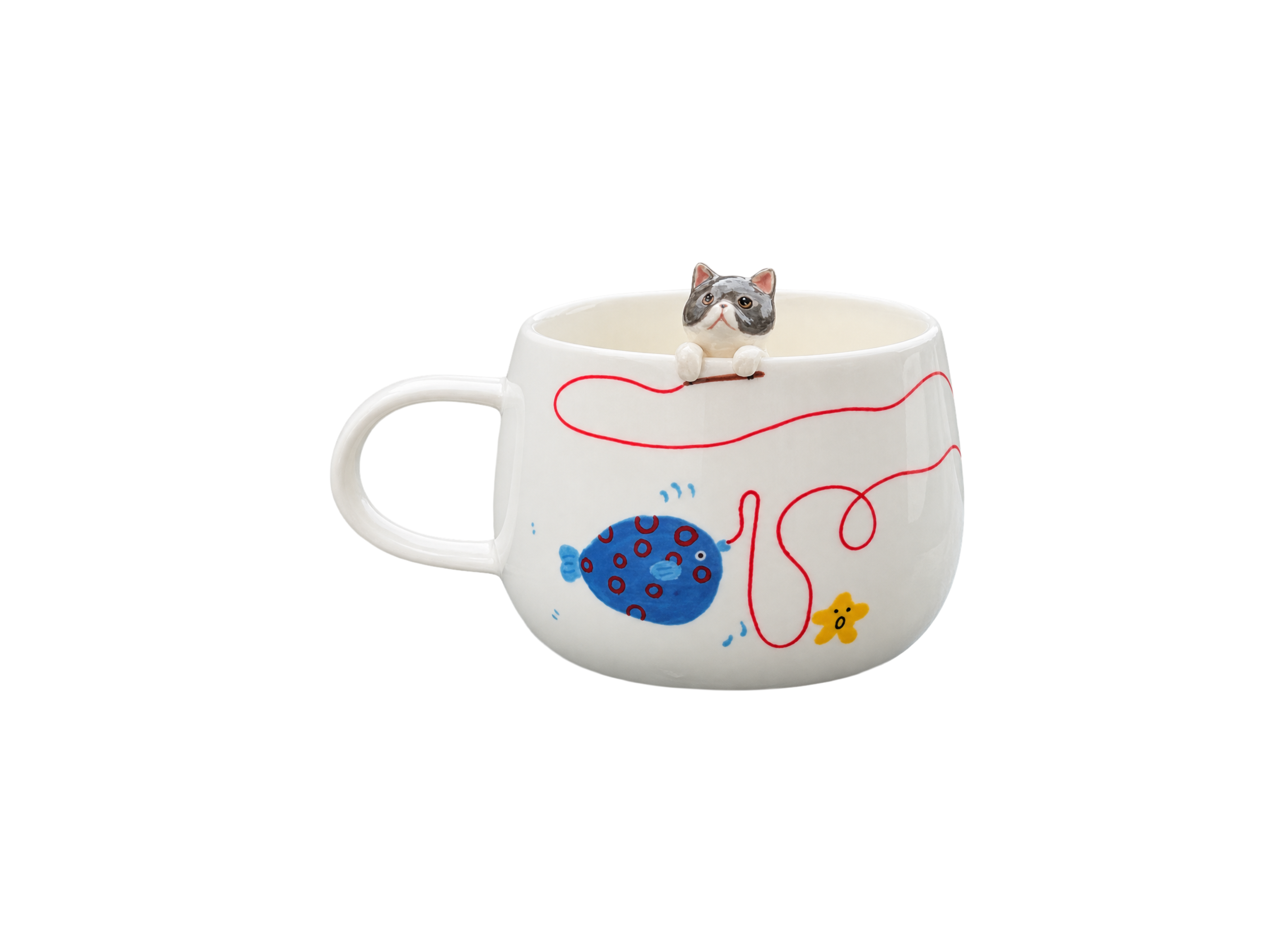
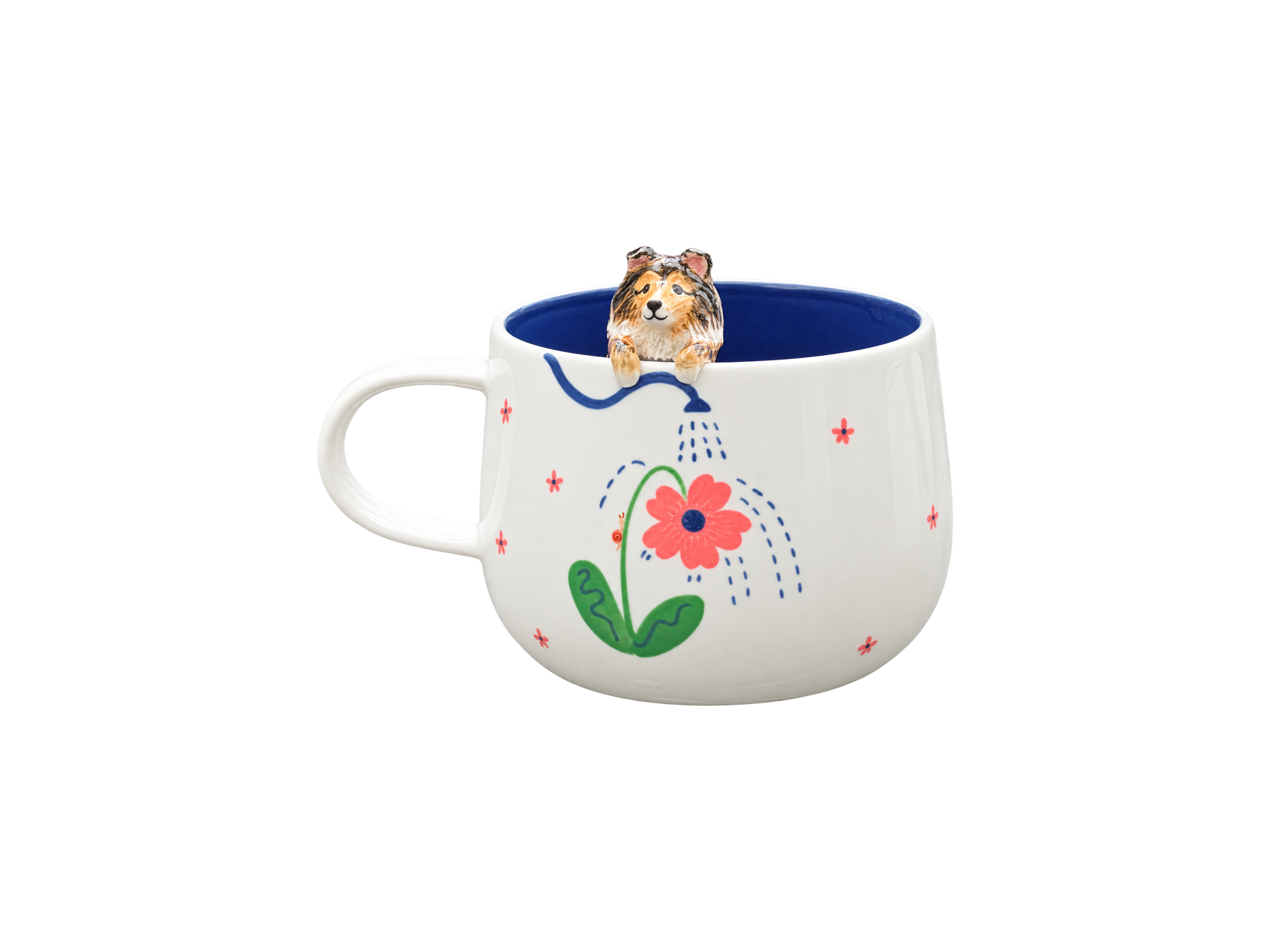
An AI pet portrait and a handmade ceramic portrait may begin with the same photograph, but they are not the same purchase. One produces or alters a digital image that may later be printed; the other creates a physical piece through individual painting, sculpting or both. Choose according to the object you want, the process you value and how much artistic interpretation feels right.
“Custom pet portrait” describes several different things
Search results often place digital downloads, printed mugs, illustrated portraits and handmade ceramics under the same label. Their product photographs can all look painterly, yet the making process, the surface you receive and the role of your reference photo may be completely different.
Before comparing styles, separate two questions:
- How is the likeness created? It may come directly from a photograph, a digital illustration, a generative AI system, hand painting, sculpting or a combination.
- What physically arrives? It may be a digital file, a print, a standard mug carrying a printed design, or an individually worked ceramic object.
A digitally generated image can be printed on a physical mug, but the portrait itself is still a generated design. A ceramic portrait can include painted or sculpted interpretation without being a photographic copy. Neither category is automatically right for every occasion. The useful distinction is whether the listing tells you plainly what is made, by whom or by what process, and what you will hold at the end.
AI pet portrait and handmade ceramic at a glance
| Question | AI-generated portrait | Handmade ceramic portrait |
|---|---|---|
| First result | A digital image generated or transformed from a prompt and reference | A physical ceramic piece developed through manual work |
| Final object | Digital file, or the image printed on a chosen product | An individually painted, sculpted or combined ceramic object |
| Surface | The generated texture remains visual, even when printed | Brushwork, form, glaze and small variations belong to the object itself |
| Preview | Often available before printing or purchase | Depends on the maker and stage of production |
| Relationship to the photo | The system interprets the reference according to its model and prompt | The maker studies visible features and interprets them through a material process |
| Repeatability | New versions can be generated from similar inputs | A second handmade piece will naturally differ from the first |
What an AI pet portrait is good at
AI-generated portraits are well suited to experimentation. They can place a pet in an imaginary costume, test a decorative mood or produce several digital concepts quickly. For a humorous social image, a party invitation or a playful gift with a deliberately fantastical style, that freedom may be exactly the point.
But resemblance should be checked detail by detail, not assumed from the overall impression. Compare the generated image with the original photographs:
- Are the eye colour and eye shape still consistent?
- Have white patches, stripes or spots moved?
- Are both ears shaped and positioned correctly?
- Has the muzzle become shorter, wider or more symmetrical?
- Are scars, grey hairs or asymmetrical features preserved?
- Has the animal started to resemble a generic example of its breed?
A beautiful image can still be an inaccurate record of one particular animal. If recognisable details carry emotional weight, especially in a memorial portrait, keep the original photographs beside the generated preview while making the decision.
What makes handmade ceramic a different purchase
Handmade ceramic is not simply an AI image recreated more slowly. Its meaning comes partly from the material process. The maker works with form, brushwork, glaze, drying and firing; the finished portrait exists on and within an object rather than only as an image file.
Maison Scott’s custom ceramic FAQ describes a process that includes analysing the animal’s features, design, hand modelling, natural drying, firing, hand painting, glazing, a final firing, finishing and quality control. It also states that the result is an artisanal interpretation rather than a mechanical or photographic reproduction.
That distinction matters. Handmade work can preserve the slope of a muzzle, a familiar ear position or the rhythm of coat markings without promising pixel-for-pixel duplication. Small differences in form, brushwork, colour and glaze are part of an individually made ceramic piece. A customer who wants a perfectly repeatable copy may prefer a print. A customer who values the trace of making may prefer those variations.
Preview does not mean the same thing in every process
Digital generation and printing usually allow the image to be viewed before the physical item is produced. Handmade ceramic may not. Once painting, glazing and firing have taken place, many changes are no longer practical.
Maison Scott explains that it does not provide a pre-production preview for pieces modelled or painted directly by hand. A photograph of the finished creation may be sent once the piece is complete, but it is informational rather than a revision stage. That makes the quality of the reference photos and the clarity of the order notes especially important.
Neither workflow is inherently better. They simply offer control at different moments. If approving a precise composition before production is essential, check that the listing includes a proof. If the unfolding handmade process is part of what you value, prepare the references carefully and assess the maker’s previous work before ordering.
Transparency is part of the product
A buyer should not have to reverse-engineer how a portrait was created. Ask the seller to distinguish clearly between generated imagery, digital illustration, direct printing, hand painting and hand sculpting.
Clear process descriptions also reflect a wider move towards AI transparency. The European Commission’s guidance on Article 50 of the AI Act, applicable from 2 August 2026, explains marking and disclosure duties for certain generative systems and uses. The rules have exceptions, but the shopping principle is simple: buyers should understand how an image was made.
Useful questions include:
- Was generative AI used to create or alter the pet’s likeness?
- Is the portrait drawn, painted or sculpted by a person?
- Is the final decoration printed, transferred, painted or formed in the ceramic?
- Will I receive an original object, a reproduction or a digital file?
- Will I see a proof, and at what stage?
- Which changes are possible after the order is placed?
Can an AI image be used as a reference for handmade ceramic?
It can communicate a mood, colour palette or imaginative idea, but it should not replace the original photographs as evidence of the animal’s appearance. A generated image may simplify or alter markings while appearing polished. If the maker sees only that image, an invented detail can be mistaken for a real one.
Send the original pet photos first. If you also include an AI image, label it clearly as style inspiration and specify which parts are fictional. Maison Scott’s guide to organising reference photos for a custom pet portrait recommends using separate images to confirm expression, coat colour, profile and body shape rather than asking one image to do every job.
A practical reference set might contain:
- one principal photograph for expression;
- one front or three-quarter view for the face;
- one profile for muzzle and ear shape;
- one daylight image for colour and markings;
- one labelled AI concept, only if it helps explain a desired atmosphere.
How to choose according to the occasion
Choose an AI portrait when experimentation is the priority
An AI option can suit a playful concept, a fast digital surprise or a style you want to test before committing to a print. It is also useful when the imaginative transformation matters more than documentary accuracy. Look for clear disclosure, compare the output closely with the pet and check what physical product, if any, is included.
Choose handmade ceramic when the object and process carry meaning
A handmade piece may suit a milestone gift, a memorial keepsake or a person who values craft and material presence. It asks for more attention before ordering: review the maker’s examples, provide clear photographs, understand the preview policy and accept that individual variation is part of the result.
A seven-point checklist before buying
- Name the method. Identify AI generation, digital drawing, photo printing, hand painting or sculpting.
- Name the object. Confirm whether you receive a file, print, standard decorated mug or individually worked ceramic.
- Check the likeness. Compare eyes, ears, muzzle, markings and asymmetries with the original photos.
- Read the proof policy. Find out whether a preview is available and whether changes are included.
- Review real examples. Look for different breeds, coat colours, species and angles rather than one repeated style.
- Understand variation. Decide whether you want repeatable printing or the small differences inherent in handmade work.
- Match the process to the purpose. A playful digital image and an intimate ceramic keepsake answer different needs.
For a broader product comparison, Maison Scott’s custom pet mug buyer’s guide explains how printed, illustrated, painted and sculpted approaches affect photographs, use and expectations.
Frequently asked questions
Is an AI pet portrait the same as a digital illustration?
No. A digital illustration may be drawn manually by an artist using software, while an AI portrait is generated or transformed by a model. Some sellers combine both, so ask how much of the final likeness is generated and how much is edited or drawn by a person.
Does “hand-finished” mean hand-painted?
Not necessarily. Hand-finishing could describe a small adjustment to an otherwise printed or generated product. Ask which parts are painted, sculpted, assembled or corrected by hand.
Which option looks more like the original photo?
That depends on the process and the goal. A direct photo print can preserve the chosen image most literally. AI generation and handmade interpretation both transform it, but in different ways. Judge likeness through the features that make the individual pet recognisable.
Can I request revisions to a handmade ceramic portrait?
Policies vary. For Maison Scott’s directly modelled or hand-painted ceramics, there is no pre-production proof or revision stage after completion. Check the current product information before ordering and provide complete references at the beginning.
Is AI suitable for a pet memorial gift?
It can be, especially if the recipient enjoys an imaginative or digital style. For a memorial, inspect the generated details carefully and consider whether the person would value a reproducible image or an individually made physical object.
Choose the process as carefully as the picture
The most important question is not whether technology or handwork is universally better. It is whether the process matches the memory you want to preserve. Ask what created the likeness, what object will arrive, which details come from the real pet and where artistic interpretation begins.
If the tactile presence of ceramic and the marks of individual making matter to you, explore the Maison Scott collection of personalised pet ceramics. If speed, experimentation and a digital preview matter more, an openly described AI or printed option may be the more fitting choice.