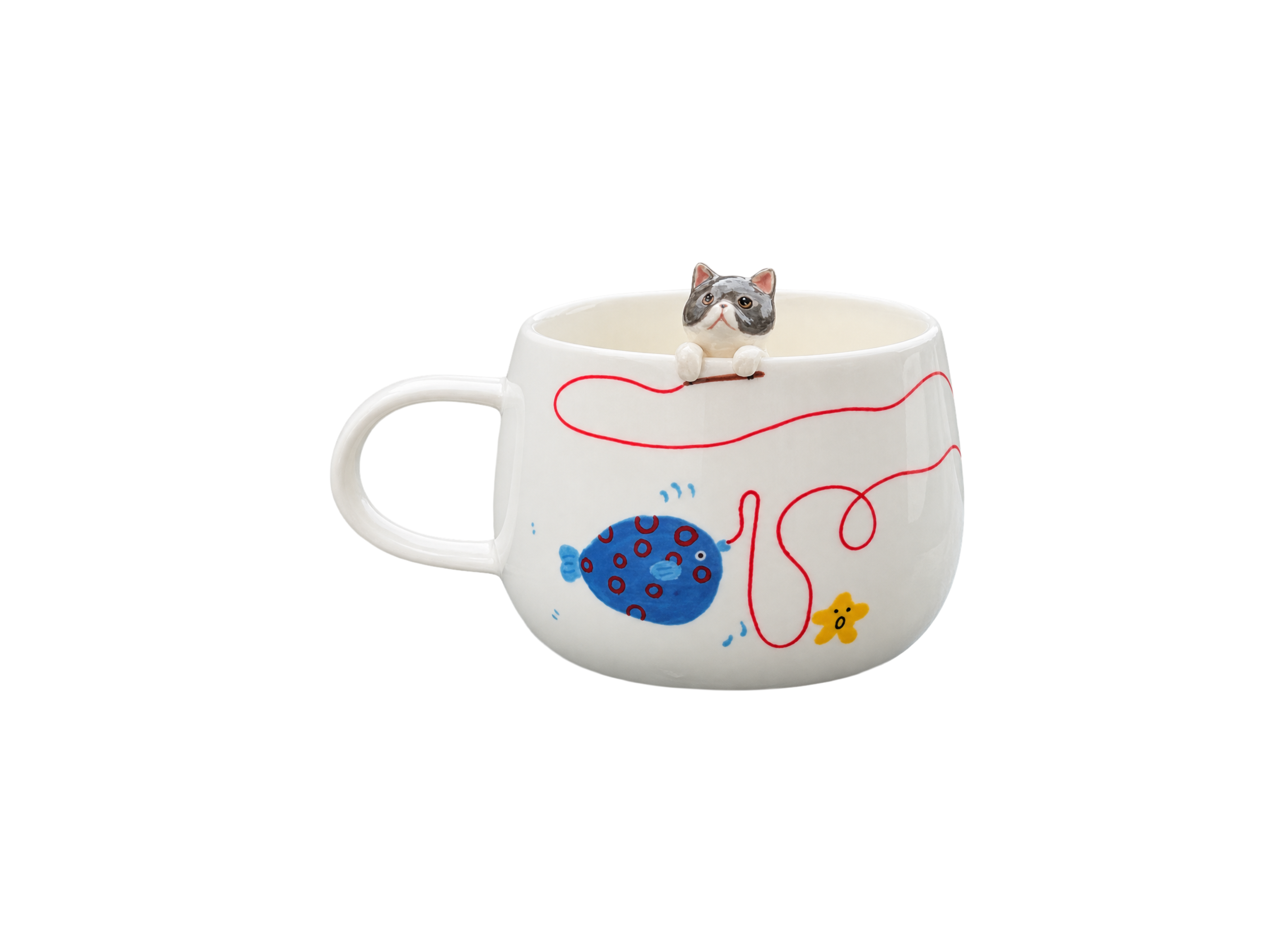
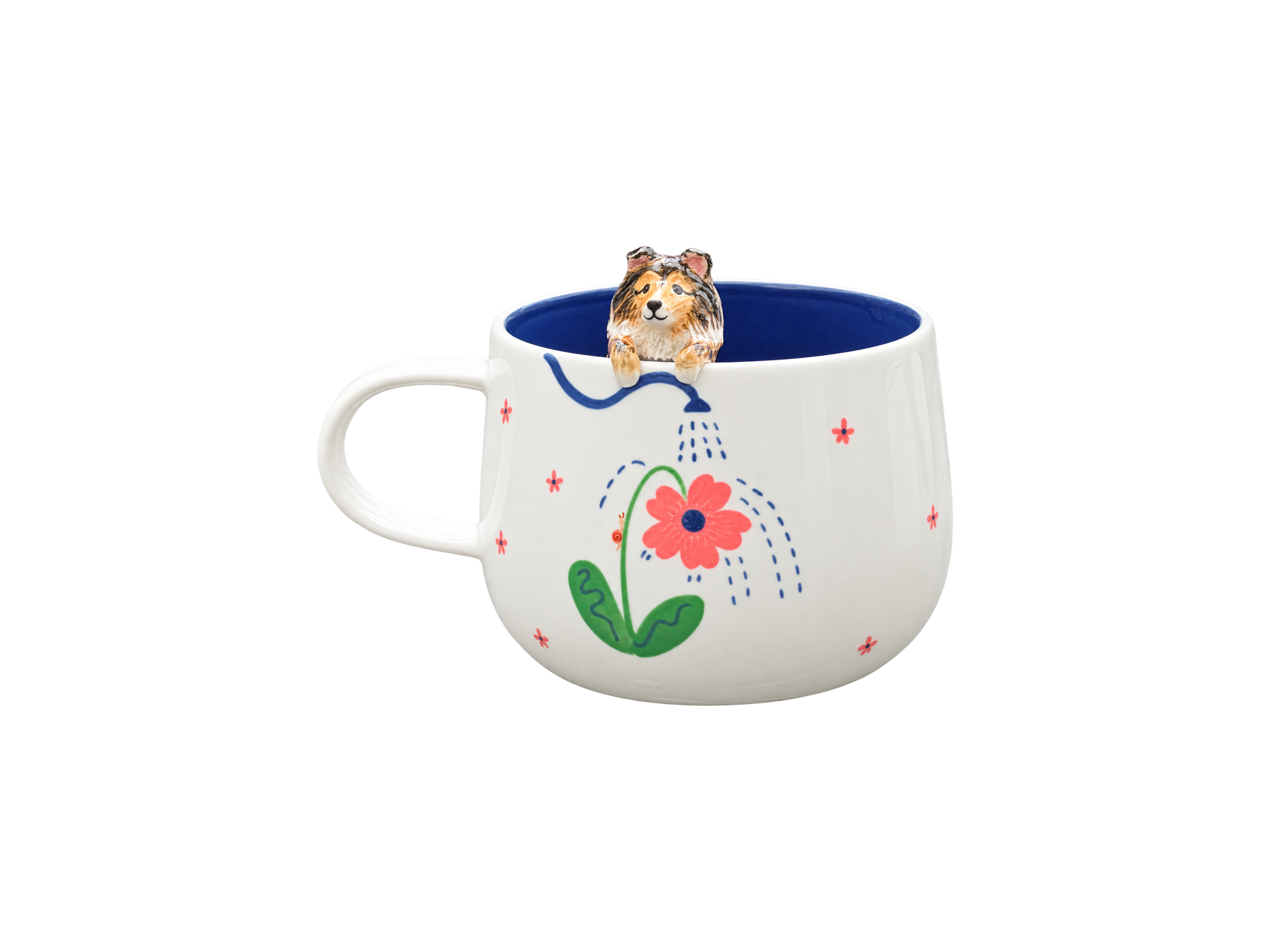
Yes, a handcrafted ceramic mug can be suitable for coffee or tea, provided the finished object is intended for that use and complies with applicable food-contact requirements. Its glossy appearance, material, or a "handmade" label is not enough to verify this. Useful indicators include the stated usage, the manufacturer's information, and the compliance of the piece including its decorations.
Food contact: what are we talking about?
A mug intended for drinking is not just an object that holds liquid. It is also a material in contact with a beverage.
In the European Union, the regulatory framework requires, among other things, that no constituents are transferred in quantities dangerous to health, and that the composition, taste, or odor of the food is not unacceptably altered. The European Commission presents these principles in its documentation on food contact materials.
To choose a mug, start with a very simple question: "Is this model actually intended for drinking coffee and tea?"
If you are looking for a piece to use every morning, say so from the start. If you only wish to display it, specify that as well. This avoids confusing decorative intent with tableware usage.
Why must you look at the finished mug?
A custom ceramic piece may combine a shape, a glaze, several colors, and a decoration. The question does not stop at the name of the clay used.
The DGCCRF technical sheet on inorganic materials concerns finished products and provides for, among other things, the verification of the migration of certain substances as well as oral contact. Therefore, the inside of the container is not the only place to consider.
For a mug adorned with a portrait or an animal figurine, ask if the compliance information covers the proposed finish, including the decoration in question.
A close-up photo helps in understanding the shape and placement of details. It does not replace the manufacturer's technical information.
This is not an invitation to be suspicious of artisanal work. It is a way of asking the right question: not "is this material considered safe?" but "is this piece, in this finish, suitable for the use I intend to make of it?"
What do the terms "lead-free" and "non-toxic" mean?
These expressions require clarification: do they describe a raw material, a glaze purchased by the studio, or the finished mug?
Regulations specific to ceramics govern, in particular, the quantities of lead and cadmium that can be released into food. The official EUR-Lex summary on ceramic objects explains this distinction between the possible presence of substances and their transfer to foodstuffs.
A claim referring to a single material, therefore, does not on its own answer all questions regarding the finished object. Ask what it covers and what elements it is based on.
Also, keep in mind the difference between "complies with an applicable limit" and "contains absolutely no trace." These two statements do not mean the same thing.
Conversely, the absence of these words on a product sheet does not allow one to conclude that the mug presents a danger. Look for a precise answer regarding its suitability for food use, rather than an accumulation of reassuring phrases.
What documents can you ask the manufacturer for?
For ceramics, French law provides for a written declaration of conformity in the marketing chain, including at the retail stage, but excludes mandatory delivery to the final consumer. The order of November 7, 1985, articles 5-1 and 5-2, also specifies that supporting documentation must be kept available for control agents.
This means that a mug does not necessarily have to arrive at your home with a laboratory report in its packaging.
You can, however, ask for written confirmation of the intended food use and question the seller about the documents that cover the model.
The declaration identifies, in particular, the manufacturer, the object concerned, its date, and compliance with the texts referred to by the order. The supporting file contains analysis results, test conditions, and the identity of the laboratory.
For your exchange with the studio, three points are particularly useful:
- Being able to link the response to the model and finish ordered.
- Knowing who to ask a question to after receipt.
- Knowing about any usage restrictions.
A generic document without a clear link to your mug deserves a request for clarification. There is no need to turn this exchange into an audit: simply seek to understand what is covered.
Is the glass and fork symbol essential?
This symbol indicates food-contact suitability, but its absence on a mug is not, by itself, proof of non-compliance. The DGCCRF points out that objects obviously intended for food contact may be exempt from this indication.
The symbol does not mean that all temperatures or all uses are authorized. Specific instructions remain important. These nuances are explained in the general DGCCRF sheet, labeling section.
In an online shop, read everything: description, usage information, notices, and the seller’s response.
In case of contradiction, ask for clarification before using the piece. Do not simply choose the phrase most favorable to your daily habit.
Food contact, dishwasher, and microwave: three different questions
Information on food contact does not constitute general permission to use all kitchen appliances. The DGCCRF distinguishes destination indications from specific instructions, which may, in particular, concern temperature and microwave use.
Here is a simple way to organize your verification:
| Desired use | Question to ask |
|---|---|
| Drinking coffee or tea | Is the finished model suitable for these drinks, and under what conditions? |
| Dishwasher safe | What are the maintenance instructions specific to this finish? |
| Microwave heating | Is this use explicitly planned for this model? |
| Displaying the piece | Is it sold as a decorative object only? |
If information is missing, do not deduce it from something else. For example, a hand-washing recommendation does not answer the question of drinking suitability.
This distinction also avoids a commercial confusion: instructions intended to preserve a decoration and safety information should not be presented as interchangeable.
What about a mug with a figurine of one's pet?
Personalization adds a concrete question: which version will you receive?
Before ordering, specify the model, the number of animals represented, and the desired decoration. Then ask if these choices remain within the uses announced for the piece.
To understand its comfort, look at a top view and a profile view. Where will you place your lips? Does the figurine occupy the spot where you prefer to drink? Does the shape correspond to how you like to hold a mug?
These observations concern usage and your preferences. They do not measure substance migration or replace a compliance verification.
You may love a highly sculptural object and prefer a simpler shape for your daily tea. There is no wrong choice: the essential thing is that the stated destination and your expectations align.
If the piece is to be a gift, pass on its instructions with the gift. The recipient does not necessarily know the details exchanged during the order.
A simple message to send before ordering
You do not need to use laboratory vocabulary. A message like this is enough to open the discussion:
"Hello, I would like to order this model with a portrait of my pet and use it for coffee and tea. Can you confirm that the finished mug, with this finish and decoration, is intended for this use? What are its possible restrictions, cleaning instructions, and the compliance information that covers it?"
Keep the response with your order reference and the notice received.
If your request concerns an unusual use, indicate it. A response given for a normally served drink should not be interpreted as authorization to cook, heat in an oven, or store food long-term.
The goal is not to obtain an absolute promise. It is to have consistent information for a precise use.
A personal creation, with a clear destination
At Maison Scott, creations are thought out starting with your companion to give them a place in your home. The choice can begin with an expression, a coat pattern, or a small detail that touches you.
To choose a mug rather than an object to display, simply add the question of use to that of the likeness.
You can explore Maison Scott creations, then contact us with the reference you like and how you wish to use it. A beautiful gift becomes even more personal when it also fits the habits of the person who will receive it.
D. SEO Optimization & FAQ
The conclusions below can be selected for a summary; the FAQ can follow the main text. There is no need to repeat all the content, nor is it promised to be referenced by AI.
Key takeaways
- For a personalized mug, compliance information must concern the finished object with the proposed finish, not just a raw material. DGCCRF
- The absence of the glass and fork symbol on a mug clearly intended for drinking does not prove non-compliance. DGCCRF
- A food contact indication does not replace specific usage instructions. DGCCRF
- To prepare an order, specify the model, its finish, and the desired use in your message to the manufacturer.
Frequently asked questions
Is a porcelain mug automatically suitable for drinks?
The name of the material is not enough to verify a specific piece. One must consider the finished object, its decorations, and its intended use. The DGCCRF technical sheet focuses on finished products.
Must I receive a laboratory report with my mug?
Not necessarily. French law distinguishes between documentation kept by the professional and its delivery to the final consumer. You can ask for clarification from the seller without assuming that every package must contain a full report. Légifrance
Does a "lead-free" label answer all compliance questions?
No. Ask exactly what it describes. Regulations specific to ceramics concern, in particular, the release of lead and cadmium, within a broader framework of food contact material safety. EUR-Lex
What should I do if the product sheet and the notice contradict each other?
Ask for a written response for the model concerned before using it. Do not interpret missing information as authorization.