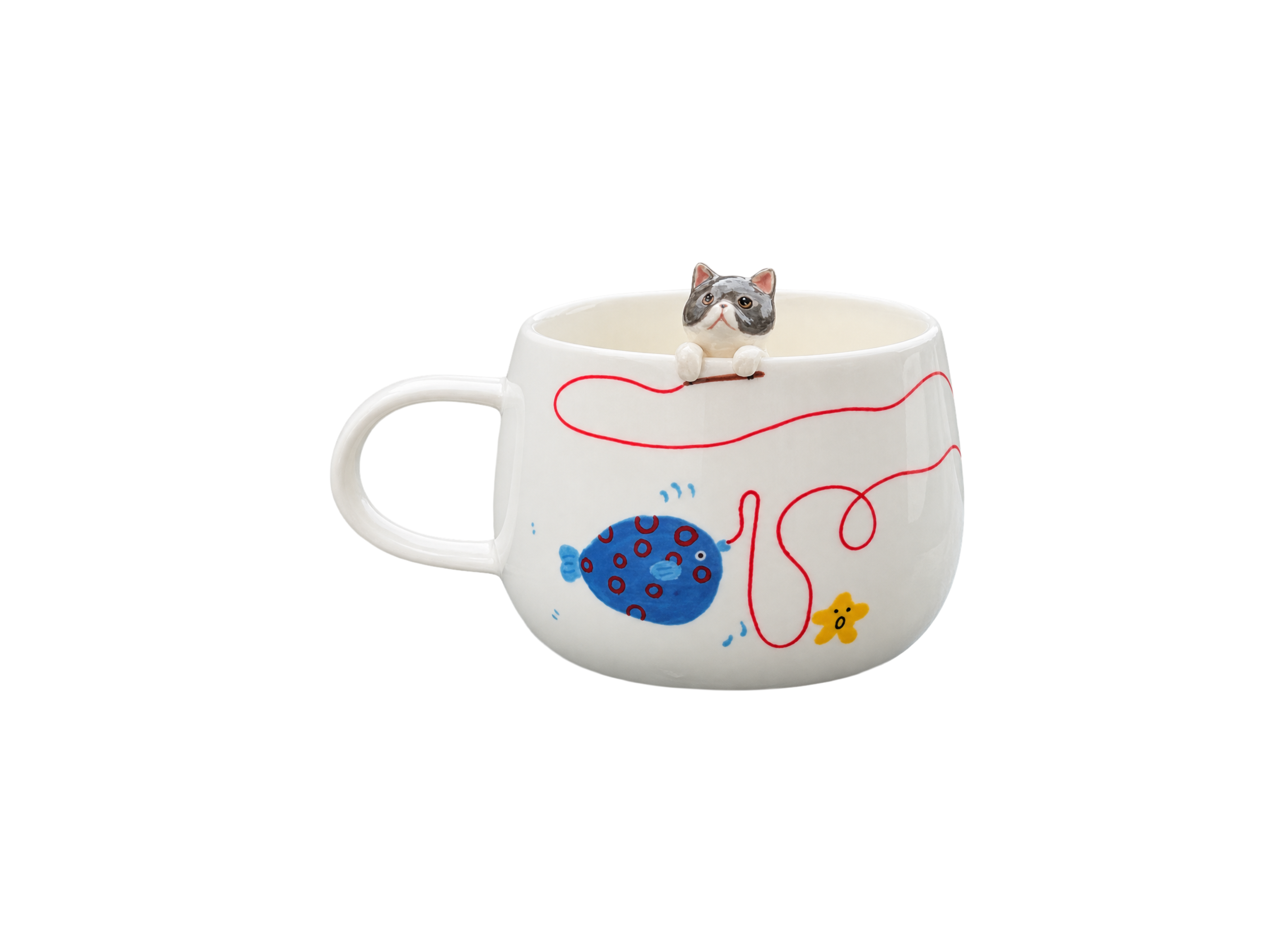
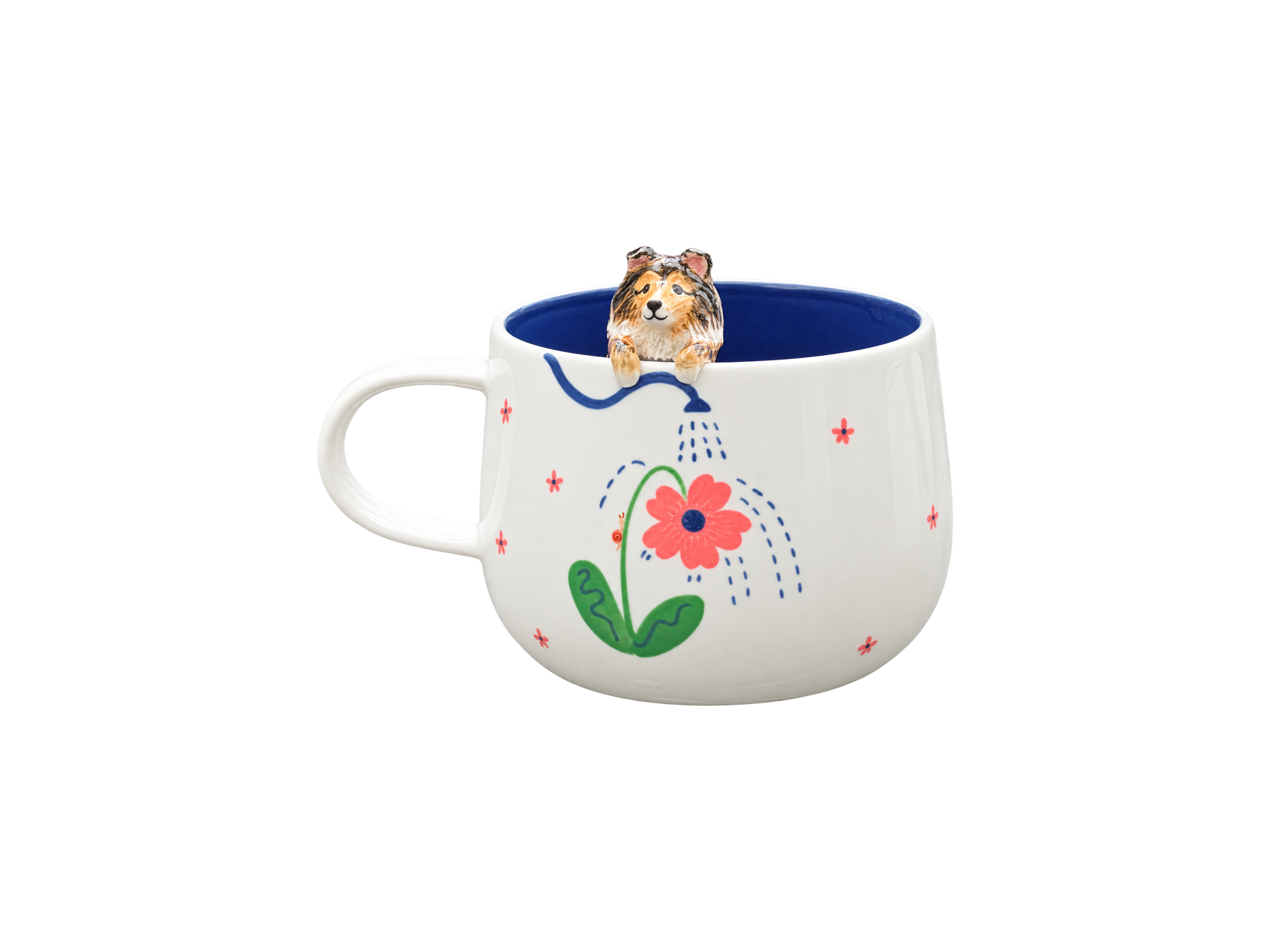
Linglong porcelain is recognizable by its small patterns that illuminate when placed in front of a light source. In the traditional technique, openings are cut into the piece and then filled with a translucent glaze before firing. They thus become delicate, luminous windows, without transforming the entire cup into a transparent object.
Is porcelain naturally translucent?
Porcelain is not transparent like glass. However, it can allow some light to pass through when it is sufficiently thin and properly vitrified during firing.
The Metropolitan Museum of Art cites whiteness, fineness, translucency, and the ability to withstand high firing temperatures among the characteristics of hard-paste porcelain. In France, the Ministry of Culture’s History of Arts platform also presents porcelain as a hard-paste, translucent ceramic.
This translucency remains relative, however. An ordinary porcelain cup does not light up uniformly. Wall thickness, paste composition, glaze, firing, and ambient light all influence what the eye perceives.
The Linglong technique goes further: it intentionally organizes light into patterns.
What does the word Linglong mean?
Linglong is written 玲珑 in Chinese. The word evokes something delicate, refined, and finely crafted. In the field of ceramics, it refers to a family of porcelains decorated with small translucent patterns.
In English, one often encounters the terms “rice-grain porcelain” or “rice-pattern porcelain.” These do not mean that rice grains have been incorporated into the piece. The name comes from the elongated shape of certain patterns, which resembles a grain of rice.
The library of traditional Chinese crafts published with Pro Helvetia describes Linglong as one of the traditional porcelains of Jingdezhen. In the process presented, small openings are cut into a pre-formed piece, then filled multiple times with a translucent glaze. A white glaze is then applied before firing at a high temperature.
After firing, the worked areas become what are sometimes called “Linglong eyes”: luminous patterns integrated into the wall.
Is this a recent technique?
No. Historical documentation shows that the term Linglong was already associated with complex openwork porcelains at the end of the Ming dynasty.
A record kept by Paris Musées and the Musée Cernuschi mentions a memorandum from 1583 in which a supervisor of Jingdezhen porcelain production asked the court to limit orders for Linglong pieces due to the difficulty of creating them.
This reference alone does not fix a precise date of invention. It does, however, show that the technique was sufficiently known and demanding in the 16th century to appear in administrative documents.
The tradition then evolved. Simple translucent patterns were supplemented by blue underglaze designs, colors, and more contemporary compositions.
Public collections hold several examples. The British Museum holds, in particular, Jingdezhen porcelain spoons whose “rice grain” motif is filled with glaze and surrounded by blue underglaze decor. The Metropolitan Museum of Art also preserves a 19th-century Chinese jar combining a “rice grain” pattern with blue underglaze painting.
How does light pass through the decor?
The effect relies on a difference in light transmission between the porcelain wall and the translucent parts.
When the cup is viewed under ordinary lighting, the patterns may appear white, slightly bluish, or simply lighter than the rest of the surface. Placed in front of a window or soft light, they let more luminosity through and seem to light up from within.
This is why the same piece can give two very different impressions:
- placed on a table, it is first read as a painted porcelain;
- held in front of a window, its luminous decor becomes visible;
- observed very closely, it reveals the alternation between painting, porcelain, and translucent zones.
Light is therefore not just a way to illuminate the object; it is part of how its decor is discovered.
Linglong, openwork porcelain, and simple printing: what are the differences?
These expressions can easily be confused.
Openwork porcelain
A strictly openwork piece contains openings that remain empty. Light and air can pass through them directly. This solution is common on decorative objects, incense burners, or certain double-walled pieces.
Traditional Linglong
The openings or thinned areas are associated with a translucent glaze. Visually, they look like small windows integrated into the wall.
A simply printed or painted motif
A light painting can imitate the appearance of a luminous motif, but it does not actually allow light to pass through. To tell the difference, you must observe the piece backlit.
The term “rice grain” describes the look of certain motifs, not their composition. No rice grains are needed for the process described by museum and artisan sources.
How to recognize a true translucent zone?
A few simple observations allow you to verify the effect without any special equipment.
First, place the piece in front of a window, preferably when the light is soft. A translucent motif should become noticeably brighter than the porcelain surrounding it.
Then, look at the same area without backlighting. The motif generally becomes more discreet again. This difference between frontal light and backlighting is an important clue.
You can also check:
- if the motif is integrated into the wall rather than simply printed on the surface;
- if the luminous zones form a coherent design;
- if the manufacturer shows the piece under normal lighting and backlit;
- if the product description clearly distinguishes between painting, glaze, and translucent motifs.
A photograph alone does not always confirm the process. Very strong exposure or retouching can create the illusion of transparency. The ideal is therefore to look at several images or a short video showing the change in light.
How does Maison Scott use this luminous effect?
In the Dentelle de Lumière collection, Maison Scott combines hand-painted animal portraits with botanical designs and translucent motifs.
The product sheet for the Rose Ancienne cup confirms several elements:
- the porcelain piece is entirely hand-painted;
- the animal portrait is personalized from the photos provided;
- the translucent motifs are revealed by light;
- the decor is created underglaze and then fired at a high temperature;
- a detail image is identified as showcasing the translucent Linglong technique.
The collection currently includes nine decorative themes, notably Rose Ancienne, Pêche en Fleurs, Fraise des Bois, Corail des Mers, Jardin de Lotus, Bambou de Jade, Soleil d’Été, Mimosa Doré, and Iris de Brume.
The interest of this combination lies in the contrast between two ways of viewing the piece. The portrait first draws attention through its expression, colors, and the recognizable characteristics of the animal. The translucent motifs appear afterward, when the cup encounters light.
Personalization is therefore not limited to placing an image on a support. It is part of a composition where the portrait, botanical elements, color, and light must remain in balance.
The exact detail of the creation of the Linglong zones at Maison Scott—cutting the paste, number of glaze applications, and finishing steps—is not explained on the public product sheet. To be confirmed by Maison Scott before adding a more precise technical description.
Why photograph the piece under two types of lighting?
A single photo taken from the front can show the portrait and the colors, but hide the translucency almost entirely.
To present a Linglong porcelain correctly, it is best to provide at least two images:
- a photograph under normal natural light, showing the entire cup and its saucer;
- a backlit photograph, revealing the translucent motifs.
A third close-up image can show the transition between the underglaze painting and the luminous zones.
To avoid distorting the result, it is better to use a window than a very harsh lamp, reduce the exposure slightly, and maintain natural colors. The goal is not to make people believe that the whole cup glows, but to faithfully show how certain parts react to light.
What to check before choosing translucent porcelain?
Before placing an order, it is useful to ask yourself a few questions.
Does the manufacturer really show the effect when backlit? Does the sheet explain if the piece is intended for daily use or only as a decorative item? Are the motifs translucent, open, or simply painted? Is care information provided? Do the portrait and decor remain legible when the piece is not lit from behind?
In the case of a personalized creation, one must also observe the space reserved for the portrait. A remarkable technique should not obscure the details that allow for the animal to be recognized: face shape, ears, coat colors, specific markings, and general expression.
A porcelain that reveals itself slowly
Linglong porcelain does not reveal everything at first glance. Placed on a table, it can seem sober and delicately painted. Brought near a window, it unveils a second composition made of small, luminous openings.
This discreet transformation naturally corresponds to the spirit of the Dentelle de Lumière collection: a personal portrait, hand-painted decor, and light that makes what one did not notice before appear.
You can discover the different motifs in the Dentelle de Lumière collection or observe other interpretations of dogs, cats, and companions in the Maison Scott Gallery.
- Linglong porcelain traditionally uses patterns that are cut or thinned, then filled with a translucent glaze before firing.
- The English expression “rice-grain porcelain” describes the shape of certain patterns; it does not mean that rice grains are embedded in the porcelain.
- A record kept by Paris Musées confirms the existence of Linglong porcelains that were difficult to produce in Jingdezhen as early as 1583.
- A Linglong motif appears discreet under ordinary light and becomes significantly brighter when observed backlit.
- In its Dentelle de Lumière collection, Maison Scott combines hand-painted animal portraits with translucent motifs revealed by light.
FAQ
Does Linglong porcelain contain rice?
No. The expression “rice-grain porcelain” comes from the shape of certain patterns, which can resemble a grain of rice. The technical descriptions consulted speak of openings worked into the paste then filled with translucent glaze.
Is all fine porcelain Linglong?
No. Fine porcelain can allow some light to pass through without containing Linglong motifs. Linglong organizes this translucency into designs or small decorative windows.
How to verify that a motif is truly translucent?
One must observe the piece in front of a window or a light placed behind it. A true translucent zone becomes brighter than the porcelain surrounding it.
Does Linglong mean the cup is pierced?
In the traditional technique, openings are created during manufacture, but they are then filled with translucent glaze. They do not necessarily remain open like on purely openwork porcelain.
Does Maison Scott use a traditional Linglong technique?
The Rose Ancienne sheet identifies an image as showing the “translucent Linglong technique” and mentions translucent motifs, underglaze painting, and high-temperature firing. The precise steps used by Maison Scott remain to be confirmed before describing the process as strictly identical to a given historical method.