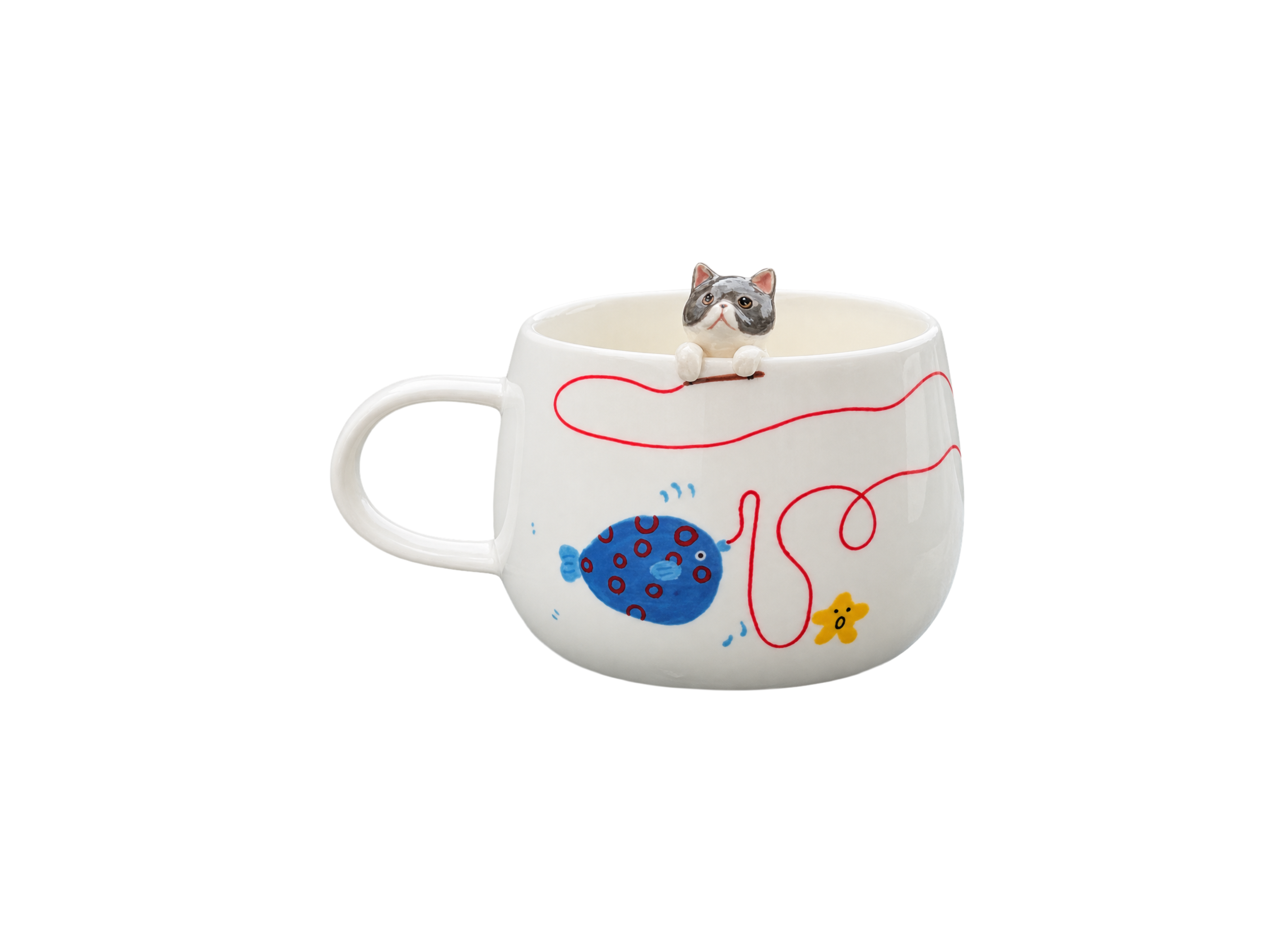
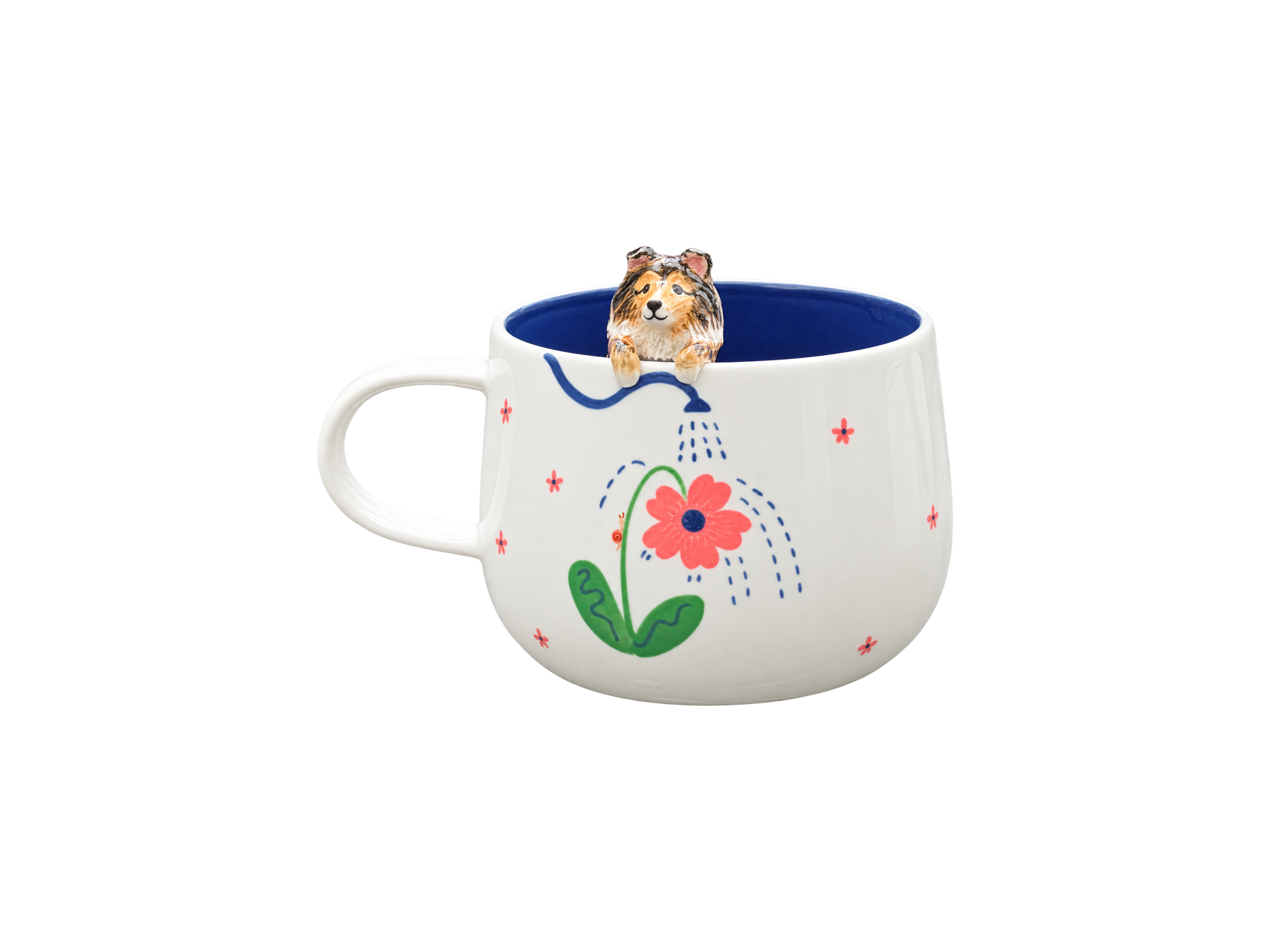
The safest way to display a custom pet figurine is on a level, stable surface, away from edges, busy walkways, vibration and sudden changes in temperature. Give the piece enough room to be lifted with two hands, support it from the base whenever it is moved, and reduce unnecessary cleaning by choosing a calm, dust-protected location.
Begin with the surface, not the styling
A beautiful arrangement cannot compensate for an unstable shelf. Before deciding where a figurine looks best, check that the surface is level, rigid and deep enough for the entire base. A narrow ledge, a wobbly side table or the front edge of a bookcase leaves very little margin for an accidental bump.
Ceramic is hard, but it is also brittle. The Canadian Conservation Institute identifies breakage as the main risk for ceramic and glass objects. In an ordinary home, that usually means preventing falls, knocks and pressure on projecting details rather than searching for a complicated preservation system.
Choose a calm location
The ideal position is visible without being part of a traffic route. Good options often include the centre of a deep bookcase, a closed display cabinet or a dedicated shelf above the reach of curious hands and paws. Less suitable places include the edge of a mantel, the top of a frequently used desk, a hallway console beside keys and bags, or a shelf behind a door.
Look for everyday sources of movement:
- doors or drawers that create vibration when they close;
- loudspeakers placed on the same piece of furniture;
- robot vacuum routes and frequently moved chairs;
- curtains that brush the shelf when a window is open;
- play areas used by children or animals;
- air vents or radiators that create rapid temperature changes.
Ceramic itself is not as light-sensitive as paper or textiles, but a custom figurine may include painted surfaces and fine colour details. Avoid intense, prolonged direct sunlight and strong heat. A position with soft, indirect light also makes the portrait easier to see without creating harsh reflections on glazed areas.
Give the figurine enough space
Crowding is one of the quietest risks in a display. When a figurine is squeezed between books, frames and heavy objects, reaching for one item can knock another. Leave enough clear space around the piece for both hands to approach it without touching ears, tails, relief decorations or other delicate projections.
Do not stack a ceramic figurine on books, boxes or an upturned bowl to create height. If elevation is important, use a purpose-made, stable plinth that is wider than the base. The support should sit flat and should not rock under gentle pressure.
Open shelf, cabinet or shadow box?
Open shelf
An open shelf is simple and lets the piece be enjoyed from several angles. It works best in a low-traffic room and on furniture that is firmly secured. Its main disadvantage is dust, which leads to more frequent handling and cleaning.
Closed cabinet
A glass-fronted cabinet reduces dust and creates a physical boundary around the figurine. The Canadian Conservation Institute’s preventive conservation guidance notes that enclosed storage can reduce both dust and physical risks. Check that shelves are correctly seated, doors do not strike the objects, and nothing is placed so close to the glass that it can be trapped when the door closes.
Shadow box
A deep shadow box can suit a small memorial or keepsake arrangement, provided the figurine fits without pressure and can be removed safely. Choose a box with adequate depth and a secure wall fixing. The object should rest on its base rather than being suspended by wire, tied around a projecting detail or permanently glued in place.
Use discreet support without stressing the piece
A thin layer of clean, soft, non-fibrous material beneath the base can add friction and reduce vibration. Conservation guidance commonly recommends stable cushioning materials such as polyethylene foam for fragile objects. Any support should lie flat, remain hidden under the base and never force the figurine into a new angle.
For an unusually tall or unbalanced piece, a custom-shaped support may be safer than adhesive. Avoid household tape, sticky pads or glue directly on painted, glazed or unglazed surfaces. Adhesives can age, stain, pull at decoration or make later removal difficult. If a support seems necessary, ask the maker about the object’s finish or consult a qualified conservator before attaching anything to it.
If the figurine rocks on a level surface, do not solve the problem by pressing it down or loading one side. Move it to a safe padded area and contact the maker for advice. A wobble can come from the handmade base, the shelf or a small piece of debris; the correct response depends on the cause.
How to move a ceramic pet portrait safely
Handling is when many accidents happen. The Canadian Conservation Institute recommends using clean, dry hands and supporting ceramic objects securely rather than lifting them by handles or projecting parts. Before moving the figurine, clear the route and prepare its destination so you never have to carry it while opening a cabinet or shifting other objects.
- Remove rings, bracelets or anything that could scratch or catch on the piece.
- Place one hand beneath the base, close to the centre of gravity.
- Use the other hand to stabilise the body of the piece.
- Keep fingers away from ears, tails, collars, handles and sculpted relief details.
- Carry one object at a time and set it down slowly on the prepared surface.
Even when a projecting detail feels strong, it may act as a lever if the weight of the piece hangs from it. Two-handed support from below is a better habit for both decorative figurines and functional ceramics with sculpted elements.
Dusting and cleaning: less is often safer
Good placement reduces the need for cleaning. For loose surface dust, begin with the gentlest method: a soft, clean brush used while the figurine is fully supported. Do not hold the object in one hand while brushing quickly with the other, and do not push dust into narrow gaps with a hard tool.
Avoid abrasive sponges, scouring powders, bleach and sudden hot-to-cold water changes. If the piece is a Maison Scott functional ceramic rather than a purely decorative figurine, follow the care guidance supplied with it. The Maison Scott FAQ recommends lukewarm water, a gentle product and a non-abrasive sponge, with hand washing preferred for relief and delicate elements.
Do not immerse a repaired, cracked or unknown ceramic object without professional advice. Older repairs and porous areas may react differently to water. The Victoria and Albert Museum’s ceramic care guide offers further general guidance for fragile and historic ceramics.
Displaying a figurine integrated into a mug
Some personalised ceramics combine a usable vessel with a hand-sculpted animal figure. In that case, the piece needs a display spot that also allows it to be removed without catching the relief on nearby objects. Leave extra clearance around the handle and sculpted decoration, and never lift the mug by the figurine.
Maison Scott’s À la pêche ! personalised ceramic, for example, integrates a sculpted and hand-painted figure into the design. When displaying a piece of this kind, support the ceramic body and base as you lift it. When it is in use, set it down gently on a stable, dry surface and keep the relief away from utensils or other cups in a crowded cupboard.
Create a personal display without overcrowding it
A custom pet portrait often carries more meaning than an ordinary decorative object. It may celebrate a companion who is still part of daily life or preserve a gentle memory after a loss. The display can acknowledge that meaning without becoming elaborate.
Try combining the figurine with one photograph, a small name card or a carefully placed keepsake. Keep heavier frames lower or farther back so they cannot fall onto the ceramic. If you include a collar or tag, lay it beside the figurine rather than draping it over sculpted details.
A quick display checklist
- The shelf is level, rigid and firmly secured.
- The entire base sits well back from the edge.
- Doors, drawers, speakers and curtains do not create movement nearby.
- Children and pets cannot reach or brush past the piece.
- There is room for two hands to lift it from below.
- No heavy object can fall onto it.
- Direct heat and intense, prolonged sunlight are avoided.
- Cleaning can be done gently and infrequently.
Frequently asked questions
How high should a custom pet figurine be displayed?
There is no universal height. Choose a shelf that is easy to see but not easy to bump. In a home with children or active pets, a higher secured shelf or a closed cabinet is usually safer than a low table. The furniture itself must be fixed and stable.
Can I use museum wax or putty under the base?
These products can add restraint in some situations, but compatibility depends on the ceramic surface, decoration and local conditions. Do not apply an adhesive product blindly to paint, porous ceramic or an unknown finish. Ask the maker or a conservator, and prefer a reversible, tested support.
Is direct sunlight harmful to a ceramic figurine?
The ceramic body is generally stable, but strong, prolonged sunlight can heat the object and may affect some decorative finishes over time. Soft indirect light gives a more even view and avoids rapid heating.
Is a glass cabinet always the safest option?
A well-built cabinet often reduces dust and accidental contact, but it must have secure shelves, enough clearance and doors that do not strike the display. A poorly fitted cabinet can introduce its own risks.
What should I do if I notice a crack or loose detail?
Stop handling and using the piece. Place it on a padded, stable surface away from activity, keep any detached fragment in a labelled container, and contact the maker or a ceramic conservator. Do not use household glue as a quick repair.
A considered place for a personal object
The best display is not necessarily the most elaborate. A secure shelf, thoughtful spacing and careful two-handed handling will do more to protect a custom pet figurine than decorative complexity. If you are considering a hand-sculpted portrait, explore Maison Scott’s personalised ceramic creations and choose a future place for it with the same care you bring to the portrait itself.