Pet family members are not just an affectionate way to refer to our dogs or cats. When an animal shares our space, our habits, and some of our decisions, it gradually becomes part of the household's story.
This bond isn't built in an instant. It arises from an accumulation of ordinary gestures: preparing a meal, opening a door, organizing a walk, recognizing a way of looking, or immediately noticing a change in behavior.
Pet Family Members: How is this bond formed?
An animal doesn't become a family member simply because we love it. It becomes one because a lasting relationship is built around its presence.
Research on the human-animal bond shows that animals can play a real relational role within the household. They participate in family routines, influence interactions, and can be perceived as relatives, companions, or full-fledged family members.
This integration usually relies on four elements: shared time, familiarity, responsibility, and common memory.
Habits transform a presence into a relationship
A dog waiting by the door at a specific time or a cat always joining the same person in the evening gradually becomes part of the household's rhythm.
These daily routines create a form of continuity. Even when they seem insignificant, they become markers: the morning walk, the sound of paws in the hallway, or the spot occupied by the sofa.
Attachment to one's pet is often built through this repetition. It is not necessarily the intensity of a moment that creates the bond, but its regularity.
We learn to understand each other without explaining everything
The relationship with a pet is largely based on observation. We eventually recognize certain gestures, postures, vocalizations, or changes in attitude.
The animal also learns to anticipate routines and react to our movements, our voice, or our availability. This doesn't mean it thinks exactly like a human, but that a communication specific to the relationship is established.
The human-animal bond thus develops in a language made of habits, signals, and reciprocal attention.
Caring creates emotional responsibility
Welcoming an animal implies concrete obligations: ensuring its food, safety, care, activity, and a suitable environment.
This responsibility gradually changes how we perceive it. It is no longer just present in the house: its well-being partly depends on our decisions.
The family role also arises from this responsibility. We think of it before leaving, plan its arrangements during holidays, and adapt certain choices to its needs.
The place of animals in the family is seen in the details
Saying that an animal belongs to the family may seem abstract. In daily life, however, this place becomes very visible.
It appears when:
- its rhythm is integrated into the schedule;
- certain rooms or furniture are arranged for it;
- its health is taken into account in the household budget;
- holidays and trips are organized according to its presence;
- its name appears in conversations, messages, or family traditions;
- household members keep photos and tell stories related to it.
The animal also becomes a witness to different periods of life. It may have been present during a move, a meeting, the birth of a child, or a professional change.
It then connects several moments together. Its presence is part of the family memory, just like certain places, objects, or rituals.
Is it normal to consider one's pet as a loved one?
There is no single correct way to define the relationship with one's pet. Some people refer to their dog as their best friend, others consider their cat as a child, or simply prefer the word "companion".
Studies on relationships with cats show that owners may describe their animal as a family member, a child, a friend, or simply a pet. These different representations influence how the relationship is experienced.
The intensity of the bond depends on many elements: the duration of cohabitation, the animal's personality, the family context, shared experiences, and the importance each person gives to it.
Feeling deeply attached to an animal is therefore not, in itself, a problem. The important question is whether this relationship respects both the person's balance and the animal's needs.
Loving one's pet without over-humanizing it
Considering an animal as a family member does not mean forgetting that it belongs to another species.
A dog does not necessarily understand a situation like a child. A cat does not express its discomfort in the same way as a human. Systematically attributing our intentions or emotions to them can prevent us from seeing what they truly need.
ANSES defines animal welfare as a positive mental and physical state linked to the satisfaction of the animal's physiological and behavioral needs, as well as its expectations.
A balanced relationship therefore consists of combining affection and observation:
- respect rest periods;
- provide an environment adapted to the species;
- allow the animal to move away;
- learn to recognize signs of discomfort;
- avoid forcing physical contact;
- take into account its age, health, and temperament.
Love is not measured solely by the number of accessories purchased or the time spent together. It is also manifested by the ability to respect the animal's limits.
An emotional place that does not always correspond to the legal place
In France, the Civil Code recognizes animals as "living beings endowed with sensitivity". It specifies, however, that they remain legally subject to the regime of property, subject to the laws that protect them.
The emotional place and the legal place are therefore not exactly the same. In the life of the household, an animal can be considered a loved one. In certain administrative, patrimonial, or separation-related procedures, it remains subject to specific rules.
This difference partly explains why certain experiences, such as the illness or loss of an animal, can be emotionally very strong while sometimes being little recognized socially.
Why do we keep so many memories of our animals?
We rarely photograph a simple object every day. Yet, we often take hundreds of photos of our pet: when it sleeps, plays, waits by a window, or adopts a familiar posture.
These images do not only serve to show its appearance. They preserve an atmosphere, an era, and a relationship.
Some memories seem very ordinary at the time they are lived. An empty place on a sofa, a bowl, a collar, or the sound of a tag can then represent an entire period of life.
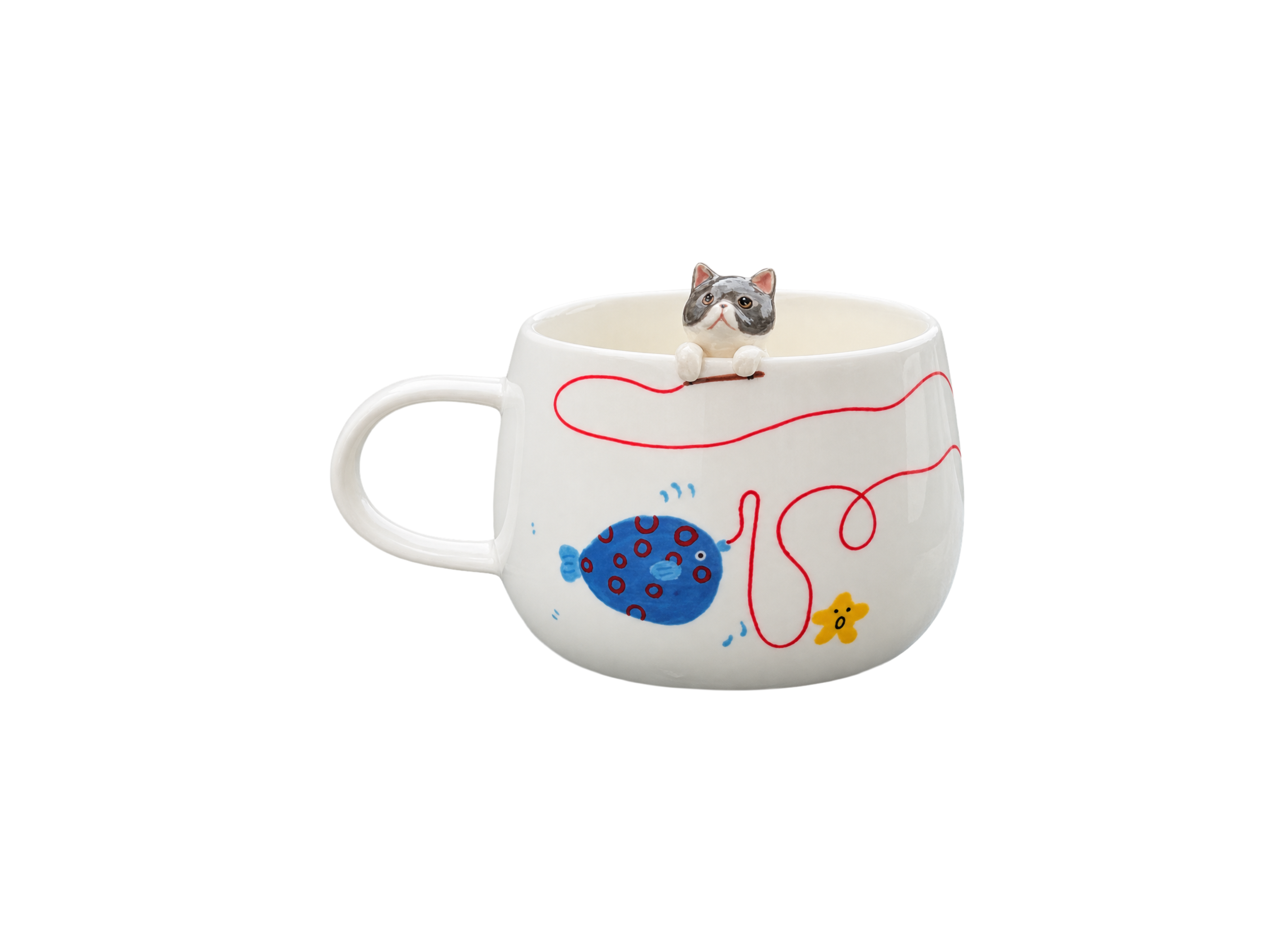
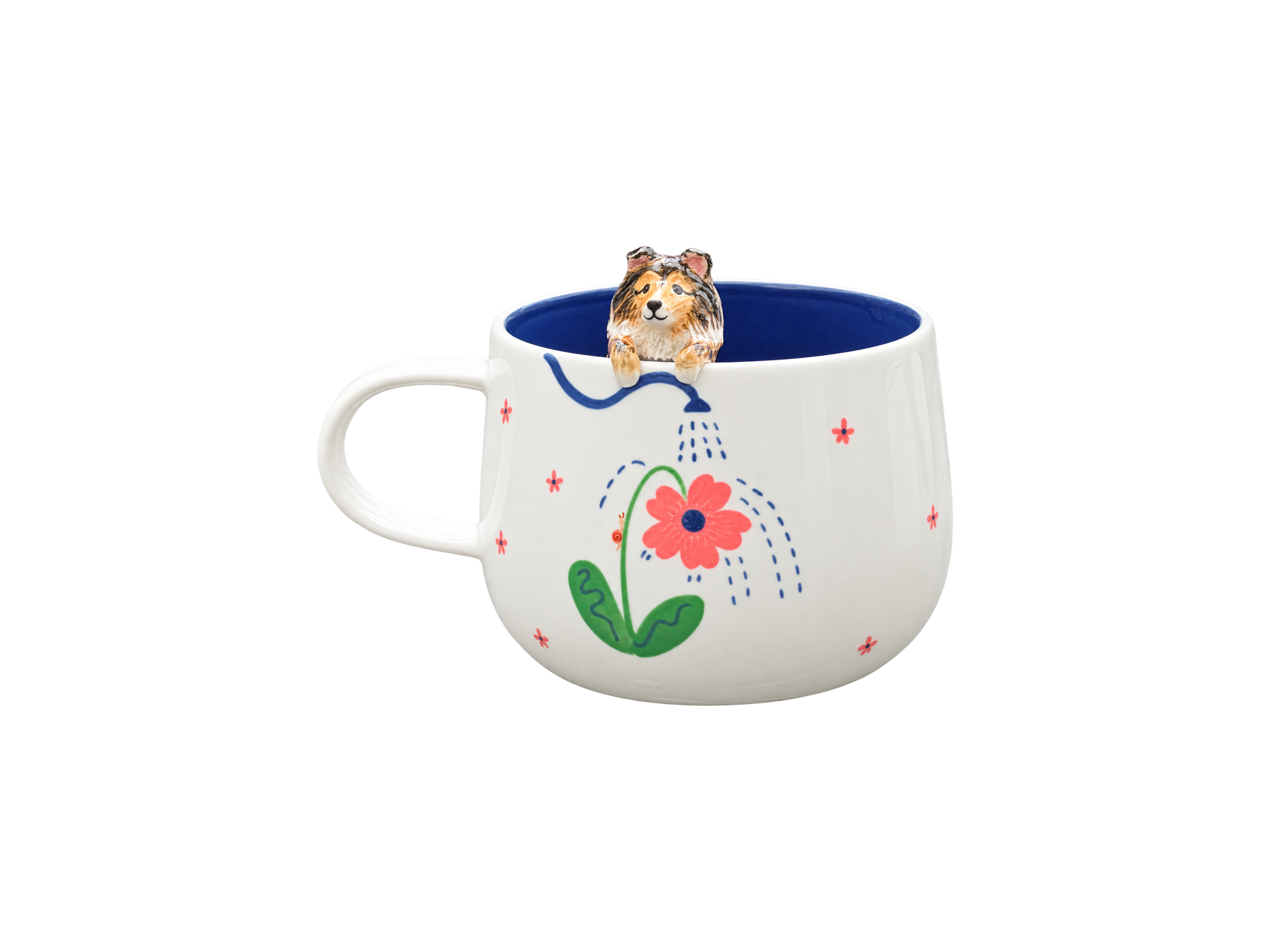
It is also for this reason that some people wish to bring their companion into their interior decoration. A portrait, a small sculpture, or a personalized ceramic can give visible form to a bond already present in the home.
The object does not need to be spectacular. Its value comes primarily from what it recalls: an expression, a posture, a habit, or a shared moment.
The loss of an animal often reveals its true place
The disappearance of an animal can cause profound grief. This reaction is consistent with the place it occupied in daily life: a regular presence, responsibilities, repeated gestures, and sometimes several years of shared life.
The scientific literature on pet bereavement describes different emotional reactions after the loss of a companion and emphasizes that the intensity of grief varies according to the relationship, the circumstances of the disappearance, and the support received.
It is not necessary to compare this loss to another to make it legitimate. The sadness corresponds to the bond that existed.
Keeping a photograph, writing down some memories, creating a small commemorative space, or choosing a personalized object can help some people give a place to this story. This does not eliminate the pain, but sometimes allows to preserve what the relationship brought.
How to build a balanced relationship with your pet?
A strong relationship does not depend solely on the time spent together. It is mainly based on the quality of interactions and the ability to understand the animal as it is.
Observe its preferences
Not all animals appreciate the same contacts. Some seek physical proximity, while others prefer to stay a few meters away.
Observing the moments when the animal comes by itself allows for a better respect of its rhythm.
Create a simple ritual
A short walk, a few minutes of play, or a quiet moment at a regular time can become a shared landmark.
The ritual must remain compatible with the animal's needs and with the reality of the household. It should not become a source of agitation or dependence.
Give it a real place in the house
Having a place in the family also means having a space to rest undisturbed.
This place can be a basket, a blanket, a raised platform, or a quiet room. The important thing is that the animal can feel safe there.
Share responsibilities
When several people live with the animal, it is useful to clearly distribute the care. This avoids omissions and allows everyone to build a relationship based on something other than play or treats.
Preserve memories over time
It is not necessary to wait for a particular event to preserve memories.
A dated photo, a paw print, a notebook of anecdotes, or a creation inspired by the animal can gradually tell its story within the family.
A family is also built with silent presences
An animal does not participate in conversations in the same way as a human. However, it is present in schedules, spaces, decisions, and memories.
It is this regular presence that explains why so many pet family members become part of the family. They don't necessarily replace a person and don't need to be humanized to matter.
They occupy a place of their own: that of a living being whose habits we know, whose well-being we ensure, and with whom we share a part of our history.
Is it normal to consider your pet a family member?
Yes. When an animal permanently shares the habits, spaces, and events of a household, it can occupy an emotional place comparable to that of a loved one. This relationship remains balanced as long as the animal's specific needs are respected and its well-being does not depend on an exclusively human projection.
Why am I so attached to my dog or cat?
Attachment is built through repeated interactions, the responsibility of care, and familiarity. Your animal is associated with schedules, places, gestures, and periods of your life. It is often these daily details, more than exceptional events, that make the relationship particularly important.
Can an animal be attached to several people in the family?
Yes, but the relationship can take a different form with each person. The animal may seek play with one household member, calm with another, and associate a third person with meals or walks. These preferences do not necessarily mean that it only loves one person.
How to strengthen the relationship with your pet?
Prioritize regular interactions, adapted to its character: walks, play, learning, observation, or quiet moments. Also, let it choose when it wants to approach or retreat. A strong relationship relies less on constant attention than on consistency, security, and respect for its boundaries.
Can you humanize your animal too much?
Humanization becomes problematic when it leads to ignoring the animal's behavioral needs. Imposing contacts, interpreting every behavior as a human emotion, or limiting its natural activities can create discomfort. Considering it a loved one remains compatible with respecting its species and individuality.
How to preserve the memory of a deceased animal?
You can gather photographs, write down its habits, keep a paw print, or choose an object that evokes a particular expression. Some people prefer a discreet souvenir integrated into the home, while others create a small commemorative space. There is no single right way to preserve this relationship.
At Maison Scott, we believe that pet family members deserve a place in the objects and spaces that tell our daily story. You can discover our animal-inspired creations, explore customization possibilities, or consult our guide to understand how a photograph becomes a piece designed for your interior.